 ×
×
By Zhang Wei, Production Director at Horizon Ceramic Manufacturing
In the high-stakes environment of industrial ceramic production, consistency is not just a goal; it is the currency of survival. As a Production Director overseeing multiple kiln lines, my daily reality is defined by the relentless pursuit of uniformity. We deal with massive volumes, tight margins, and the unforgiving physics of thermal dynamics. Among the various challenges we face, few are as critical—or as frustrating—as managing color consistency in yellow-toned tiles. This is where the specific application of yellow iron oxide ceramics becomes paramount. Specifically, the performance of Synthetic Iron Oxide Yellow 920 during the kiln firing process dictates the difference between a premium product and a batch of seconds.
To understand why standard pigments fail, one must first understand the chemistry at play. Synthetic iron oxide yellow (Goethite, -FeOOH) is inherently thermally unstable. When subjected to heat, it undergoes a dehydration process, transforming into hematite (-FeO), which is red. However, in the context of yellow iron oxide ceramics, we are not looking for red; we are looking for a stable, vibrant yellow that survives the firing cycle.
The "920" designation refers to the optimal firing temperature range where this specific synthetic pigment maintains its chromatic integrity before significant phase transition occurs. The technical depth lies in the crystal lattice stability. Standard pigments have a narrow energy window. If the temperature spikes even slightly above the threshold, the dehydration accelerates uncontrollably, leading to a shift towards orange or brown hues. This phenomenon is known as thermal shock-induced phase variation.
Our approach to yellow iron oxide ceramics involves modifying the surface structure of the pigment particles to enhance their thermal inertia. By creating a protective barrier at the molecular level, we delay the onset of rapid dehydration. This allows the pigment to withstand the rigorous conditions of the kiln without undergoing premature phase changes. The result is a pigment that does not merely survive the heat but thrives within it, maintaining its hexagonal crystal structure’s optical properties longer than conventional alternatives. This scientific backbone is what separates a commodity chemical from a specialized solution for yellow iron oxide ceramics.
While the chemistry is fascinating, the factory floor cares about results. In any large-scale tunnel kiln, thermal uniformity is a myth. There are always gradients—hot spots near the burners, cooler zones near the walls, and vertical temperature differences between the top and bottom of the stack. A typical variance of ±10°C is common and often unavoidable due to airflow dynamics and load distribution.
For a production director, this variance is a nightmare if the pigment is sensitive. If you use a standard pigment with a narrow tolerance window, a 5°C difference across the kiln width can result in visible banding or shade variation across the tile surface. This leads to sorting losses, reduced yield, and increased waste. This is where our wide-temperature-domain adaptive iron oxide yellow pigment acts as the production line’s "stabilizer."
We have engineered this pigment to possess a broad firing range, specifically optimized for the 900°C–950°C window. Within this 50-degree span, the color hue remains statistically invariant. This "process tolerance" means that even if the kiln control system experiences minor fluctuations, or if there are slight inconsistencies in the stacking density, the final output remains consistent. For manufacturers dealing with yellow iron oxide ceramics, this translates directly to higher first-grade yield rates. We no longer need to micro-manage the kiln curve to accommodate pigment sensitivity. Instead, the pigment accommodates the kiln’s natural behavior.
Furthermore, batch-to-batch consistency is crucial. In the past, switching to a new drum of pigment often required days of trial-and-error adjustments to the glaze formulation or firing schedule. Our modern production base, equipped with independent R&D capabilities, ensures that every ton of pigment produced matches the previous one with microscopic precision. Using high-precision spectrophotometers, we guarantee that the colorimetric data ( values) remain constant. This reliability allows our partners to run continuous production campaigns without interruption, significantly reducing downtime and debugging costs associated with yellow iron oxide ceramics.
Beyond technical stability, the ultimate judge is the eye. In the world of interior design and architecture, the aesthetic quality of yellow iron oxide ceramics is non-negotiable. Designers seek warmth, naturalness, and depth. A flat, muddy yellow fails to evoke the desired emotional response.
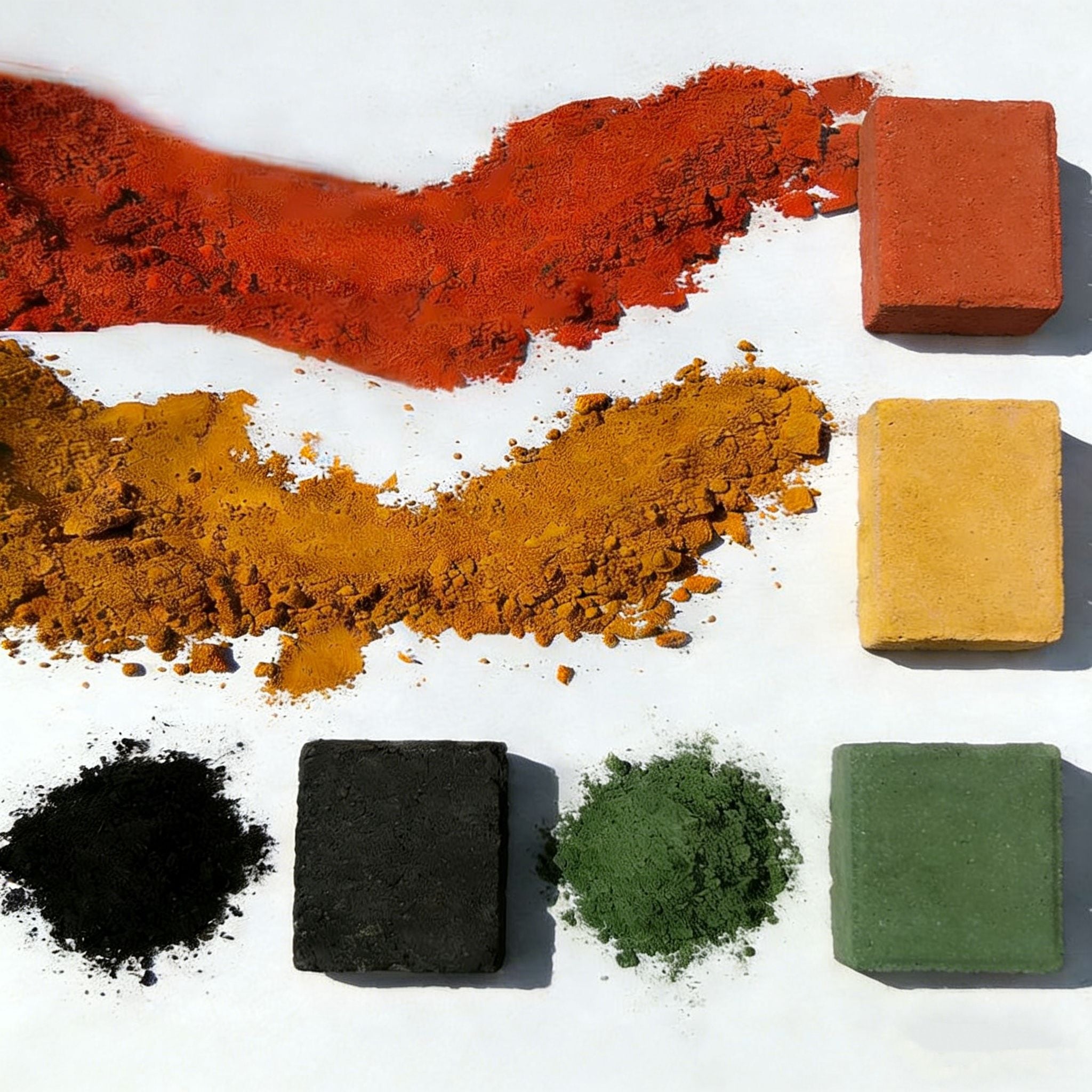
Our Synthetic Iron Oxide Yellow 920 is designed to deliver superior color fidelity. The particle size distribution is tightly controlled to ensure optimal light scattering and absorption. This results in a clean, bright yellow tone that mimics natural earth pigments but with the consistency of synthetic materials. The aesthetic texture is smooth and uniform, free from the speckling or graininess often seen in lower-quality oxides.
When applied to glazed or unglazed tiles, the pigment integrates seamlessly with the matrix. It does not float to the surface nor sink excessively, ensuring that the color appears integral to the material. This depth of color is particularly important for large-format slabs, where any inconsistency is magnified. The visual harmony achieved with our pigment enhances the perceived value of the final product. For brands positioning themselves in the premium segment, the nuanced beauty of yellow iron oxide ceramics is a key differentiator. It offers a sophisticated palette that complements modern minimalist designs as well as traditional rustic aesthetics.
To illustrate the tangible benefits, consider a recent project we supported.
In the competitive landscape of ceramic manufacturing, the choice of pigment is a strategic decision. Synthetic Iron Oxide Yellow 920 is not just a colorant; it is a tool for risk mitigation and quality enhancement. By addressing the core issues of phase stability, process tolerance, and aesthetic fidelity, we empower manufacturers to produce superior yellow iron oxide ceramics with confidence.
As we look to the future, the demand for sustainable, high-performance materials will only grow. Our commitment to R&D ensures that we continue to refine our formulations, offering even greater stability and vibrancy. For production directors like myself, having a partner who understands the intricacies of kiln dynamics and provides a solution that works with the process, not against it, is invaluable. Let us continue to innovate, ensuring that every tile produced reflects the highest standards of quality and beauty. The future of yellow iron oxide ceramics is bright, stable, and consistently yellow.
 Hot News
2026-09-04
2026-01-03
2026-01-01
2026-01-07
 EN
EN