 ×
×
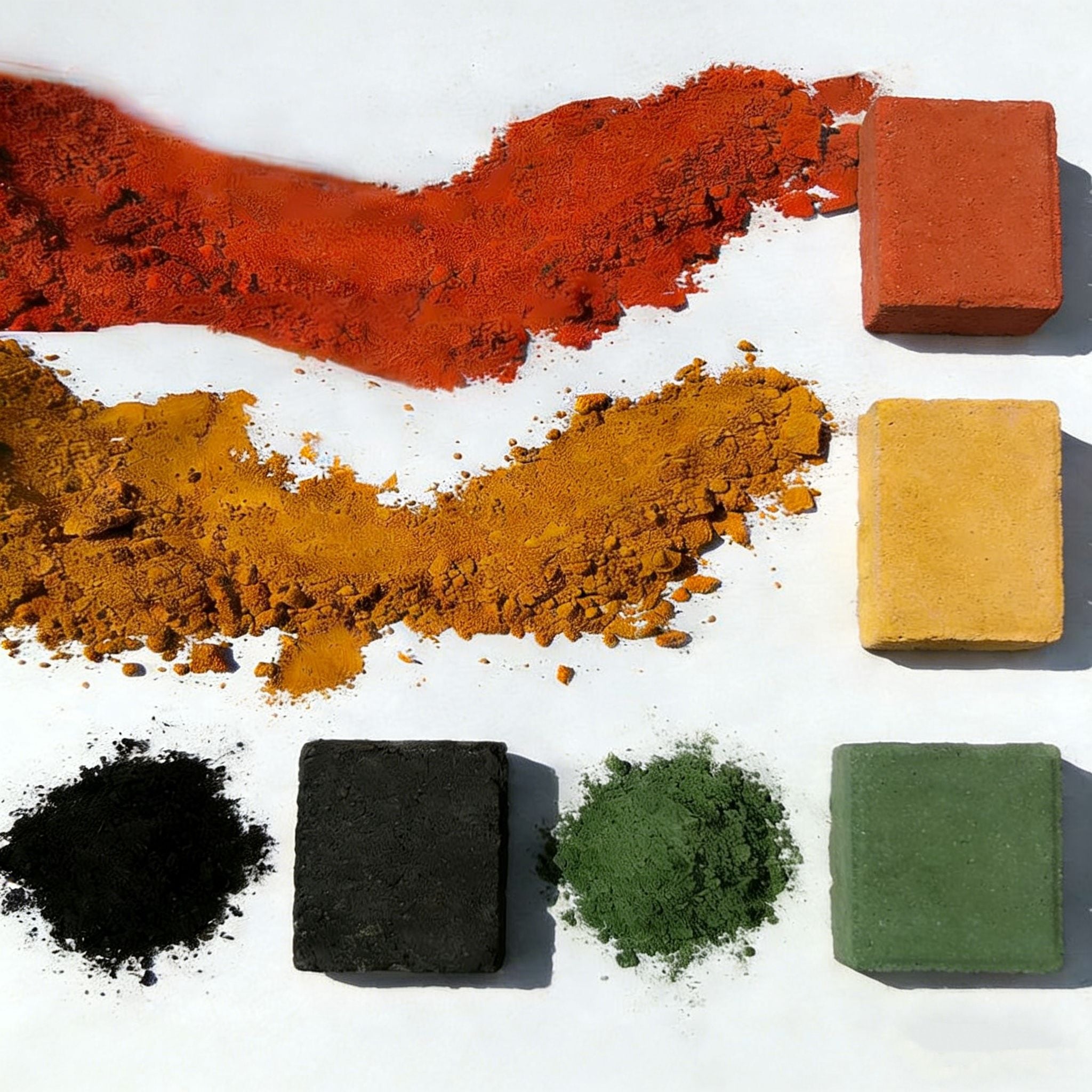
Black concrete has become an increasingly popular architectural choice in modern construction. From decorative paving stones and urban landscape elements to precast façade panels and architectural masonry, the deep, elegant appearance of black concrete conveys a sense of durability and premium design. However, achieving stable black coloration in cement-based materials is far more complex than it initially appears.
Many manufacturers of concrete products encounter a frustrating problem: freshly demolded concrete appears rich and dark, yet after several days of curing the surface becomes uneven, grayish, or mottled. What once appeared as a uniform black tone gradually loses its depth and aesthetic value. In many cases, this issue leads to product rejection, customer complaints, or costly rework.
The root cause often lies in the pigment selection. Specifically, the black oxide for concrete used in the mix may not possess the chemical stability required to withstand the extreme alkaline environment created during cement hydration.
When cement reacts with water, large amounts of calcium hydroxide are generated, creating a highly alkaline environment with a pH typically ranging from 12 to 13. Many pigments that perform well in coatings or plastics cannot tolerate such conditions. They may partially dissolve, change crystal structure, or migrate within the matrix, leading to color instability.
Therefore, the most critical performance parameter for pigments used in cement-based materials is alkali resistance. High-quality construction-grade iron oxide black pigments must remain chemically inert under strong alkaline conditions. Their crystalline structure must remain stable, ensuring that the pigment neither reacts with cement components nor loses color intensity over time.
The goal of this guide is to help manufacturers of concrete products establish a more scientific pigment selection standard. Instead of evaluating pigments only by their initial blackness, procurement and production teams should focus on three deeper indicators: alkali resistance, tinting strength stability, and compatibility with cement-based systems.
Selecting the right black oxide for concrete requires understanding how pigments behave inside the complex chemistry of cement hydration. Three technical characteristics determine whether a pigment can deliver stable color performance in concrete products.
The hydration of Portland cement generates calcium hydroxide and other alkaline compounds. This chemical environment is extremely aggressive toward many pigments and additives. If the pigment used in the concrete mixture lacks sufficient alkali resistance, its structure may gradually degrade.
High-quality iron oxide black pigments are typically based on magnetite (Fe₃O₄) with a stable spinel crystal structure. This structure exhibits excellent chemical inertness, allowing the pigment to remain stable even in strongly alkaline conditions. The pigment particles do not dissolve, react, or undergo structural transformation when exposed to cement hydration products.
In contrast, pigments with unstable structures may undergo partial oxidation or decomposition. Such reactions can shift the color tone from deep black toward reddish or grayish shades. In addition, degraded pigments may migrate within the concrete matrix, causing uneven color distribution.
A practical method to evaluate alkali resistance involves immersing pigment samples in saturated calcium hydroxide solution for several days and measuring the resulting color difference. Reliable pigments show minimal change in color parameters after prolonged exposure.
For manufacturers of architectural concrete or paving materials, alkali stability directly determines whether the finished product maintains its aesthetic quality throughout its service life.
Concrete pigmentation differs significantly from coating or plastic coloration. In cement-based materials, pigment dosage is usually limited by both cost considerations and structural performance. In most applications, pigment content rarely exceeds five to eight percent of the cement weight.
Because of this limitation, pigments must possess strong tinting strength in order to achieve deep color saturation with minimal dosage. High-performance iron oxide black pigments provide intense coloration even at relatively low addition levels.
Tinting strength depends on several factors, including pigment purity, particle size distribution, and crystalline structure. Finely controlled pigment particles interact more effectively with light, producing deeper and more consistent color tones.
For manufacturers producing decorative pavers or architectural precast elements, high tinting strength provides an important economic advantage. Lower pigment dosage reduces material costs per cubic meter of concrete while maintaining the desired color intensity.
Stable tinting strength is equally important. When pigment batches vary in tinting power, manufacturers must constantly adjust their formulas to maintain consistent color. Such adjustments complicate production and increase the risk of batch-to-batch color variation.
Consistent tinting performance therefore helps concrete manufacturers maintain predictable production quality while controlling raw material costs.
Another critical factor affecting pigment performance in cement systems is the presence of water-soluble salts. Pigments containing excessive soluble salts can accelerate the formation of surface efflorescence, a common defect in concrete products.
Efflorescence occurs when soluble compounds migrate to the surface of concrete and crystallize as white deposits. Although cement chemistry plays a major role in this phenomenon, pigments containing soluble impurities may intensify the problem.
High-quality black oxide for concrete strictly controls the content of water-soluble substances. By minimizing soluble salts, the pigment reduces the risk of surface discoloration during curing and early service life.
Equally important is the dispersion behavior of the pigment within the concrete mixture. Pigments with narrow particle size distribution disperse more evenly in mixers, preventing pigment agglomeration. When dispersion is uniform, the color distribution within the concrete matrix becomes consistent.
Poorly dispersed pigments may create localized color spots or streaks, reducing the visual quality of finished products. Therefore, pigments designed for concrete applications typically undergo controlled milling processes to ensure extremely low sieve residue and excellent dispersion properties.
The demand for durable black concrete continues to grow in multiple construction sectors. In decorative permeable pavements and artistic flooring systems, black pigments are often used to create dramatic visual contrast and modern design patterns. These surfaces are frequently exposed to sunlight, water, and mechanical abrasion, requiring pigments that combine alkali resistance with excellent weather stability.
Concrete paving stones and permeable bricks represent another major application. These products are manufactured through high-frequency vibration and compression processes. The pigment must disperse rapidly in the mix and maintain color consistency across large production volumes.
Precast architectural components and façade panels place even higher demands on pigment durability. These elements are often exposed to outdoor environments for decades, where ultraviolet radiation, moisture, and atmospheric conditions continuously affect the surface. Pigments used in such applications must resist both chemical degradation and surface discoloration to preserve the long-term appearance of the building.
In each of these scenarios, the correct black oxide for concrete plays a decisive role in achieving reliable color performance.
In the global pigment market, extremely low-priced iron oxide pigments occasionally appear attractive to procurement teams seeking to reduce material costs. However, such products often carry significant quality risks.
Some low-cost pigments are derived from poorly controlled industrial by-products rather than purified raw materials. These pigments may contain excessive heavy metals or other impurities that prevent them from meeting international environmental standards.
Another risk involves unstable iron compounds or excessive magnetic materials within the pigment. These impurities may lead to rust-like stains appearing on the surface of concrete products after exposure to moisture.
Batch inconsistency is another frequent issue with low-cost pigments. When color variation between batches exceeds acceptable limits, manufacturers must halt production or attempt to blend pigments to maintain color consistency. Such disruptions can quickly erase any initial savings obtained from lower pigment prices.
For companies exporting concrete products to international markets with strict appearance standards, these risks can translate into rejected shipments and reputational damage.
Reliable pigment sourcing requires more than simply purchasing raw materials. It requires working with suppliers who understand the technical demands of concrete manufacturing.
Hebei Tianhuibao Technology Co., Ltd. specializes in the production and global supply of iron oxide pigments used in construction materials, coatings, and industrial applications. The company provides high-performance black oxide for concrete designed specifically for cement-based systems.
Each production batch undergoes strict quality testing to verify alkali resistance, tinting strength stability, sieve residue levels, and water-soluble salt content. These controls ensure that pigments perform consistently in demanding concrete applications.
Beyond product supply, the company also offers technical application support. By evaluating customers’ cement formulations and production processes, technical specialists can recommend optimized pigment dosage strategies that maintain color depth while controlling production costs.
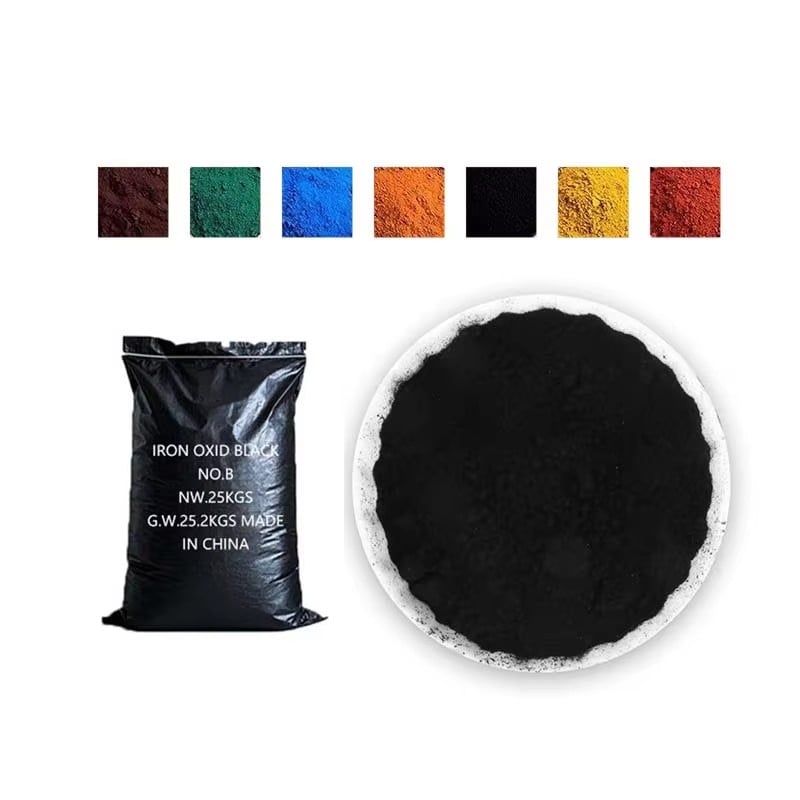
Flexible packaging options further support different production scales. Pigments are available in standard 25-kilogram bags as well as jumbo bag packaging for large-volume operations, ensuring efficient logistics and stable supply.
Through consistent product quality and technical support, the company aims to function not only as a pigment supplier but also as a long-term partner for concrete manufacturers seeking reliable color performance.
Producing high-quality black concrete involves far more than achieving an attractive initial color. The pigment must withstand the aggressive chemical environment created during cement hydration and remain stable throughout the product’s service life.
Alkali resistance, strong tinting performance, and low soluble impurity levels form the foundation of reliable pigment performance in concrete systems. By focusing on these critical characteristics, manufacturers can significantly reduce issues such as color fading, efflorescence, and batch inconsistency.
For companies seeking stable and high-performance black oxide for concrete, selecting the right pigment supplier is an essential step in maintaining product quality and protecting brand reputation.
Manufacturers interested in evaluating pigment performance can request sample kits for laboratory testing, submit cement samples for compatibility analysis, or contact Hebei Tianhuibao Technology Co., Ltd. for detailed technical consultation and pricing information. Through collaborative testing and application support, concrete producers can ensure that their black concrete products maintain their visual impact and durability for years to come.
 Hot News
2026-09-04
2026-01-03
2026-01-01
2026-01-07
 EN
EN