EN
EN




Introduction: Compliance as a Market Access Passport
In the global coatings industry, product performance alone is no longer sufficient to secure international market access. A paint formulation may deliver excellent durability, accurate color shade, and outstanding weather resistance, yet still fail to enter a target market because of a compliance issue hidden deep within the pigment supply chain.
For many exporters, the most overlooked risk lies in the pigments used for coloration. Even trace amounts of heavy metals—particularly lead, cadmium, mercury, or hexavalent chromium—can cause a shipment to fail regulatory testing during customs clearance. In some cases, containers are delayed for weeks awaiting laboratory analysis; in more severe situations, the cargo may be rejected, recalled, or subject to regulatory penalties.
These scenarios are not theoretical. International regulatory agencies have steadily tightened restrictions on hazardous substances in coatings, plastics, and consumer products. For companies exporting paint and coating materials, compliance with global regulatory frameworks has effectively become a prerequisite for market entry.
Among the most influential regulatory systems affecting iron oxide for paint are the European Union’s REACH regulation, the RoHS directive governing hazardous substances in electronic materials, and the United States Food and Drug Administration (FDA) regulations related to pigments used in food contact materials, pharmaceuticals, and cosmetics. These frameworks function as a regulatory “passport” for pigments entering high-standard markets.
Understanding these requirements—and selecting suppliers capable of meeting them—is therefore a strategic necessity rather than an optional administrative step. For coating manufacturers and procurement managers, adopting a compliance-first sourcing strategy for iron oxide for paint significantly reduces export risks and protects long-term market access.
Key Technical Characteristics of Compliant Iron Oxide for Paint
Before examining regulatory certifications in detail, it is essential to understand the material characteristics that determine whether a pigment can realistically meet global compliance requirements. High-quality pigments designed for coatings must satisfy strict chemical purity, contamination control, and performance stability criteria.
Low Heavy Metal Content and Migration Limits
The primary regulatory concern associated with iron oxide for paint is the presence of trace heavy metal impurities. These impurities typically originate from natural mineral sources or from contamination during pigment synthesis and processing.
Historically, regulations focused on the total concentration of heavy metals present in pigments. However, modern regulatory frameworks increasingly emphasize the concept of “migration limits”—the amount of a hazardous substance that may potentially leach out under simulated usage conditions. This shift reflects growing concern about long-term exposure risks, especially in products used by children or in food-contact applications.
For example, toy safety standards in the European market require extremely strict migration limits for heavy metals. In many cases, soluble lead must remain below 23 mg/kg in dry coatings. High-quality synthetic iron oxide pigments used in coatings often maintain total lead content below 50 ppm, while soluble lead levels may be controlled at levels as low as 4 ppm.
These parameters are critical for manufacturers producing coatings intended for toys, consumer goods, architectural applications, or packaging materials. Suppliers capable of controlling heavy metal impurities at these levels provide a significantly safer foundation for compliant iron oxide for paint formulations.
High Purity and Stable Chemical Composition
Another key determinant of regulatory compliance is the chemical purity of the pigment itself. High-purity pigments reduce the risk of contamination and ensure consistent regulatory documentation.
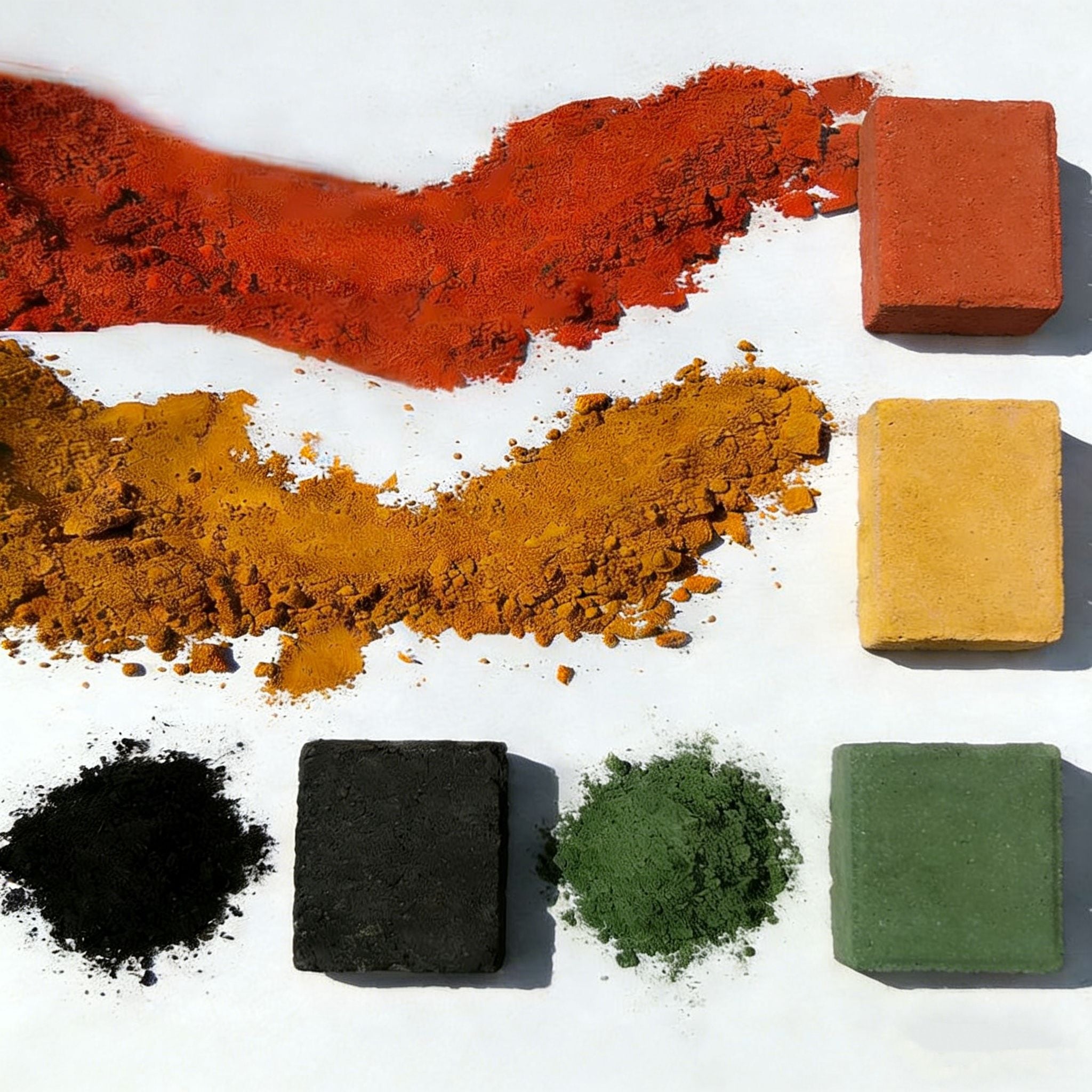
For example, widely accepted industrial standards specify that premium iron oxide red pigments should contain at least 95 percent Fe₂O₃ content. Maintaining this purity level requires controlled synthesis processes rather than simple mechanical grinding of natural mineral sources.
Synthetic iron oxide pigments offer a significant advantage in this regard because the manufacturing process allows precise control over chemical composition and impurity levels. Water-soluble substances are also strictly limited—typically below 0.5 percent—to ensure long-term coating durability and to prevent issues such as alkali bloom or reduced adhesion.
From a regulatory standpoint, consistent chemical composition is essential for compliance with global chemical inventories and substance registration systems. Stable composition ensures that iron oxide for paint can remain compliant across different regulatory jurisdictions over time.
Consistent Color and Thermal Stability
While color consistency may initially appear to be a performance consideration rather than a compliance requirement, it is closely linked to material integrity and regulatory transparency.
In coatings manufacturing, color variation between pigment batches must remain tightly controlled. Professional coatings producers typically require color difference values within ΔE ≤ 1.5 relative to the standard reference sample. Maintaining such tight tolerance requires stable particle size distribution and uniform crystal structure.
Particle size also plays a key role in pigment performance. A D50 particle size typically ranging between one and three micrometers ensures effective dispersion, high tinting strength, and strong hiding power within coating systems.
Thermal stability is another essential factor, particularly for coatings that undergo baking or curing processes. Standard testing procedures verify that pigments do not undergo color transformation or degradation when exposed to elevated temperatures during processing.
Stable physical and chemical properties therefore serve as an indirect indicator that the pigment’s composition is consistent and controlled—an essential prerequisite for regulatory compliance of iron oxide for paint products.
REACH Compliance: The Gateway to the European Market
Among global chemical regulations, the European Union’s REACH framework remains one of the most comprehensive and influential.
REACH, formally known as the Registration, Evaluation, Authorization and Restriction of Chemicals regulation (EC No. 1907/2006), requires manufacturers and importers to register chemical substances with the European Chemicals Agency before they can be placed on the European market.
For pigments used in coatings, REACH compliance ensures that the chemical substance has undergone appropriate safety evaluation and risk assessment. Suppliers must maintain valid registration numbers and provide documentation confirming that their substances are included within the relevant regulatory framework.
Another key requirement involves the identification and control of Substances of Very High Concern (SVHC). These substances are periodically added to a candidate list maintained by European regulators. Suppliers must provide formal declarations confirming that their products do not contain restricted SVHC substances above regulatory thresholds.
For buyers sourcing iron oxide for paint, verifying REACH documentation is an essential step in confirming that pigments can legally enter the European market without compliance barriers.
RoHS Directive: Ensuring Compliance for Electronics and Industrial Coatings
The Restriction of Hazardous Substances directive, commonly known as RoHS, was originally designed to regulate materials used in electronic and electrical equipment. Over time, its influence has expanded to affect a broad range of industrial supply chains.
RoHS restricts the presence of several hazardous substances, including lead, mercury, cadmium, and hexavalent chromium. Each of these substances has defined concentration limits within materials used in electronic devices.
Although pigments themselves are not electronic components, they may be incorporated into coatings applied to electronic equipment housings, printed circuit boards, or other components. In such applications, pigments used in coatings must meet RoHS thresholds to ensure that the final product remains compliant.
Verification typically requires laboratory testing using analytical techniques such as inductively coupled plasma spectroscopy. For coatings manufacturers, confirming RoHS compliance when sourcing iron oxide for paint helps ensure that their products remain suitable for electronics-related applications.
FDA Compliance: Requirements for Food Contact and Sensitive Applications
In the United States, regulatory oversight of pigments used in sensitive applications falls under the authority of the Food and Drug Administration.
Certain iron oxide pigments are permitted for use in specific regulated applications including food contact materials, pharmaceuticals, and cosmetic products. These permissions are defined within detailed regulatory provisions that specify the acceptable use conditions and impurity limits for each pigment category.
For example, pigments used in food contact materials must maintain extremely low heavy metal concentrations. In many cases, lead content must remain below 5 parts per million. Cosmetic applications require additional microbiological testing to ensure that pigments do not introduce microbial contamination into finished products.
Compliance documentation for FDA-regulated pigments must reference the appropriate sections of federal regulations that define allowable uses and impurity thresholds. Suppliers providing compliant iron oxide for paint materials for these applications must therefore maintain rigorous testing and documentation systems.
The Hidden Risks When Compliance Is Overlooked
Ignoring regulatory requirements can create severe financial and reputational consequences for coatings exporters.
In the toy industry, pigments containing excessive lead have triggered product recalls and legal liability for manufacturers whose coatings failed safety tests. In the electronics sector, non-compliant coatings have resulted in customs detentions and regulatory warnings that disrupt supply chains.
Food packaging applications present particularly high risks. If pigments used in printing inks or coatings fail to meet regulatory thresholds, entire shipments of packaging materials may be rejected or recalled.
Industry testing data indicates that a small but significant percentage of pigment samples still fail heavy metal compliance thresholds each year. Although the proportion may appear low, the potential cost of a single failed shipment can be extremely high.
For companies sourcing iron oxide for paint, proactive compliance verification is therefore far more cost-effective than addressing regulatory issues after products have entered the export chain.
Verifying Supplier Compliance
Ensuring regulatory compliance begins with careful supplier evaluation. Procurement teams should request a comprehensive compliance documentation package that includes REACH registration information, RoHS laboratory testing reports, and formal regulatory compliance statements relevant to FDA regulations when applicable.
It is also important to confirm that laboratory testing methods correspond to recognized regulatory standards. Analytical methods used for heavy metal detection should match the requirements specified by relevant regulatory frameworks.
Finally, establishing a batch traceability system is essential. Suppliers should provide documentation confirming that each shipment meets regulatory limits and that samples from each production batch are retained for verification if questions arise later in the supply chain.
Why Partner with Us: Compliance Built Into the Manufacturing Process
At Hebei Tianhuibao Technology Co., Ltd., regulatory compliance is integrated directly into our pigment production and quality management systems.
Our manufacturing process emphasizes strict impurity control, stable synthesis technology, and continuous monitoring of heavy metal content. Each production batch undergoes analytical testing to verify compliance with international regulatory thresholds relevant to iron oxide for paint applications.
We maintain comprehensive traceability records covering raw material sourcing, production parameters, and finished product testing results. This documentation enables customers to verify the regulatory status of each shipment and simplifies compliance verification during export procedures.
In addition, our technical team continuously monitors updates to global regulatory frameworks to ensure that our pigment products remain aligned with evolving requirements in major international markets.
Conclusion: Compliance Is the Foundation of Global Market Access
As environmental and safety regulations become increasingly strict worldwide, pigment compliance has become a decisive factor in determining whether coatings products can enter international markets.
Selecting a supplier capable of meeting the requirements of REACH, RoHS, and FDA frameworks significantly reduces regulatory risks and protects the long-term stability of export supply chains. For manufacturers and procurement managers working with iron oxide for paint, compliance verification should therefore be treated as an essential step in supplier selection.
Companies seeking reliable, fully documented pigment solutions are welcome to connect with Hebei Tianhuibao Technology Co., Ltd. Our team can provide detailed compliance documentation, batch-specific testing reports, and technical consultation to support coating manufacturers navigating complex global regulatory environments.

 Hot News