 ×
×
In most industrial procurement discussions, one metric tends to dominate the conversation: the iron oxide price per ton. It is simple, measurable, and easy to compare across suppliers. For many purchasing managers, this single number becomes the starting point—and often the ending point—of supplier evaluation.
However, professionals with extensive experience in pigment sourcing understand that price is only the visible portion of the cost structure. The real financial impact of a pigment is determined during production and application, not during purchasing. A pigment that appears inexpensive at the procurement stage can easily become the most expensive option once it enters the production line.
Consider a typical scenario in coatings, plastics, or concrete manufacturing. A pigment priced $200 lower per ton may initially seem attractive. Yet if that pigment exhibits poor dispersion, inconsistent batch quality, or inadequate impurity control, the downstream consequences can include production downtime, rejected batches, color inconsistency, and customer complaints. In extreme cases, regulatory non-compliance or product recalls can multiply the real cost far beyond the original savings.
This is precisely where the value of a provincial-level research and development center becomes evident. A well-equipped R&D center transforms iron oxide pigments from commodity materials into technically validated application solutions. Instead of merely supplying pigments, the manufacturer provides measurable performance assurance, consistent quality control, and application-specific optimization.
At Hebei Tianhuibao Technology Co., Ltd., the provincial R&D center serves as the technological foundation behind every product we deliver. It ensures that when customers evaluate the iron oxide price per ton, they are not only purchasing a pigment—but also gaining access to a system of technical expertise, testing capabilities, and application support that significantly reduces total lifecycle costs.
A pigment supported by a professional R&D infrastructure differs fundamentally from a generic commodity product. The difference lies in measurable technical parameters that directly influence application performance.
One of the most critical parameters for high-performance iron oxide pigments is chemical purity and impurity control. In many industrial applications, iron oxide pigments must meet strict requirements for Fe₂O₃ content, water-soluble salts, and heavy metal concentrations.
High-grade iron oxide pigments typically contain Fe₂O₃ levels above 95%, while water-soluble salts are maintained below approximately 0.3–0.5%. Heavy metals such as lead, cadmium, mercury, and hexavalent chromium must also remain within strict regulatory limits. These parameters are not simply quality metrics; they directly affect weather resistance, chemical stability, and regulatory compliance.
Achieving this level of control requires advanced analytical equipment such as atomic absorption spectroscopy (AAS) and inductively coupled plasma optical emission spectroscopy (ICP-OES). Within a provincial R&D environment, these instruments allow precise monitoring of trace impurities throughout the production process.
The value of this capability becomes particularly clear in regulated industries. Applications involving high-end coatings, plastics used in consumer products, pharmaceutical intermediates, or materials in contact with food must comply with international standards. Pigments that meet these requirements enable manufacturers to access global markets while avoiding regulatory risks.
Therefore, when evaluating the iron oxide price per ton, purity is not simply a chemical specification—it represents market access, product durability, and regulatory security.
Another critical factor that separates commodity pigments from advanced materials is particle size distribution. The dispersion behavior, tinting strength, and stability of iron oxide pigments depend heavily on the uniformity of particle size.
High-quality pigments often maintain 45 μm sieve residue below 0.05%, with an average particle size typically ranging from 0.1 to 0.4 micrometers. Achieving this consistency requires continuous monitoring through laser particle size analyzers and controlled synthesis processes.
A well-designed particle size distribution produces several measurable advantages. First, it improves pigment dispersion within the application medium, whether that medium is a polymer melt, a coating resin system, or a cement matrix. Improved dispersion means shorter mixing times and lower energy consumption during production.
Second, optimized particle size enhances color strength and tinting efficiency. When particles disperse uniformly, the pigment surface interacts more effectively with light, resulting in stronger coloration. As a result, manufacturers often require lower dosage levels to achieve the same color intensity.
This reduction in dosage directly affects cost calculations. Even if the iron oxide price per ton appears higher, the actual cost per application may remain equal or even lower because the required pigment quantity decreases.
A provincial R&D center also enables surface modification technologies, which significantly expand the functional capabilities of iron oxide pigments.
Surface treatments can alter several key parameters, including dispersibility, oil absorption, heat resistance, and compatibility with specific resin systems. In plastics and coatings applications, these modifications allow pigments to integrate more efficiently into the formulation, improving both performance and processing stability.
Beyond traditional pigment functions, advanced surface engineering can introduce functional properties such as catalytic activity, magnetic behavior, or enhanced thermal stability. These specialized materials are increasingly used in emerging industries including advanced batteries, catalysts, electronic materials, and specialty chemicals.
Functional iron oxide pigments naturally command higher prices compared with general-purpose construction-grade pigments. However, their value lies in the performance output per unit of material, which can be dramatically higher than conventional pigments.
From a procurement perspective, this is where technical differentiation begins to outweigh simple price comparison.
One of the most practical benefits of a provincial R&D center is the ability to simulate real-world application environments before large-scale production begins.
Industrial pigments behave differently depending on the formulation and processing method used by each manufacturer. For example, the performance of a pigment in water-based coatings differs significantly from its behavior in solvent-based systems. Similarly, pigment dispersion in plastic extrusion lines or concrete mixing systems involves unique mechanical and chemical conditions.
Within the R&D facilities of Hebei Tianhuibao Technology Co., Ltd., application laboratories replicate these industrial environments through testing systems designed for coatings evaluation, concrete pigmentation, polymer compounding, and ceramic firing processes. This capability allows technical teams to analyze pigment performance under conditions closely resembling the customer's actual production process.
The practical value of such testing is substantial. Customers can verify pigment compatibility before committing to bulk procurement, minimizing the risk of large-scale material mismatches. When application issues arise, engineers can reproduce the problem in the laboratory environment and identify the root cause quickly.
For manufacturers developing new products, the R&D center also functions as a technical partner in formulation development, accelerating the time required to bring new materials to market.
A genuine research center does not operate as a passive testing department. Instead, it serves as a collaborative development platform between the pigment manufacturer and the customer.
Industrial applications vary widely in their technical requirements. Color tone adjustments, oil absorption characteristics, dispersion properties, and particle size distribution must often be fine-tuned to match specific production equipment and formulations. Through collaborative development, engineers can adjust pigment properties to meet precise performance targets.
For example, color matching in industrial coatings often requires precise control of L*a*b* color parameters to maintain brand consistency. In polymer processing, reducing pigment oil absorption can significantly decrease resin consumption, lowering overall material costs. Particle size distribution can also be optimized for specific mixing equipment to ensure stable dispersion without filtration issues.
Such customization transforms pigments from standardized commodities into tailored functional materials designed for a specific manufacturing ecosystem.
At Hebei Tianhuibao Technology Co., Ltd., the provincial R&D center supports this collaborative process by combining laboratory experimentation with field-level application knowledge. The goal is not merely to supply pigments, but to deliver optimized pigment solutions aligned with customer production processes and cost targets.
Another often overlooked advantage of an advanced R&D infrastructure is its role in quality stability and traceability management.
Pigment applications are highly sensitive to batch consistency. Even minor variations in particle size, impurity levels, or moisture content can lead to visible color differences in finished products. In industries such as coatings or construction materials, inconsistent pigment batches can force manufacturers to repeatedly adjust formulations, increasing both labor and material waste.
Within a research-driven quality system, every production batch undergoes comprehensive inspection. Key indicators such as color deviation, tinting strength, sieve residue, and water-soluble salts are monitored continuously. Sample retention systems allow each batch to be traced and re-evaluated if necessary.
Stable quality provides an operational advantage that extends beyond laboratory measurements. When pigment properties remain consistent, production lines can operate without constant adjustments. Equipment downtime decreases, formulation stability improves, and manufacturing throughput increases.
These operational benefits rarely appear in the initial procurement price but contribute significantly to the true economic value of a pigment supplier.
To understand the real economics of pigment procurement, it is useful to move beyond the concept of iron oxide price per ton and instead evaluate cost per application.
Consider a simplified example in concrete coloration. A general-grade pigment priced at $800 per ton may require approximately 8% dosage to achieve the desired color strength. A higher-performance pigment priced at $1000 per ton might deliver stronger tinting power, allowing the dosage to drop to around 6.8%.
On the surface, the premium pigment appears more expensive. Yet once dosage efficiency, dispersion performance, production stability, and regulatory compliance are considered, the overall financial difference becomes minimal—and often favorable.
Furthermore, the premium pigment may reduce mixing time, improve color consistency across batches, and support international regulatory standards that enable product exports. These advantages create hidden economic returns that extend far beyond the original price difference.
In practice, the most cost-effective pigment is often not the cheapest per ton, but the one that minimizes total production cost while maximizing product reliability.
Certain industries benefit particularly strongly from R&D-driven pigment solutions.
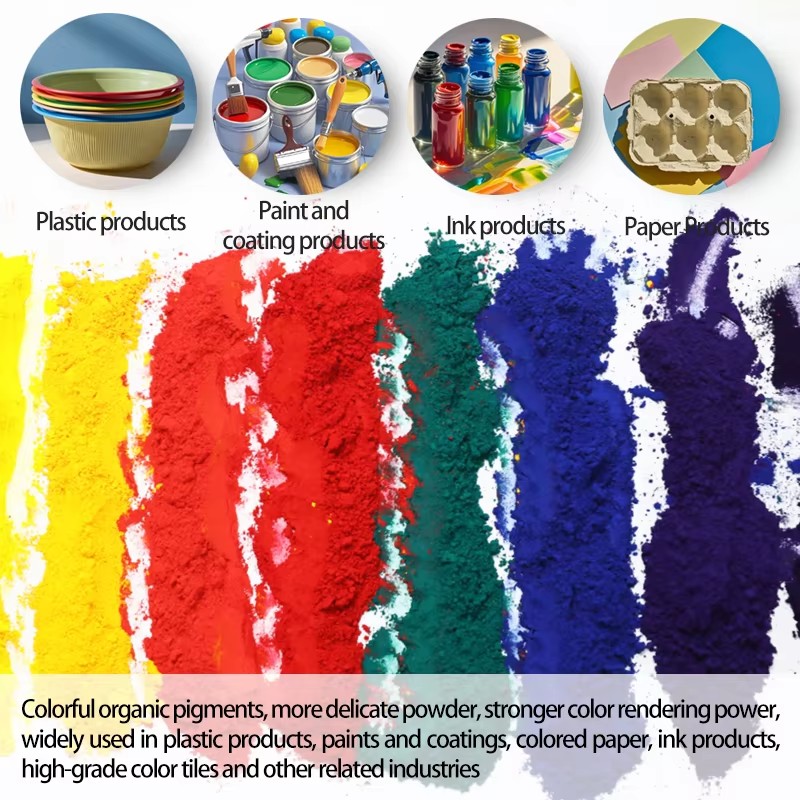
High-end coatings require excellent weather resistance, chemical stability, and compliance with strict performance standards. Plastics and masterbatch manufacturing demand pigments capable of withstanding high processing temperatures while maintaining dispersion stability. Construction materials such as concrete rely on pigments that resist alkali environments and maintain color stability over long service periods.
In emerging sectors—including energy materials, pharmaceutical intermediates, cosmetics, and catalytic processes—pigment performance becomes even more specialized. These applications often require customized functional materials rather than general-purpose pigments.
A provincial R&D center enables manufacturers to support this wide spectrum of technical requirements through targeted formulation development and application testing.
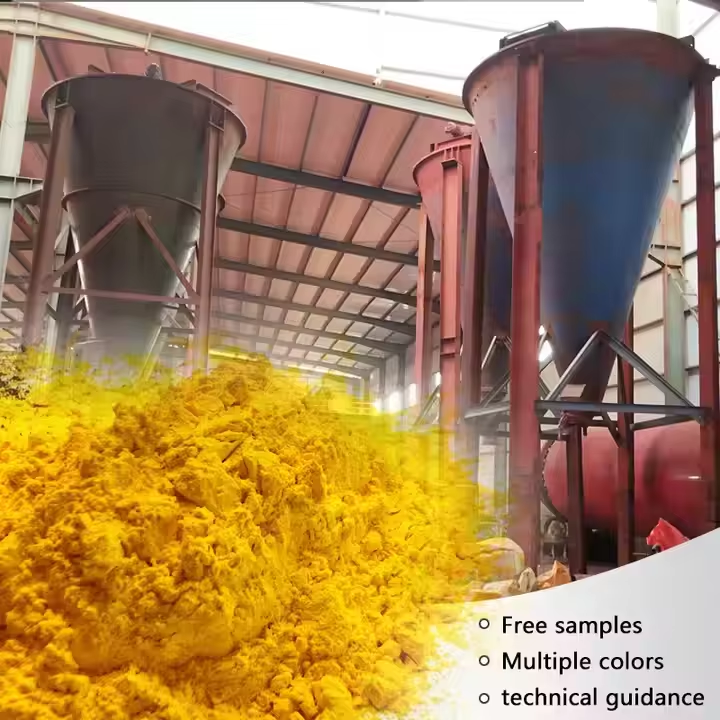
At Hebei Tianhuibao Technology Co., Ltd., technological innovation forms the core of our product strategy. Our provincial-level R&D center is equipped with advanced analytical instruments and application laboratories that support comprehensive pigment research, quality control, and formulation development.
Our technical team brings extensive industry experience in pigment chemistry, application engineering, and process optimization. Through continuous collaboration with research institutions and industrial partners, we maintain a strong foundation in both fundamental materials science and real-world manufacturing requirements.
Customers working with our team gain access to application testing services, customized pigment development, and full batch traceability systems. From initial sample evaluation to large-scale production implementation, our engineers provide continuous technical support to ensure reliable performance in every stage of the product lifecycle.
This integrated approach allows us to deliver not only competitive iron oxide products, but also long-term technical value for our partners.
The iron oxide price per ton is only the most visible part of a much larger equation. Beneath that number lies a complex network of factors—chemical purity, particle engineering, application compatibility, production stability, and regulatory compliance—that ultimately determine the true cost of using a pigment.
A provincial R&D center reveals and manages these hidden variables. By combining scientific analysis, application testing, and collaborative development, it transforms iron oxide pigments into optimized industrial solutions.
For procurement professionals and technical managers alike, the most important question is no longer simply “What is the price per ton?” but rather “What value does each ton deliver in real production conditions?”
If you are evaluating iron oxide pigments for your next project, the team at Hebei Tianhuibao Technology Co., Ltd. welcomes the opportunity to support your application.
Share your production challenges with us, request technical samples with full performance data, or connect with our engineers to explore how R&D-driven pigment solutions can help reduce your total production cost while improving product performance.
 Hot News
2026-09-04
2026-01-03
2026-01-01
2026-01-07
 EN
EN