 ×
Colored concrete is increasingly used in architectural and landscaping projects where appearance is an important part of the finished product. From paving blocks and concrete tiles to precast panels and decorative concrete, manufacturers can use inorganic pigments to introduce stable colors directly into cement-based materials.
Among the different types of pigments available, iron oxide pigments are widely used for coloring concrete and other cement-based products because they are suitable for the alkaline environment of cement and can provide durable, consistent colors when properly formulated and mixed.
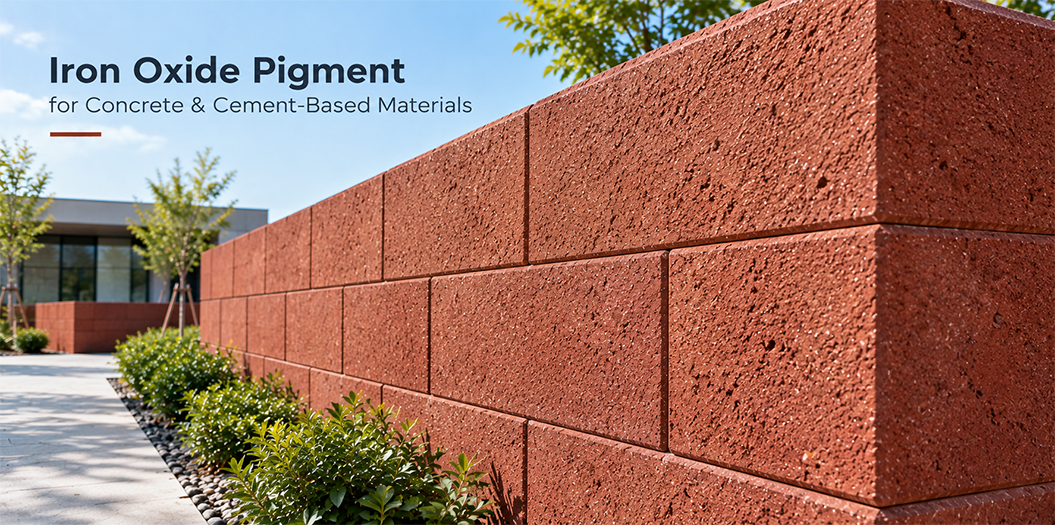
Iron oxide pigments are commonly added to concrete mixtures to produce colored building products rather than applying color only to the surface.
Typical applications include:
Colored concrete
Concrete paving blocks
Interlocking pavers
Cement bricks
Concrete tiles
Roof tiles
Precast concrete products
Architectural concrete panels
Decorative concrete
Terrazzo and other cement-based products
These applications are especially common in landscaping, residential construction, commercial projects and architectural products where manufacturers want to combine the appearance of natural colors with the performance of concrete.
Concrete creates a demanding environment for colorants. Cement-based materials are highly alkaline, and outdoor products may also be exposed to sunlight, rain, temperature changes and moisture.
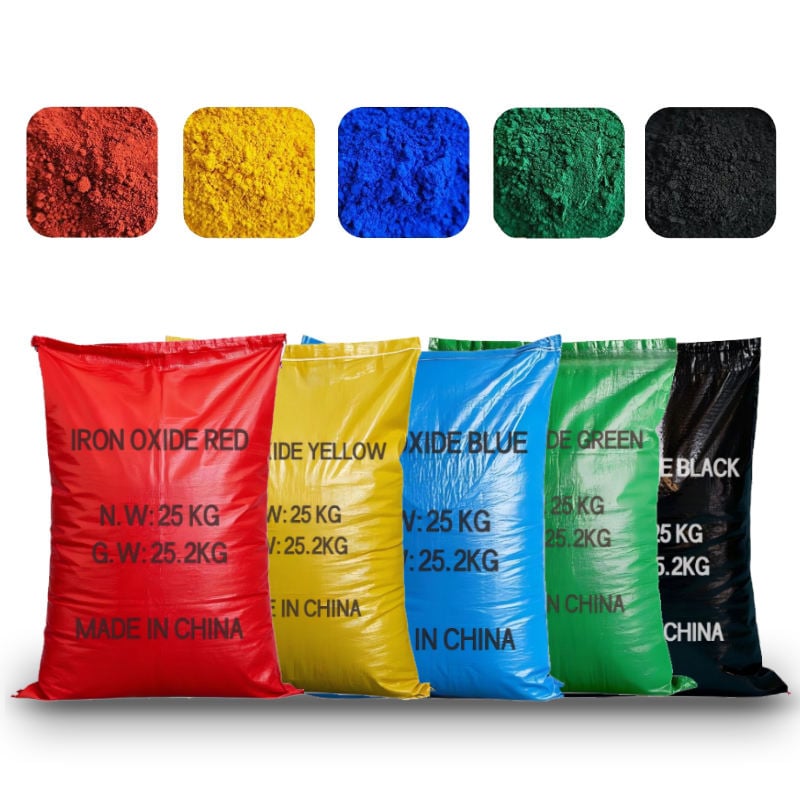
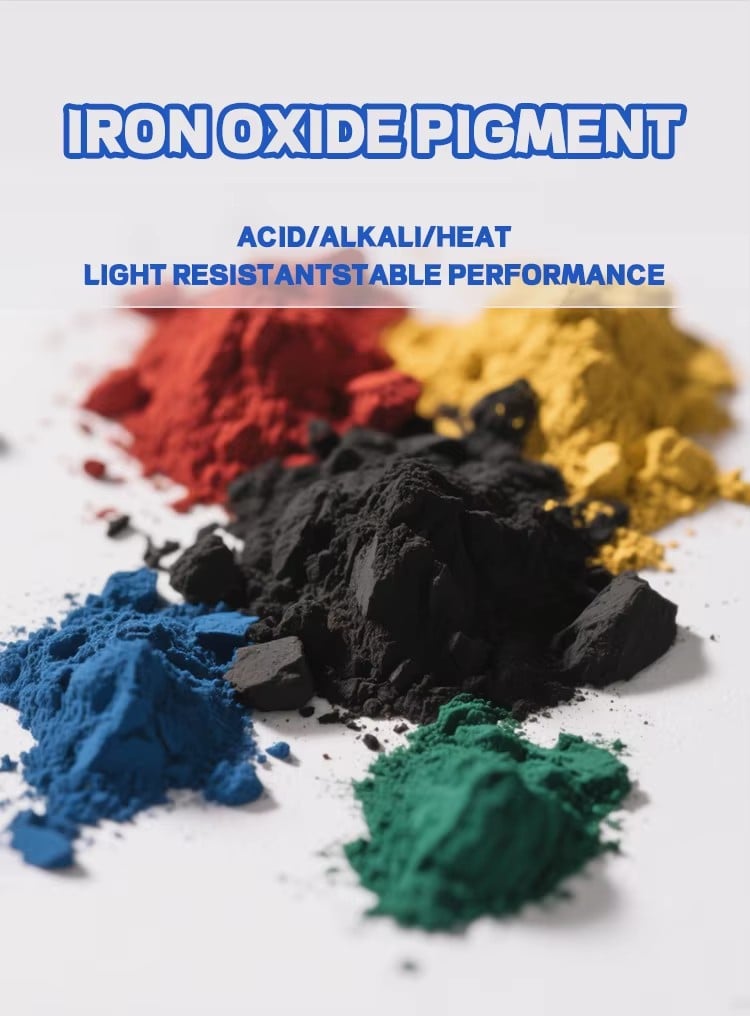
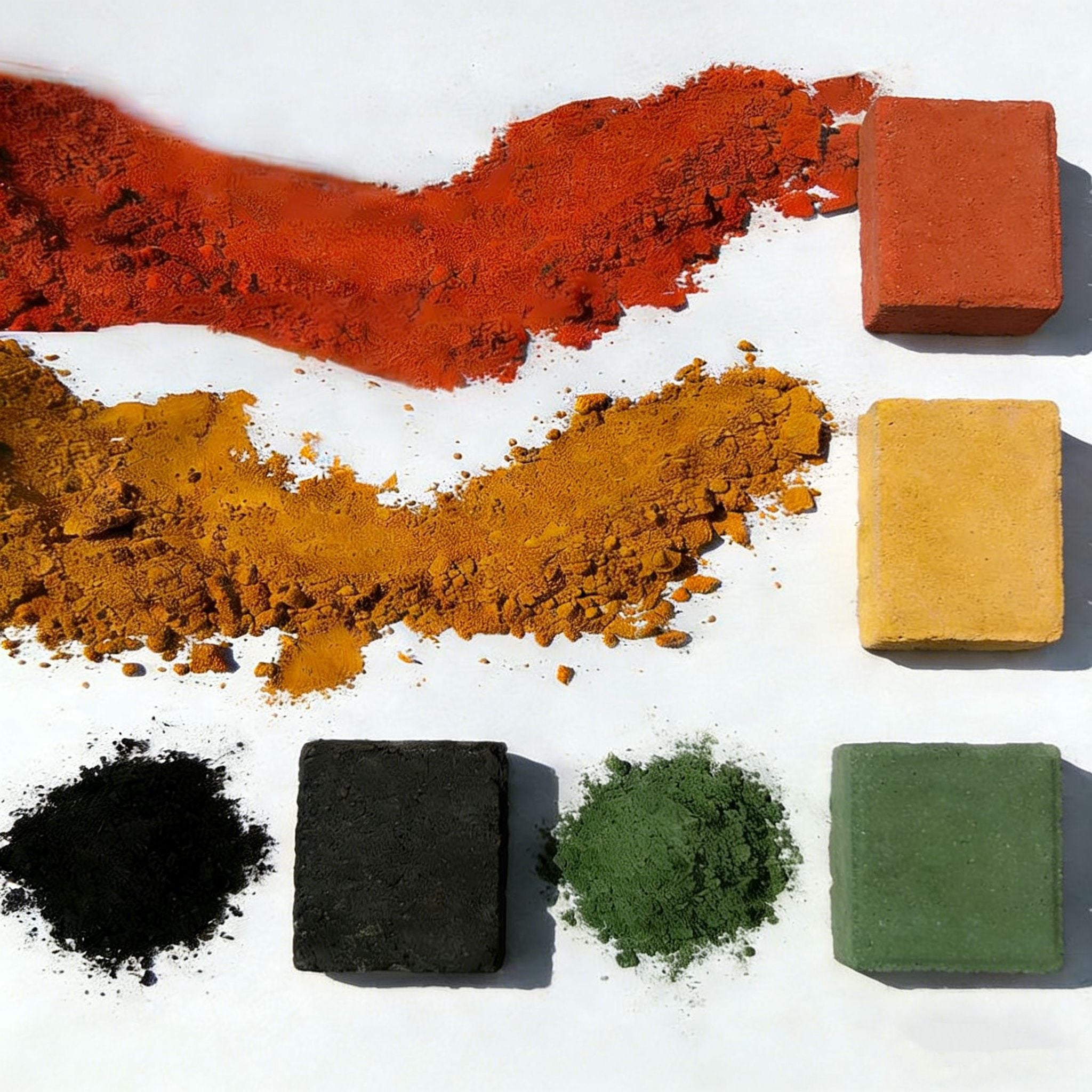
Iron oxide pigments are inorganic pigments and are widely used in cement-based applications because of their chemical stability and resistance to outdoor exposure. Manufacturers of concrete coloring products commonly select iron oxide pigments for red, yellow, black, brown and related earth-tone shades.
Another important advantage is that the pigment is incorporated into the concrete mixture rather than forming a thin coating on the surface. When the pigment is properly dispersed, the resulting color is distributed throughout the cement matrix.
This makes iron oxide pigments particularly useful for products such as paving blocks, bricks and precast concrete elements where the color is part of the material itself.

In typical concrete coloring processes, pigment dosage is calculated according to the weight of cement or binder, rather than the total weight of the concrete mixture.
A simplified example:
If a formulation contains 100 kg of cement and the selected pigment dosage is 4%, approximately 4 kg of pigment would be added.
The actual dosage depends on several factors, including the pigment grade, desired color intensity, cement type, formulation and production process.
Industry references commonly report pigment dosage ranges around 1–5% of binder or cement content, while some applications use higher levels depending on the required shade.
For this reason, manufacturers should not simply increase pigment dosage to obtain a darker color. A laboratory or small-batch trial is recommended before moving to full-scale production.
Pigment dosage has a direct influence on the final color intensity.
Generally:
Lower dosage → lighter or softer color
Higher dosage → deeper or stronger color
However, increasing the amount of pigment does not necessarily produce a proportional increase in color intensity. Pigment saturation can occur, meaning that additional pigment may provide limited visual improvement while increasing material consumption.
Concrete producers therefore need to balance color intensity, formulation performance and production cost.
The exact optimum dosage should be determined through testing because different pigment grades, cement types and formulations can produce different results.
The color of the cement base can significantly affect the final appearance of pigmented concrete.
For example, white cement generally provides a cleaner and brighter base for colored concrete, while gray cement can produce darker or more muted shades.
The same iron oxide pigment can therefore produce noticeably different results depending on the cement used.
Other factors can also affect the final color, including:
Pigment dosage
Water-to-cement ratio
Aggregate color
Pigment dispersion
Mixing time
Curing conditions
Surface finishing
A color sample should therefore be tested under the actual production conditions before a large order or long-term production run.
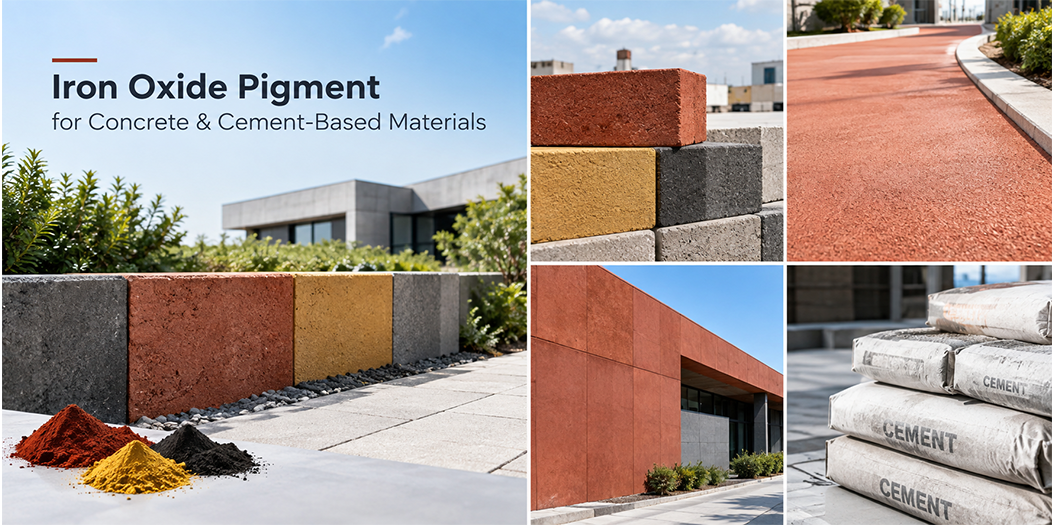
Colored paving blocks are one of the most common applications. Red, yellow, black and brown pigments can be used to create different architectural and landscaping styles.
Consistent pigment dispersion is particularly important because visible differences between production batches can result in noticeable color variation between paving units.
Iron oxide pigments can be incorporated into concrete bricks and blocks to create colored masonry products for residential, commercial and landscaping applications.
The pigment dosage and mixing process should remain consistent between batches to maintain a uniform appearance.
Colored concrete roof tiles can use iron oxide pigments to achieve different architectural colors. Since roof tiles are exposed to outdoor conditions, pigment stability and consistent production are important considerations.
Precast panels, architectural elements and decorative concrete products can also be colored with iron oxide pigments. Depending on the design, manufacturers may use subtle earth tones or stronger colors.
Iron oxide pigments are also used in decorative cement-based products where color forms part of the overall architectural design.
For manufacturers producing colored concrete on a regular basis, consistency is often more important than simply achieving a strong color.
Several production factors should be controlled:
1. Use a consistent pigment grade
Changing pigment grades can change the final shade, tinting strength and processing behavior.
2. Maintain consistent dosage
The pigment should be weighed accurately for every batch.
3. Ensure good dispersion
Pigment should be distributed evenly throughout the dry or wet mixture according to the production process.
4. Keep the concrete formulation consistent
Changes in cement, aggregate, water or additives can affect the final color.
5. Test samples before mass production
A small test batch allows manufacturers to compare the cured color before applying the formulation to a large production run.
Research on pigmented concrete has also shown that increasing pigment content can influence fresh concrete properties such as slump and slump flow, which is another reason to evaluate pigment dosage together with the overall concrete formulation rather than treating color as an isolated variable.
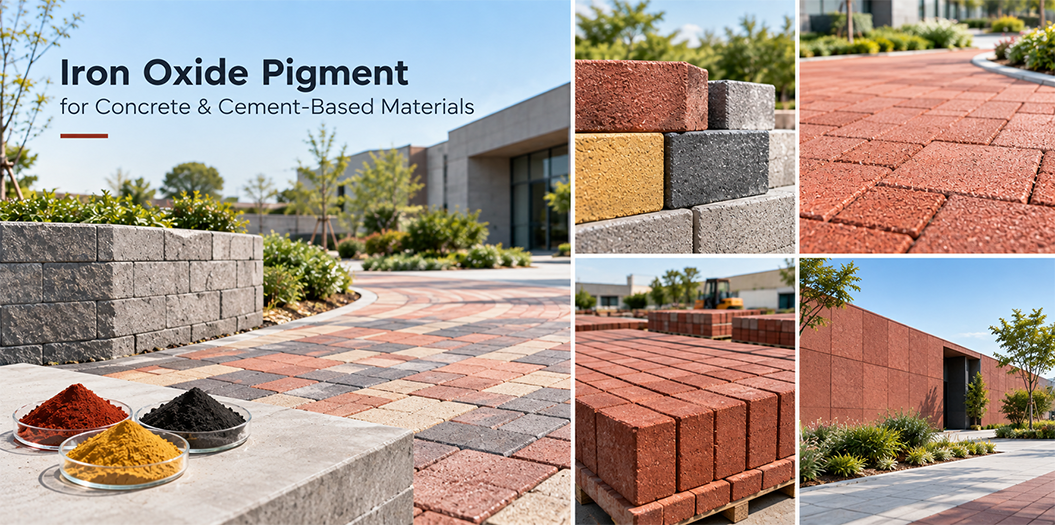
When selecting an iron oxide pigment for concrete, manufacturers should consider more than the basic color name.
Important factors include:
Required final color
Tinting strength
Pigment dosage
Cement color
Dispersion performance
Light and weather exposure
Compatibility with the concrete formulation
Batch-to-batch color consistency
Production cost
A sample test using the customer's actual cement and formulation is one of the most practical ways to evaluate the final result.
Iron oxide pigments provide a practical way to add color to concrete and other cement-based products. Their applications range from paving blocks and concrete bricks to roof tiles, precast panels and decorative concrete.
For manufacturers, achieving a good result is not simply a matter of adding more pigment. The final color depends on pigment grade, dosage, cement color, formulation, dispersion and curing conditions.
By controlling these factors and testing the pigment before full-scale production, manufacturers can achieve more consistent and predictable colored concrete products.
Looking for iron oxide pigments for concrete, paving blocks or other construction materials? Contact us for product information, samples and bulk supply options.
 Hot News
2026-10-10
2026-10-08
2026-09-17
2026-09-11
2026-09-10
2026-09-04
 EN