 ×
×
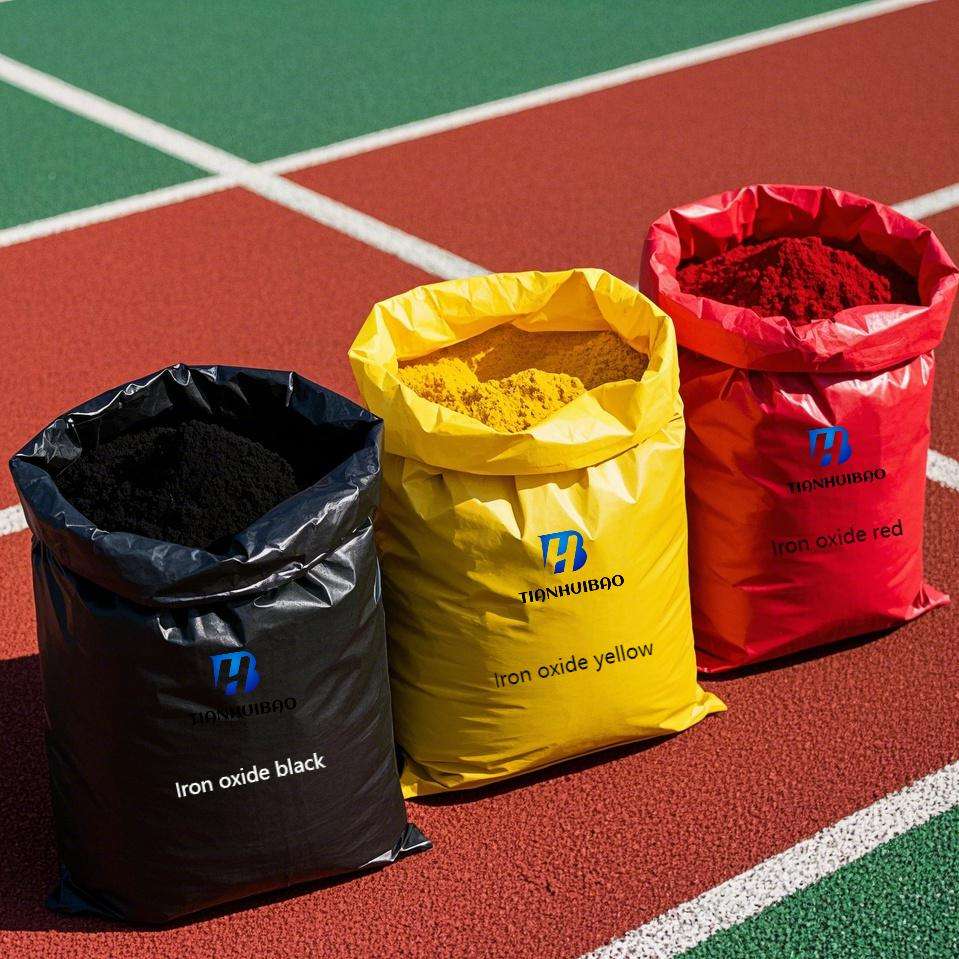
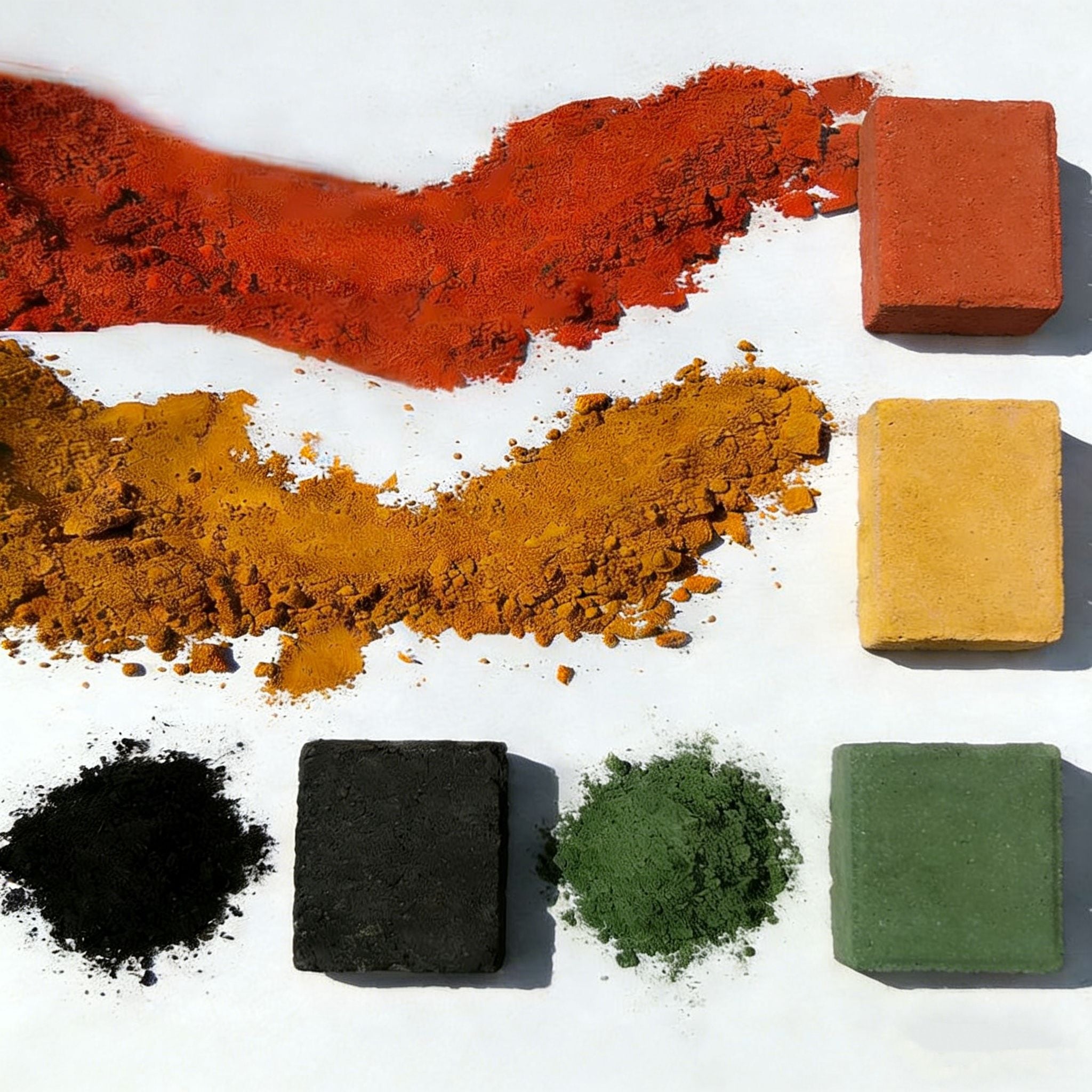
Plastic and rubber products cover massive downstream markets from outdoor construction accessories, sports facilities, auto spare parts to daily consumer goods. Selecting stable, cost-effective colorants is critical for mass production. Iron oxide series pigments (red, yellow, black, brown, composite green) have become one of the most popular inorganic coloring solutions for polymer materials across global markets.
Unlike bright-toned organic pigments, iron oxide pigments deliver earth-tone color range, outstanding weather resistance, good chemical inertness and competitive bulk-price advantage. This article breaks down detailed sub-segments within plastics & rubber industries, and explains why so many manufacturers prefer iron oxide pigments for their formulations, as well as practical limitations for reference.
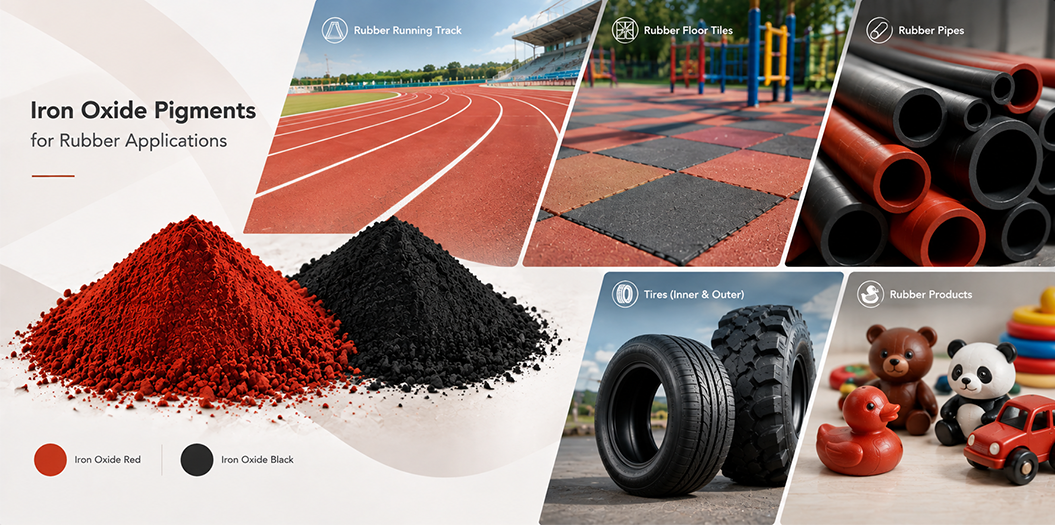
Iron oxide pigments work well in both vulcanized rubber and thermoplastic elastomer systems. They will not interfere with normal rubber vulcanization process, and provide auxiliary anti-aging effect for outdoor rubber goods.
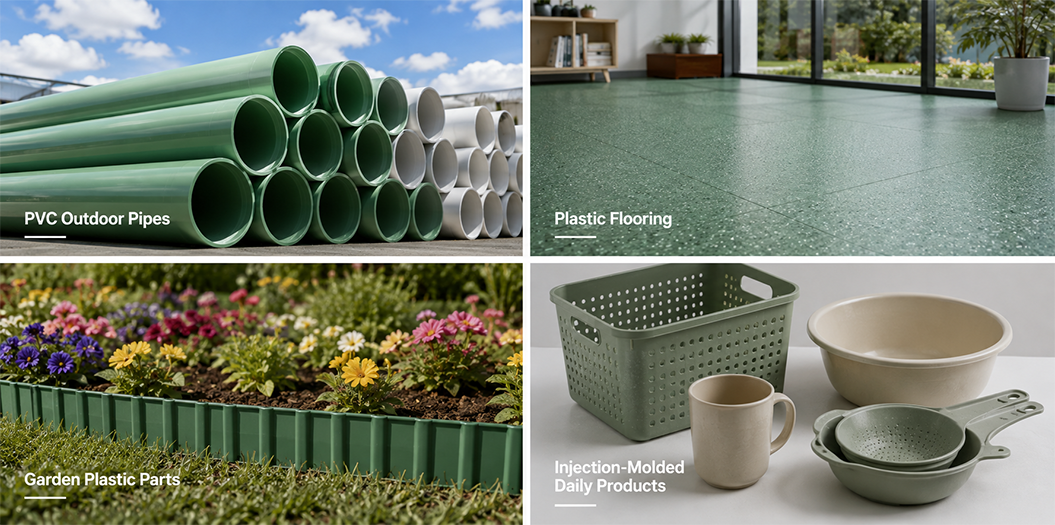
Iron oxide pigments fit most general-purpose thermoplastics and thermosetting plastics. Note: processing temperature must match pigment heat-resistance limit to avoid color shift.
Important reminder: Composite iron oxide green 5605 /561B has max working temperature ≤ 200℃. Not fit for hightemperature engineering plastics with processing temperature above 200 ℃. Iron oxide yellow will lose crystal water and turn reddish under excessive heat.
1. Excellent light fastness & outdoor weather resistance Iron oxide pigments have strong UV-shielding effect. For plastic and rubber goods used outdoors, they greatly reduce fading, chalking and discoloration caused by sunlight, rain and ozone erosion. This is the top-ranked reason for sports flooring, outdoor pipe and WPC producers to select iron oxide pigments.
2. Low color-migration risk As inorganic solid pigment, iron oxide will hardly bleed or migrate inside polymer matrix. It will not stain contact-surface of finished parts, which is critical for sealing parts, multi-layer plastic products and long-life rubber goods.
3. Good chemical stability Resistant to weak alkali, water and common solvents. It keeps stable color performance when rubber or plastic contacts daily chemical, cement and alkaline environment. It does not react with most rubber vulcanizing agents.
4. High tinting strength with economic cost High tinting strength and hiding power, low addition dosage (normally 0.5-2% by weight). Compared with high-performance organic pigments and mixed-metal oxide inorganic pigments, iron oxide brings obvious cost advantage for large-batch industrial production.
5. Safe & eco-friendly, global-certified Qualified iron oxide pigments can meet REACH, RoHS requirements, low heavy-metal content. Safe for toys, household consumer articles and general-contact-level polymer products.
6. Good dispersion for polymer processing Well-milled industrial-grade iron oxide pigments can be evenly dispersed in rubber mixing and plastic extrusion/injection processes. It can be directly used for dry-mixing or further processed into color masterbatch.
Iron oxide pigments are not universal for all polymer scenarios:
Best practice: Always run smallscale formulation test before mass production, verify color tone, heat compatibility and mechanical property influence.
Q1: Can iron oxide pigments be used for EPDM rubber granule for playgrounds? A1: Yes. Iron oxide red, black, brown and iron oxide green 5605 are widely applied for EPDM rubber granules. Please confirm processing temperature stays within pigment heat-resistance range.
Q2: What dosage of iron oxide pigment is commonly used in plastics & rubber? A2: Typical dosage ranges from 0.5 %-2 % based on polymer weight. Increase dosage for deeper color; small-batch trial test is recommended.
Q3: Will iron oxide pigment affect rubber vulcanization performance? A3: Standard-quality iron oxide pigment will not disturb vulcanization. Select low-copper, low-manganese grades for high-end rubber products to prevent potential ageing acceleration.
Q4: Can composite iron oxide green 5605 be used for high-temperature injection-molded engineering plastic? A4: No. Its maximum working temperature is ≤ 200℃. For processing temperature above 200℃, please choose other high-heat-resistant pigment solutions.
Q5: Is surface-modified iron oxide pigment better for plastic masterbatch? A5: Yes. Surface-treated iron oxide delivers better dispersion and compatibility with polymer resin, reduces speckle risk during masterbatch production.
Iron oxide pigments occupy an irreplaceable position in plastics and rubber industries, balancing weather performance, chemical stability and bulk-supply cost. With multiple sub-grades for rubber tracks, outdoor plastic profiles, masterbatch and consumer goods, it is the preferred earth-tone coloring solution for global polymer manufacturers.
If you need iron oxide pigment samples, specification sheets or bulk quotation for plastic & rubber formulations, please contact our sales team.
 Hot News
2026-10-10
2026-10-08
2026-09-17
2026-09-11
2026-09-10
2026-09-04
 EN
EN