 ×
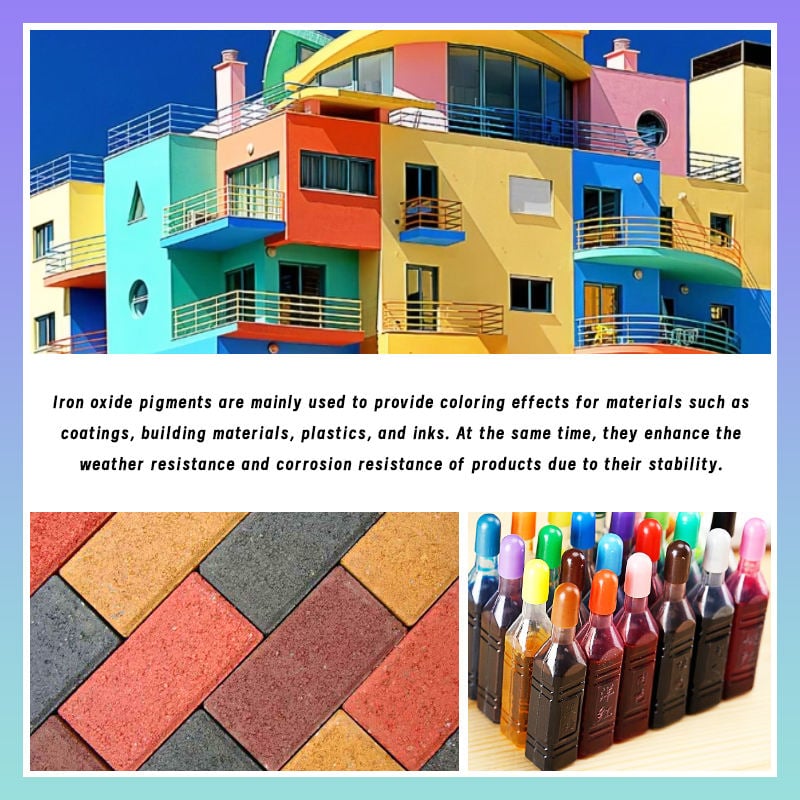
A white bloom on a red paving tile is usually reported as a colour problem. It is a salt-transport problem. Efflorescence in colored concrete is the deposit left behind when water carrying dissolved salts reaches the concrete surface and evaporates. The pigment is not the salt, and in most cases it is not the cause — but its water-soluble content is a parameter that can be specified on a number and tested, which makes it one of the few parts of this problem a supplier can be held to.
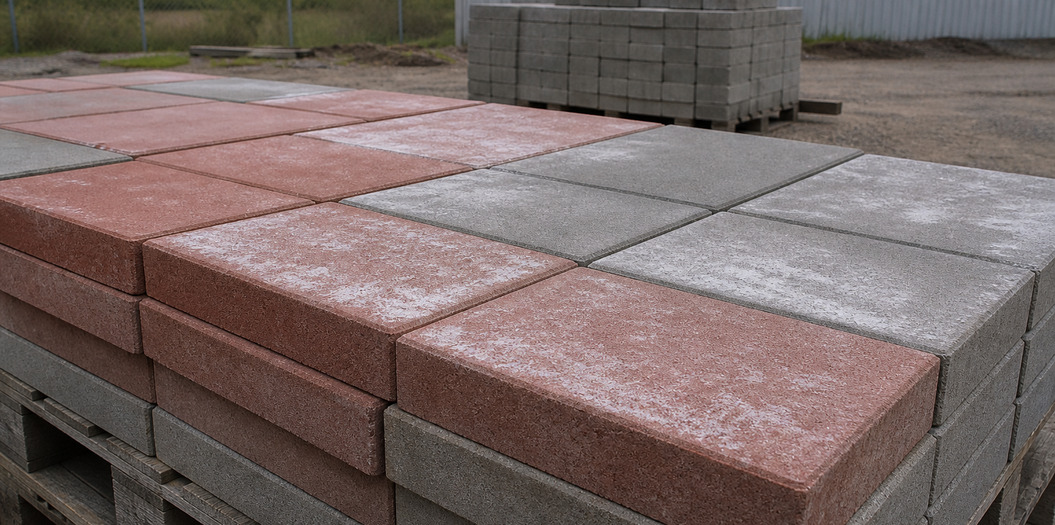
Efflorescence forms in three steps, and all three have to happen: soluble salts present in the pore water; water migrating to an evaporation surface by capillary flow and diffusion; and evaporation that leaves the salts to crystallise. Remove any one of the three and no bloom appears — which is why this is a moisture-and-salt problem, not a colouring problem.
The salt most commonly reported in concrete efflorescence is calcium carbonate. Free lime — calcium hydroxide, Ca(OH)2 — is released as cement hydrates, dissolves in the pore water, travels to the surface and reacts there with atmospheric carbon dioxide to form calcium carbonate (CaCO3), which has low solubility and precipitates as the white deposit. Sulfates and chlorides appear too, where the materials or the mix water bring them in.
Three white surface conditions get confused with each other, and they have different causes:
| Condition | What it is | How it behaves |
|---|---|---|
| Efflorescence | Water-soluble salt crystallised at the surface | Removable; returns if salts and moisture remain |
| Laitance | Weak layer of cement paste and fines brought up by bleeding | Does not dissolve; removed by finishing |
| Surface dusting | Fine powder from a surface that was over-wetted or over-trowelled | Mechanical wear, not a salt deposit |
Only the first is a salt-transport problem. Efflorescence is also described in two phases: primary, during manufacture and curing where units are cured wet or stored with poor air movement, and secondary, later in service, driven by water entering from outside — rain, irrigation, rising damp or wash-down.
On grey concrete a thin white deposit reads as a slightly lighter patch. On a red, black or brown pigmented surface the same deposit is a high-contrast mark, so the tolerance in the buyer's eye is much tighter. The deposit has not changed; its visibility has.
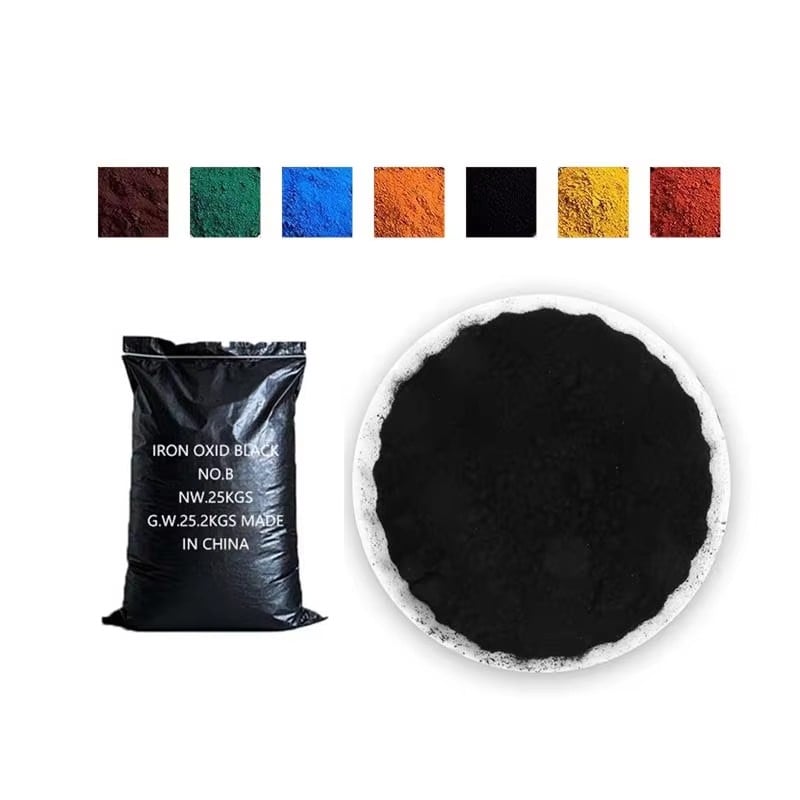
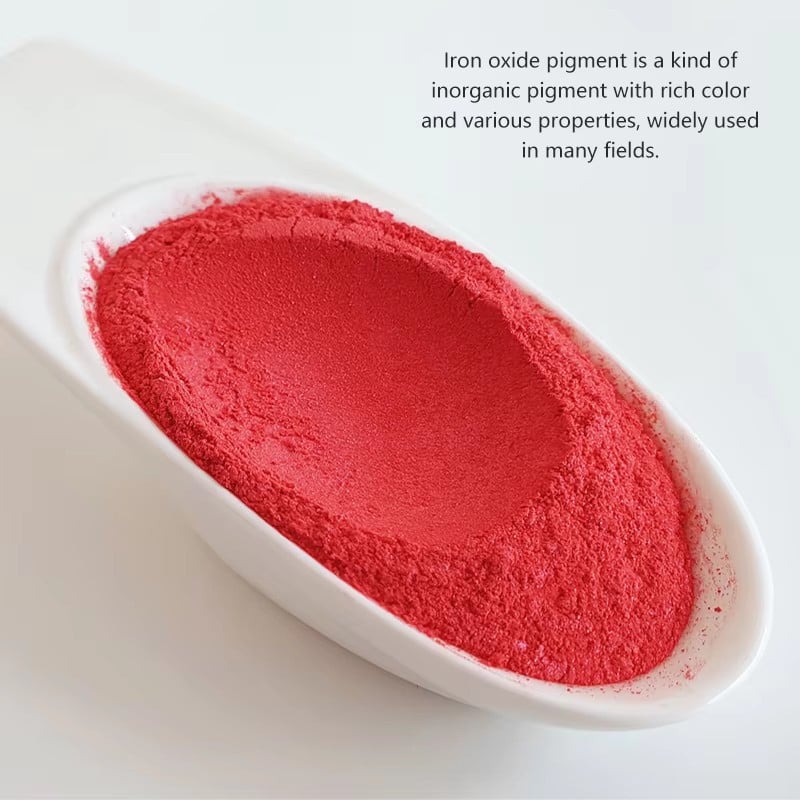
The pigment itself does not travel. Iron oxide pigments are water-insoluble inorganic oxide particles, so they stay where they were placed in the matrix; bloom, by contrast, is built from material that dissolves, moves with water and re-crystallises at the surface.
Where pigment does enter the discussion is the soluble salt load it carries in. Iron oxide grades are supplied against a water-soluble matter limit, commonly reported on published technical data sheets in the region of 0.3% max, with sulfate content as a second parameter in the same family.
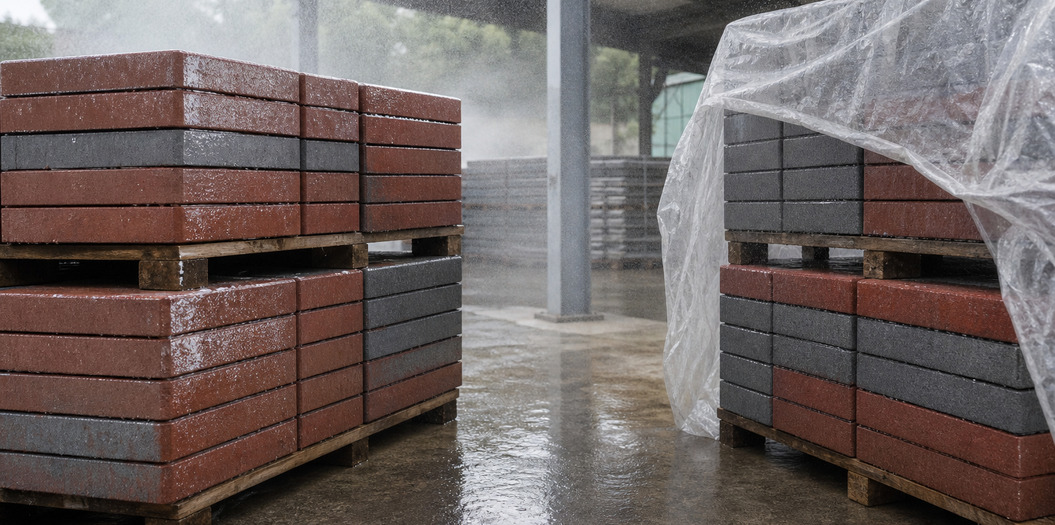
Water. The pore network is the pathway, and water-cement ratio is the main control on it. A mix placed stiffer and finished without adding water for workability has a denser surface layer, so less water reaches the evaporation surface and less salt is carried with it. Curing water counts as an input: ponding or spraying with water that itself carries dissolved salts adds to the salt load, so appearance-critical work is normally cured with clean potable water.
Cement. Free lime is the raw material for the most common deposit, so the cement's alkali content — commonly expressed on a mill certificate as sodium oxide equivalent — and its free-lime behaviour set how much soluble material is available. Where a project has a history of bloom and the mix design allows it, specifying a cement with lower alkali release is one of the few upstream levers available.
Sand and aggregate. Unwashed or marine-derived sand can carry chlorides and a high fines content. Chlorides add to the soluble salt load, and fines raise water demand for the same workability. A washed, well-graded sand is a cheaper fix than any change to the pigment.
Admixtures. Calcium chloride accelerators are a commonly reported contributor to both efflorescence and chloride load; where acceleration is needed, non-chloride types are normally specified instead. Water-reducing admixtures can also change bleeding behaviour, and so change how much water migrates to the surface while the unit is still plastic.
External water. A correctly made unit can still effloresce in service if it stays wet, which is why fall, drainage and jointing set how far the pigment decision is ever tested.
The pigment is one line item in a salt balance. It is a real line item, and it is testable:
| Requirement | Why it matters | How to verify |
|---|---|---|
| Water-soluble matter, lot specific | Caps the soluble material the pigment adds to the mix | Certificate of analysis for the delivered lot; test defined in ASTM C979 / C979M-16 |
| Sulfate content | Sulfates are a component of many efflorescence deposits | Lot certificate of analysis |
| Alkali resistance | The pigment must survive the alkaline pore solution without changing | ASTM C979 / C979M-16 |
| Water wettability | A pigment that wets readily disperses with less mechanical work in the mixer | ASTM C979 / C979M-16 |
| Colour match of shipment | Separates a colour dispute from a bloom dispute when both appear on one pallet | ΔE against a retained standard, reported batch by batch |
What the supplier does not control: the water-cement ratio, whether the sand was washed, how the units were cured and how they were stored. A pigment at its water-soluble limit can be blameless in a mix placed wet and cured under ponded water.
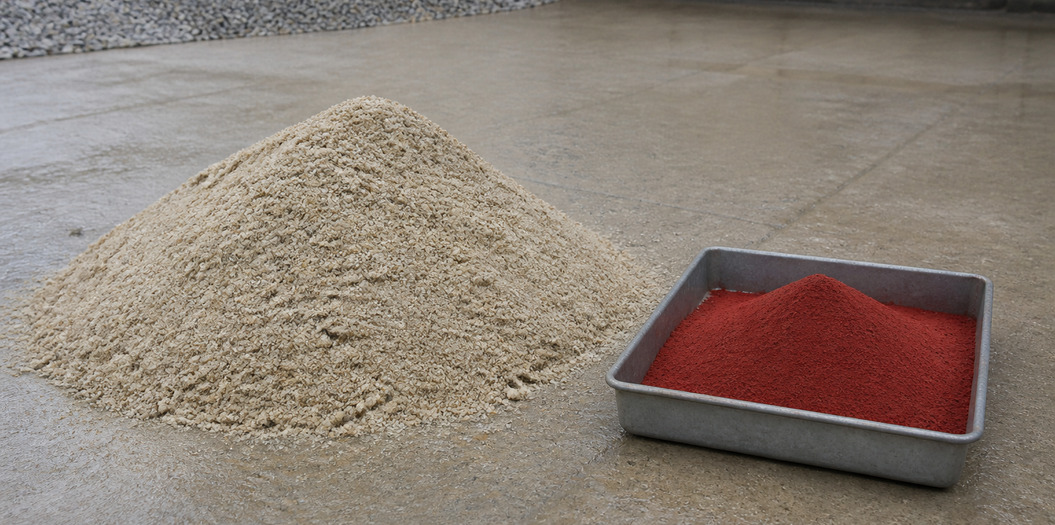
Efflorescence is a system effect, so it must be verified on the system: a trial that uses the supplier's pigment but not the buyer's cement, sand, admixture, curing cycle and storage conditions tests almost nothing.
Pigment selection changes hue, depth, tinting strength and dispersion behaviour. It does not change the pore structure of the concrete, the water in the mix, the alkali content of the cement, or how the units were dried. So when a bloom appears, the questions that locate the cause come first: the water-cement ratio the mix was placed at, what the sand carries, and how the units were cured and stored.
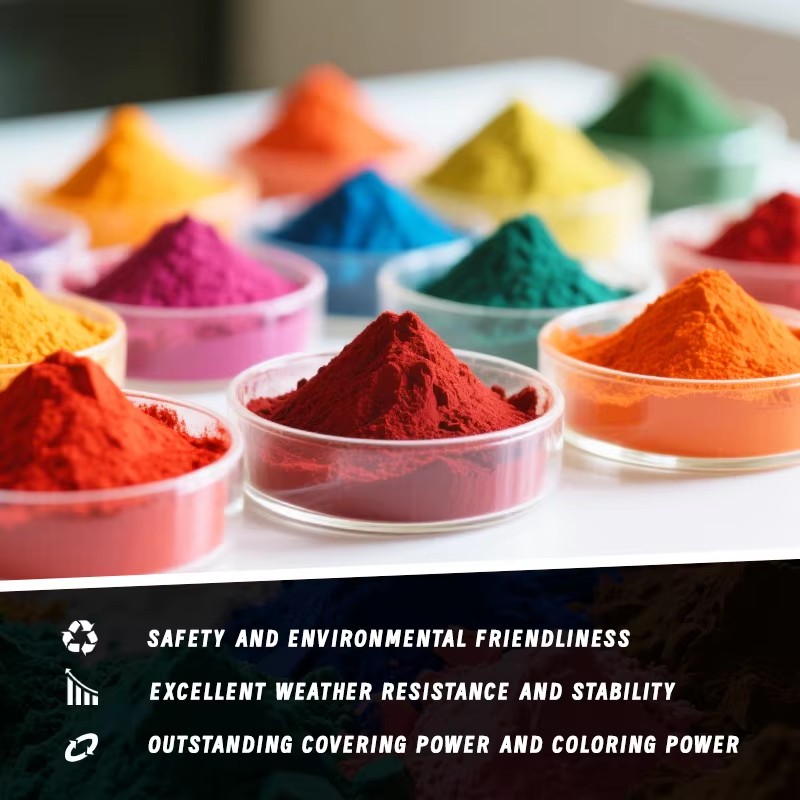
Hebei Tianhuibao Technology Co., Ltd. has produced iron oxide pigments for 26 years, with an annual production capacity of 50,000 tons, and supplies customers in 150+ countries and regions. The iron oxide red series covers grades 110, 130 and 190, plus nano, ultra-fine, easy-dispersing, acid- and alkali-resistant and food-contact grades, and factory-direct colour matching. Certifications held include REACH, RoHS, CE and ISO, with IATA DGR for air transport and IMDG Code for sea transport. The minimum order quantity is 1 metric ton in 25 kg woven bags available ex-stock; small samples are supplied separately for testing and do not count toward the MOQ. Stock items ship in 3–5 working days, customised items in 7–15 working days. Quality control runs from raw material testing through to finished product inspection, and multi-batch colour consistency data (ΔE) is available on request.
Our article Iron Oxide Pigment Dosage for Concrete: kg per m³ in the News section covers addition rates and how to verify them against your own materials.
To evaluate a pigment against your own mix and curing cycle before efflorescence in colored concrete becomes a dispute, send us your cement and sand details, your addition rate and your curing method, and request a specification sheet and a trial sample. Contact: [email protected] / +86-13400211655.
 Hot News
2026-10-10
2026-10-08
2026-09-17
2026-09-11
2026-09-10
2026-09-04
 EN