 ×
By David Chen, Senior Color Matching Engineer at Apex Polymer Solutions
In the fast-paced world of plastics manufacturing, time is the most expensive currency. As a color matching engineer responsible for delivering vibrant, consistent hues across hundreds of SKUs, I have spent countless hours staring into the abyss of "trial and error." The process of matching a customer’s desired color on a new mold or resin substrate is notoriously inefficient. Traditionally, we receive a Pantone chip or a physical sample, mix iron oxide powders with our base resin, inject them into a test mold, wait for cooling, inspect the result, adjust the formula, and repeat. This cycle can take weeks, consuming tons of raw material and valuable machine time. The root cause of this inefficiency is not a lack of skill, but a lack of data. Suppliers often provide theoretical color charts that do not account for the complex optical physics of injection molding. However, our partnership with Hebei Tianhuibao Technology Co., Ltd., which offers over 300 mold-verified iron oxide color plates covering mainstream substrates like PP, PE, ABS, PC, and PA, has revolutionized our workflow. This article details how leveraging empirical iron oxide data transforms color development from a guessing game into a precise science.
The primary challenge in plastic coloring is the discrepancy between standard color swatches and actual molded parts. Most suppliers of iron oxide provide color cards based on paint films or idealized powder compacts. These representations fail to capture the nuances of thermoplastic processing. When iron oxide particles are dispersed within a polymer matrix, their appearance changes dramatically due to factors such as refractive index differences, particle size distribution, and surface texture replication.
For instance, a specific shade of red iron oxide might look perfect on a paper swatch but appear dull and brownish when molded into high-gloss ABS. Conversely, the same pigment might show excellent vibrancy in matte-textured Polypropylene (PP). Without prior knowledge of these interactions, engineers must start from scratch for every new project. We previously faced significant delays because we had no reference points for how different grades of iron oxide behaved across various resins. Each new product launch required a dedicated R&D sprint just to establish a baseline formula. This "blind testing" approach was costly, slow, and prone to human error. The lack of substrate-specific iron oxide data meant that switching from one material type to another—say, from PC to Nylon—required completely re-evaluating the pigment load and dispersion conditions.
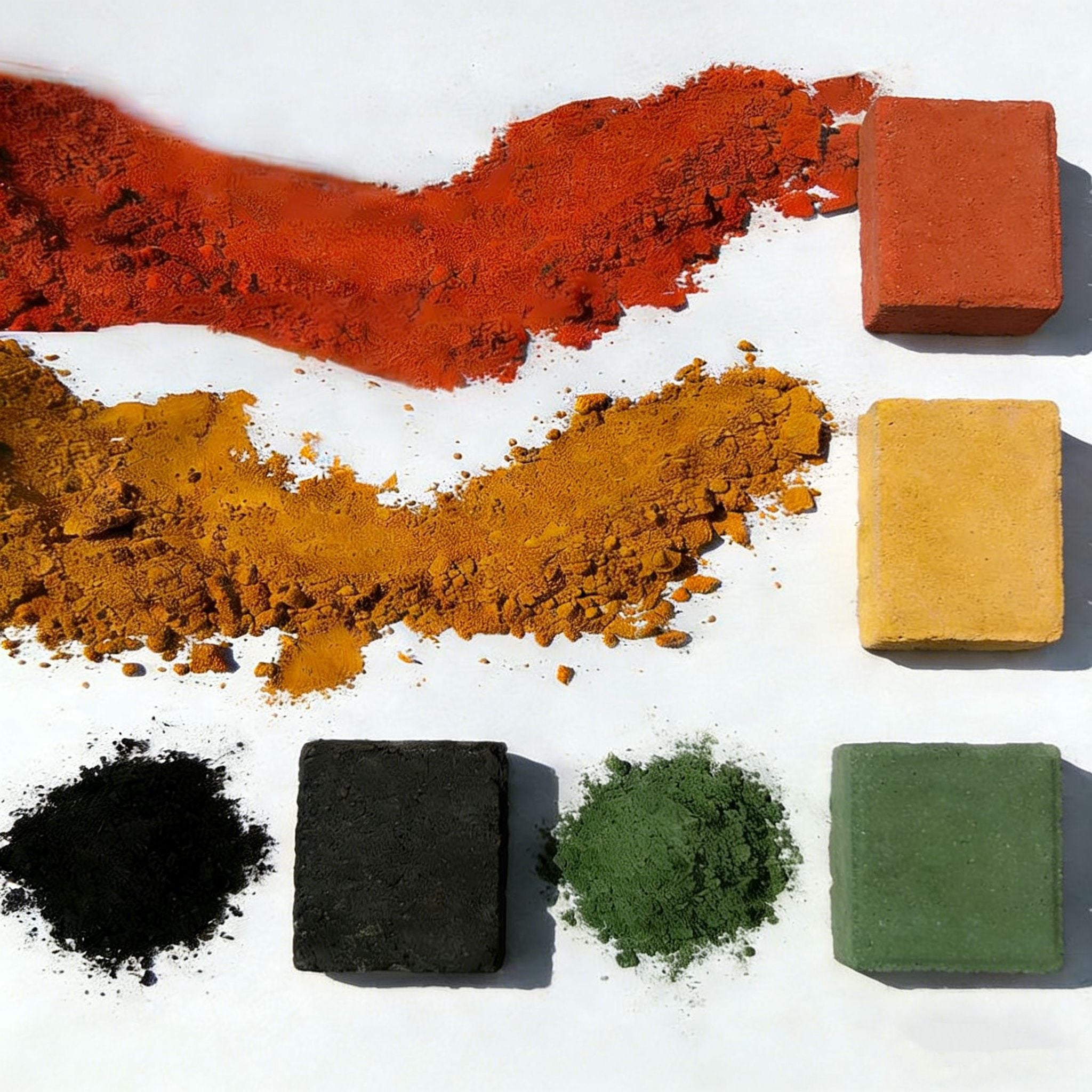
Hebei Tianhuibao addressed this gap by developing a comprehensive library of over 300 physical color plates. Unlike theoretical charts, these plates are actual molded samples produced using industrial-grade iron oxide pigments in common plastic substrates. They cover the full spectrum of applications, including automotive interiors (ABS/PC), packaging (PE/PP), and electronics housings (PA/PBT).
This database serves as a practical roadmap for color engineers. When a client requests a specific hue, we no longer start with zero. Instead, we search the library for the closest match among the pre-made iron oxide samples. For example, if a client wants a "Sunset Orange" for a PP bottle cap, we can immediately identify which specific grade of iron oxide yellow and red blend produces that exact tone in PP. We don't just get the color; we get the recipe. Each plate comes with detailed documentation specifying the exact percentage of iron oxide used, the carrier resin type, and the processing parameters (temperature, pressure) that achieved the result.
Furthermore, the company provides measured ΔE (Delta E) values comparing their samples against international standards. This quantitative data allows us to assess accuracy before we even touch the machine. Knowing that a particular iron oxide formulation yields a ΔE of less than 1.5 against a Pantone target gives us confidence to skip initial trial runs. We can proceed directly to small-scale validation rather than broad-spectrum exploration. This shift from qualitative guessing to quantitative targeting is the key to efficiency. The reliability of their iron oxide batch-to-batch consistency ensures that the data on the plate remains valid for future production runs.
The financial impact of this data-driven approach is substantial. In our previous workflow, a single color development project could consume up to 50 kilograms of premium resin and iron oxide pigments during failed trials. With the 300+ mold support system, we reduce this waste by approximately 80%. Because we start with a proven baseline, the number of iterations drops from an average of five to just one or two.
Moreover, the lead time for new product introductions has decreased significantly. Clients often demand tight deadlines for seasonal products or promotional items. By utilizing the pre-tested iron oxide formulations, we can quote accurate timelines with higher confidence. We no longer need to allocate extra buffer days for unexpected color shifts. This agility enhances our competitiveness in the market. Additionally, the cross-substrate compatibility data helps us advise clients on material substitutions. If a client wants to switch from ABS to PC for better heat resistance, we can instantly tell them how the iron oxide color will shift and what adjustments are needed, preventing costly mid-project changes.
To illustrate the tangible benefits, consider a recent project involving a major consumer electronics manufacturer.
In conclusion, the availability of extensive, mold-verified data is not just a convenience; it is a strategic asset for any plastics manufacturer. By partnering with suppliers who understand the complexities of iron oxide application in real-world processing conditions, we eliminate the guesswork inherent in color matching. The 300+ mold support system provided by Hebei Tianhuibao represents a paradigm shift from reactive problem-solving to proactive solution-design.
For color engineers and procurement managers, the message is clear: stop relying on theoretical charts. Demand empirical evidence. Choose iron oxide suppliers who provide actual molded samples and detailed performance data. This approach reduces costs, accelerates time-to-market, and ensures consistent quality. Let us continue to innovate by leveraging data, ensuring that every part we produce reflects the true potential of high-performance iron oxide pigments. The future of plastic coloring is precise, predictable, and powered by proven iron oxide technology.
 Hot News
2026-10-10
2026-10-08
2026-09-17
2026-09-11
2026-09-10
2026-09-04
 EN