EN
EN




Iron Oxide Yellow 313 for Plastic Masterbatch: Properties, Processing and Supplier Selection
As a technical application engineer specializing in inorganic pigments for polymer systems, I evaluate iron oxide yellow 313 based on how it performs in real compounding environments — not just on a datasheet. Choosing the right yellow pigment for plastic masterbatch is not simply a matter of picking the brightest option. The decision involves heat stability thresholds, dispersion behavior under high-shear extrusion, batch-to-batch consistency, and regulatory compliance — and iron oxide yellow 313 addresses all of these in a way that organic yellows often cannot.
This article walks through the key technical and commercial factors that make iron oxide yellow 313 a reliable choice for plastic masterbatch production, what to look for when selecting an iron oxide yellow 313 supplier, and how to integrate this pigment effectively into your compounding process.
What Is Iron Oxide Yellow 313?
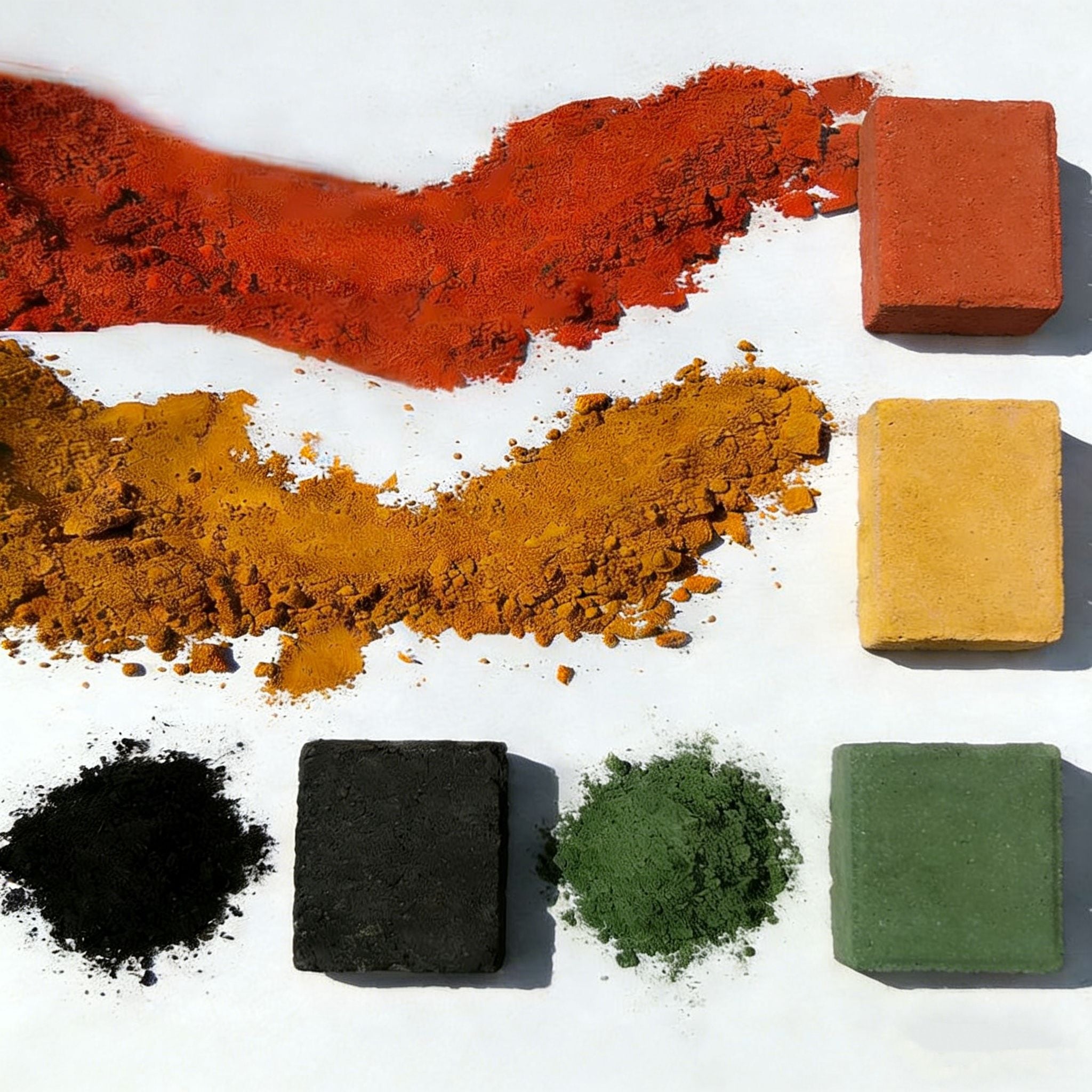
Iron oxide yellow 313 is classified under CI Pigment Yellow 42 (CI Number 77492). Its primary chemical form is FeOOH — iron oxyhydroxide — with a goethite crystalline structure. That structure gives iron oxide yellow 313 its characteristic warm golden-yellow shade and determines the upper processing temperature range you can safely work with in plastic masterbatch systems.
Unlike organic yellow pigments, iron oxide yellow 313 is an inorganic pigment with no migration, no blooming, no photodegradation from UV exposure, and considerably better chemical resistance in the polymer matrix. For plastic masterbatch producers supplying outdoor construction profiles, agricultural films, or industrial containers, these properties of iron oxide yellow 313 matter more than any incremental color brightness advantage an organic pigment might offer.
Iron oxide yellow 313 is produced by controlled precipitation from iron sulfate or iron chloride precursors. The production conditions — pH, temperature, agitation — determine the final particle size. A typical D50 of around 0.3–0.5 μm is optimal for iron oxide yellow 313 masterbatch applications, balancing tinting strength with dispersion ease in twin-screw extrusion.
Key Technical Properties for Plastic Masterbatch
Before specifying iron oxide yellow 313, several performance parameters deserve careful examination. Understanding these will help you qualify iron oxide yellow 313 suppliers, evaluate samples objectively, and set realistic production expectations.
Heat Resistance and Processing Temperature
The most critical constraint when using iron oxide yellow 313 in plastics is its thermal behavior. As a goethite-structure pigment, it begins dehydrating — converting from FeOOH to Fe₂O₃ (iron oxide red/hematite) — at temperatures above approximately 180–200°C under prolonged exposure. This means iron oxide yellow 313 is well-suited to polyethylene (PE) and polypropylene (PP) compounding at standard processing temperatures of 160–190°C, but requires attention when formulating for ABS, polycarbonate, or nylon systems running at 220°C and above.
Residence time matters as much as peak temperature. Short-duration high-temperature excursions during injection molding may have less impact than extended processing in a starve-fed extruder with long barrel residence. The practical recommendation: validate iron oxide yellow 313 with a short-run trial at your specific processing conditions. Monitor for any hue shift from yellow toward red-orange as a signal that the iron oxide yellow 313 has partially dehydrated, before committing to full-scale production.
Tinting Strength and Loading Rate
Iron oxide yellow 313 is valued for its high tinting strength relative to oil absorption. A well-manufactured grade allows masterbatch producers to achieve pigment loadings of 30–50% in PE or PP carrier resin without excessive viscosity penalties. The typical let-down ratio in the finished plastic article is 1–5%, depending on target color depth.
High tinting strength translates directly to formulation economics: a smaller dosage of iron oxide yellow 313 achieves the same color depth as a larger quantity of a lower-strength pigment, reducing material cost and the risk of dispersion-related defects at high iron oxide yellow 313 loading rates.
Dispersibility and Batch Consistency
In practice, the biggest challenge with iron oxide yellow 313 in plastic masterbatch is not chemistry but consistency. A batch that disperses well in a lab trial can behave differently in a 500 kg production run if particle agglomeration was present in a specific drum.
Quality grades of iron oxide yellow 313 exhibit consistent particle size distribution and oil absorption values across production lots. The oil absorption value — typically 20–30 g/100g for iron oxide yellow 313 — is a useful proxy for surface energy and dispersion behavior. A significant batch-to-batch swing in oil absorption signals inconsistent manufacturing. When evaluating suppliers, request multiple CoA reports from different production batches and check for variance in these key parameters.
Lightfastness and Weather Resistance
Iron oxide yellow 313 consistently achieves lightfastness ratings of 7–8 on the Blue Wool Scale, making it one of the most UV-stable yellow pigments for outdoor plastic applications. For agricultural films, construction profiles, and garden furniture, the lightfastness of iron oxide yellow 313 means the yellow coloration will remain commercially acceptable for years without the fading and chalking common with organic yellows.
Regulatory Compliance for Plastic Masterbatch
For masterbatch producers supplying European markets, regulatory documentation is now a standard part of supplier qualification — buyers expect it, and the absence of it raises immediate questions. Iron oxide yellow 313 from reputable manufacturers should carry REACH registration confirmation and, where applicable, CE marking for relevant application categories. Confirming the REACH status of iron oxide yellow 313 is particularly important for EU market access.
Beyond REACH, specific applications may trigger additional requirements. Toy-grade plastics require compliance with EN 71-3 migration limits. Food-contact plastics may require FDA 21 CFR or EU Regulation 10/2011 compliance. If your masterbatch targets these sectors, request SDS documentation confirming that your iron oxide yellow 313 supply meets these frameworks.
Hebei Tianhuibao Technology Co., Ltd. supplies iron oxide yellow 313 with REACH and CE certification documentation. We provide full SDS and technical data sheets with each shipment, and our technical team can assist with application-specific compliance review for EU-bound shipments. Contact us at [email protected] or visit ironoxidecolors.com.
Processing Recommendations for Plastic Masterbatch
Working with iron oxide yellow 313 in masterbatch production means paying close attention to a few process variables that many formulators only discover during scale-up. The following guidelines apply specifically to iron oxide yellow 313 processing in standard PE and PP masterbatch systems.
Carrier Resin Selection
Iron oxide yellow 313 is compatible with PE, PP, EVA, and PVC carrier systems. For universal masterbatch applications spanning multiple resin types, PE wax or low-MW polyethylene are the most practical carriers for iron oxide yellow 313, offering good pigment wettability and broad compatibility. For specific applications — film blowing, injection molding for automotive parts, or rigid profiles — tailoring the carrier to the end-use resin improves color development and reduces the required pigment loading of iron oxide yellow 313.
Compounding Parameters
Twin-screw extruders with co-rotating screws are standard for high-loading iron oxide yellow 313 masterbatch. Barrel temperatures should be set conservatively in the 160–180°C range for PE/PP formulations to avoid FeOOH dehydration. Screw speed and specific energy input should be optimized to maximize dispersion without generating excessive shear heating.
A practical note: iron oxide pigments are abrasive. For high-loading masterbatch runs with iron oxide yellow 313, screw wear may accelerate compared to organic pigment systems. Factor this into equipment maintenance schedules if you are running continuous high-volume production.
Pre-compounding Preparation
Where dispersibility is a concern — particularly for film-grade applications requiring fine color development — pre-compounding iron oxide yellow 313 with a processing aid or wax before introduction to the main extruder can improve final dispersion quality. Surface-treated grades of iron oxide yellow 313 are also available for demanding applications that require faster dispersion without additional processing aids.
Selecting an Iron Oxide Yellow 313 Supplier
The supplier selection conversation for iron oxide yellow 313 usually starts with price and ends with consistency. When sourcing iron oxide yellow 313 for plastic masterbatch, key evaluation criteria include:
- Batch-to-batch CoA consistency: Request six months of CoA records for Fe₂O₃ content, oil absorption, tinting strength, and pH. Variance beyond typical tolerances suggests process variability that will cause masterbatch color drift.
- Particle size documentation: Confirm D50 and D90 values from laser diffraction. Suppliers unable to provide this data are likely not monitoring particle size systematically.
- Regulatory documentation: REACH registration number, SDS, and application-specific compliance letters as needed.
- Technical support capability: Can the supplier advise on optimal loading rates for your polymer system, or troubleshoot a dispersion issue with iron oxide yellow 313? Technical support capability is a key differentiator.
- MOQ and packaging: MOQ as low as 25 kg allows trial evaluation. Flexible packaging — 25 kg bags, 500 kg jumbo bags, 1-ton FIBCs — supports different production environments.
- Production capacity and lead times: Confirm annual capacity and typical lead times. A supplier with 50,000 MT annual capacity and 15–20 day FOB delivery from Tianjin or Qingdao provides the supply continuity that masterbatch producers in Europe, Southeast Asia, and the Americas require.
Iron Oxide Yellow 313 vs. Organic Yellow Pigments
The inorganic versus organic yellow pigment decision for plastic masterbatch depends on the end application. Organic yellows offer brighter hues and some grades provide heat stability above 280°C. However, they are significantly more expensive than iron oxide yellow 313, can exhibit migration or blooming in certain polymer systems, and may face stricter regulatory scrutiny in food-contact or toy applications.
Iron oxide yellow 313 offers a warm golden-yellow hue — appropriate for construction materials, agricultural applications, industrial packaging, and decorative plastics where lightfastness, weatherability, and cost-efficiency outweigh color vibrancy. The non-migration behavior, chemical resistance, and well-established regulatory profile of iron oxide yellow 313 simplify compliance work for masterbatch producers.
For producers serving diverse downstream markets, iron oxide yellow 313 is frequently the workhorse yellow for cost-sensitive, durability-focused applications, while organic yellows are reserved for specific high-performance or aesthetics-driven requirements. The pricing advantage of iron oxide yellow 313 over organic alternatives is a consistent factor in long-term supply decisions.
Summary
Iron oxide yellow 313 is a technically reliable, cost-effective pigment for plastic masterbatch applications. The core strengths of iron oxide yellow 313 — high tinting strength, excellent lightfastness, chemical resistance, inertness in the polymer matrix, and a clear regulatory profile — make it a dependable choice for PE, PP, and EVA masterbatch systems for construction, agricultural, industrial, and decorative plastic applications.
Hebei Tianhuibao Technology Co., Ltd. has specialized in iron oxide pigments for over 25 years, with 50,000 MT annual capacity and exports to 150+ countries. We supply iron oxide yellow 313 with REACH and CE certification, MOQ from 25 kg, and full technical support for plastic masterbatch applications. To request a sample of iron oxide yellow 313 or discuss formulation requirements, contact us at [email protected] or call +86-13582344730.
 Hot News