 ×
×
For procurement managers sourcing black oxide powder for large-scale industrial applications, the most visible number in a quotation is often the unit price per ton. At first glance, comparing suppliers may seem straightforward: identify the lowest price and secure the order. However, in the bulk pigment market, the price on the invoice is only a small part of the overall procurement equation.
The real cost often emerges later in the supply chain. Inconsistent pigment quality can lead to color instability in production batches, forcing manufacturers to adjust formulas or discard finished products. Damaged packaging during international transportation can create contamination risks and environmental cleanup costs. Even minor shipping delays may disrupt production schedules for concrete plants, coating manufacturers, or building material exporters.
For buyers dealing with hundreds of tons of pigment annually, these hidden variables can easily outweigh the initial price difference between suppliers.
This is where the factory-direct procurement model becomes increasingly relevant. Direct sourcing from the manufacturer does more than eliminate intermediary markups. When combined with standardized Jumbo Bag logistics systems, it creates a supply chain structure that is predictable, traceable, and operationally efficient.
For modern industrial procurement teams, the goal is no longer simply to find the lowest price for black oxide powder. Instead, decision-makers are shifting toward a comprehensive evaluation model that considers product consistency, packaging reliability, and logistics efficiency as part of the total landed cost.
This article aims to help buyers adopt a more strategic sourcing perspective and understand how technical product characteristics and bulk logistics solutions influence long-term procurement outcomes.
When purchasing black oxide powder in large quantities, technical consistency becomes critically important. Even small variations in pigment properties can significantly affect downstream manufacturing processes. From the perspective of bulk buyers, three performance indicators are particularly important: tinting strength and consistency, magnetic content and oil absorption, and thermal stability.
Tinting strength measures the pigment’s ability to impart color intensity when mixed into a formulation. For industrial applications such as concrete tiles, paving bricks, coatings, or construction materials, tinting strength directly determines the required dosage level.
High-quality synthetic black oxide powder, primarily composed of magnetite (Fe₃O₄), typically contains iron oxide content close to 95 percent. Compared with lower-grade pigments, this higher purity can deliver 10–15 percent stronger tinting performance.
For bulk buyers, the practical implication is straightforward: stronger tinting strength allows manufacturers to achieve the same color effect with less pigment. This not only reduces formulation costs but also improves production efficiency.
Equally important is batch-to-batch color consistency. In large-scale industrial production, a single order may involve 20 to 30 tons of pigment distributed across multiple batches. If the pigment color varies between batches, manufacturers may need to adjust mixing ratios or reject finished products.
Such inconsistencies quickly translate into production losses that exceed the initial price advantage of cheaper materials. For procurement teams, reliable batch consistency is therefore one of the most valuable characteristics of premium black oxide powder.
Because iron oxide black pigments contain magnetite, they naturally exhibit mild magnetic properties. While this characteristic is generally expected, excessive magnetic content can negatively affect pigment dispersion in certain applications.
In coatings, plastics, or polymer systems, proper pigment dispersion is essential to achieve uniform color distribution and consistent film properties. Pigments with excessive magnetic particles may form clusters during mixing, making dispersion more difficult.
Another critical parameter is oil absorption, which indicates how much binder is required to wet and disperse the pigment particles. Lower oil absorption values generally allow manufacturers to incorporate higher pigment concentrations while maintaining workable viscosity.
For high-quality black oxide powder, typical oil absorption values fall within the range of 15–20 g per 100 g of pigment. This balance allows coating or plastic manufacturers to optimize pigment loading while controlling resin consumption.
From a procurement standpoint, selecting pigments with controlled oil absorption effectively helps downstream manufacturers reduce binder usage, which can significantly lower formulation costs.
Thermal stability is another critical property for pigment applications involving high processing temperatures.
Iron oxide black pigments may undergo structural transformation at elevated temperatures. When exposed to temperatures exceeding 180°C, certain forms of iron oxide black can gradually oxidize and convert into red iron oxide (Fe₂O₃), resulting in noticeable color changes.
High-quality synthetic black oxide powder is produced with carefully controlled crystal structures that improve resistance to such phase transitions. This enhanced thermal stability is particularly important for industries involving high-temperature processing.
Applications such as asphalt roofing materials, engineering plastics, or specialized coatings often require pigments that maintain color stability during heat-intensive manufacturing processes. Providing clear heat resistance specifications allows suppliers to help buyers avoid product failure risks and potential warranty claims.
For international bulk shipments of black oxide powder, packaging design plays a significant role in transportation efficiency and product protection.
Jumbo Bags, also known as bulk bags or FIBC (Flexible Intermediate Bulk Containers), typically have capacities ranging from 500 kg to 1500 kg. Compared with traditional 25 kg bags, jumbo bags offer several logistical advantages.
First, they significantly improve loading and unloading efficiency. Fewer packages mean faster forklift handling and reduced labor requirements. In large-scale manufacturing facilities, this can translate into measurable productivity improvements.
Second, jumbo bags maximize container space utilization. A full container loaded with bulk bags can transport significantly more material than the same container filled with smaller packages.
Moisture protection is another critical factor in long-distance maritime shipping. During sea transport, cargo may pass through regions with high humidity and temperature fluctuations. Condensation inside containers can cause pigment powders to absorb moisture and form lumps.
To address this risk, high-quality jumbo bag systems often include PE inner liners designed to provide moisture protection. These liners help maintain the free-flowing characteristics of black oxide powder, ensuring the material remains suitable for industrial processing after arrival.
Discharge design is also an important consideration. Depending on factory equipment, buyers may choose between single-discharge bags for one-time unloading or multi-discharge bags with controlled outlets for gradual material release.
Selecting the right bag configuration improves operational efficiency and reduces material handling risks at the production site.
The traditional pigment distribution chain often involves multiple intermediaries before the product reaches the end user. Each stage—exporter, importer, distributor—adds margin and logistical complexity.
By contrast, the factory-direct supply model simplifies this structure. Buyers purchasing black oxide powder directly from the manufacturer can reduce transaction layers and gain greater transparency in pricing and production scheduling.
Logistics also benefit from scale efficiency. For example, shipping a full container load of approximately 25 tons typically results in a significantly lower per-ton freight cost compared with smaller shipments.
Hypothetically, a 5-ton partial shipment may incur transportation costs that are 30–40 percent higher per ton than a full container shipment. For high-volume buyers, this difference can have a meaningful impact on overall procurement expenses.
Another strategy used by experienced buyers involves leveraging bonded warehouses at destination ports. By storing imported pigments in bonded zones, companies can withdraw inventory in smaller batches while optimizing cash flow and tax timing.
Such logistics strategies allow procurement teams to maintain supply flexibility while controlling overall landed cost.
Before bulk shipments of black oxide powder leave the factory, thorough inspection procedures are essential.
Professional buyers typically request pre-shipment inspection documentation to verify that the products meet agreed technical specifications. These inspections often include checking packaging integrity, confirming correct labeling and batch identification, and reviewing laboratory test reports.
Buyers may also request loading documentation or inspection videos to ensure the correct materials are placed into containers.
One potential risk in bulk pigment procurement is inconsistent mixing within large packages. To avoid such issues, experienced buyers often request sampling from the middle section of packaged materials to confirm uniform quality.
Implementing these inspection procedures helps ensure that the delivered pigment meets the agreed standards and performs reliably in downstream production.
For industrial buyers seeking reliable pigment supply, Hebei Tianhuibao Technology Co., Ltd. provides a stable and professional sourcing solution.
The company focuses on the production and global supply of high-quality iron oxide pigments, including industrial-grade black oxide powder used in construction materials, coatings, plastics, and other manufacturing applications.
Through strict raw material control and standardized production processes, the company maintains stable pigment composition and consistent batch quality. This allows customers to rely on predictable pigment performance across large-volume orders.
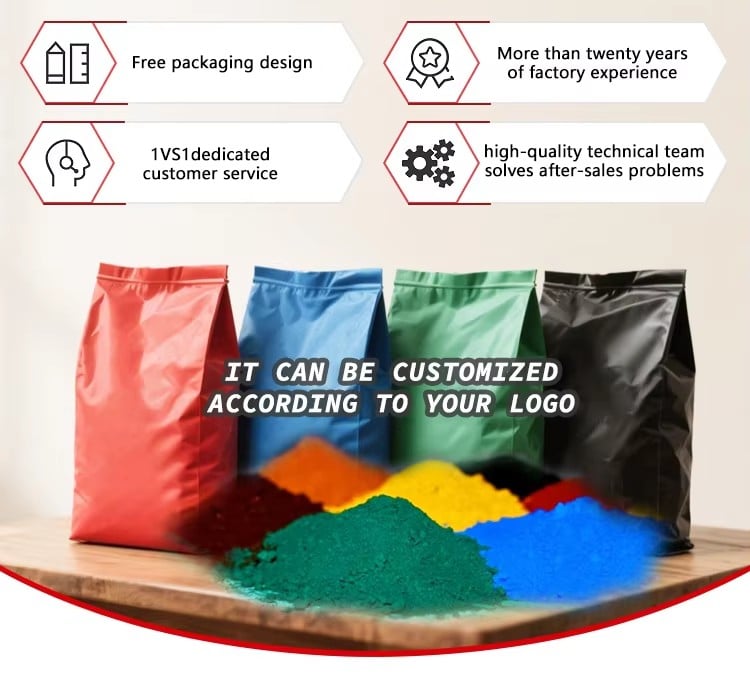
In addition to product manufacturing, the company supports customers with flexible packaging options tailored to international logistics requirements. Jumbo bag packaging systems can be customized according to shipment volume, handling equipment, and regional shipping regulations.
The company also works closely with experienced logistics partners to coordinate international shipping schedules and ensure smooth cargo handling throughout the transportation process.
By combining manufacturing expertise with practical supply chain management, Hebei Tianhuibao Technology Co., Ltd. aims to serve not only as a pigment supplier but also as a long-term strategic partner for global industrial customers.
In the bulk pigment market, the true cost of sourcing black oxide powder extends far beyond the listed price per ton. Product consistency, packaging reliability, and logistics efficiency all influence the final landed cost and operational stability.
For procurement teams managing large pigment volumes, factory-direct sourcing combined with optimized jumbo bag logistics offers a practical solution for improving supply chain efficiency and reducing hidden costs.
Companies seeking reliable and scalable pigment supply are encouraged to work with experienced manufacturers who understand both product performance and international logistics requirements.
If you are currently sourcing black oxide powder for construction materials, coatings, or industrial applications, the team at Hebei Tianhuibao Technology Co., Ltd. welcomes the opportunity to support your procurement strategy.
You may request a detailed quotation including estimated landed cost, review packaging options through a virtual production demonstration, or schedule a factory audit to better understand the company’s manufacturing and quality control processes.
 Hot News
2026-09-04
2026-01-03
2026-01-01
2026-01-07
 EN
EN