From a concrete application engineer’s perspective, ferric oxide fe2o3 is not only a red coloring powder; it is a performance material that affects color strength, dispersion, surface uniformity, dosage cost, and long-term outdoor durability. Choosing ferric oxide fe2o3 by purity grade helps concrete producers match pigment performance with different products, from economy pavers to premium precast panels. However, ferric oxide fe2o3 purity should never be evaluated alone, because particle size, tinting strength, soluble salts, moisture, and batch consistency also influence the final concrete appearance. Hebei Tianhuibao Technology Co., Ltd. supplies ferric oxide fe2o3 pigments for cement-based applications with a focus on stable quality, practical use, and export support.
What Is ferric oxide fe2o3 in Concrete Pigments?
ferric oxide fe2o3 refers to iron oxide red pigment mainly composed of ferric oxide, commonly known as iron(III) oxide. In concrete applications, it is widely used as an inorganic pigment for coloring cement-based materials.
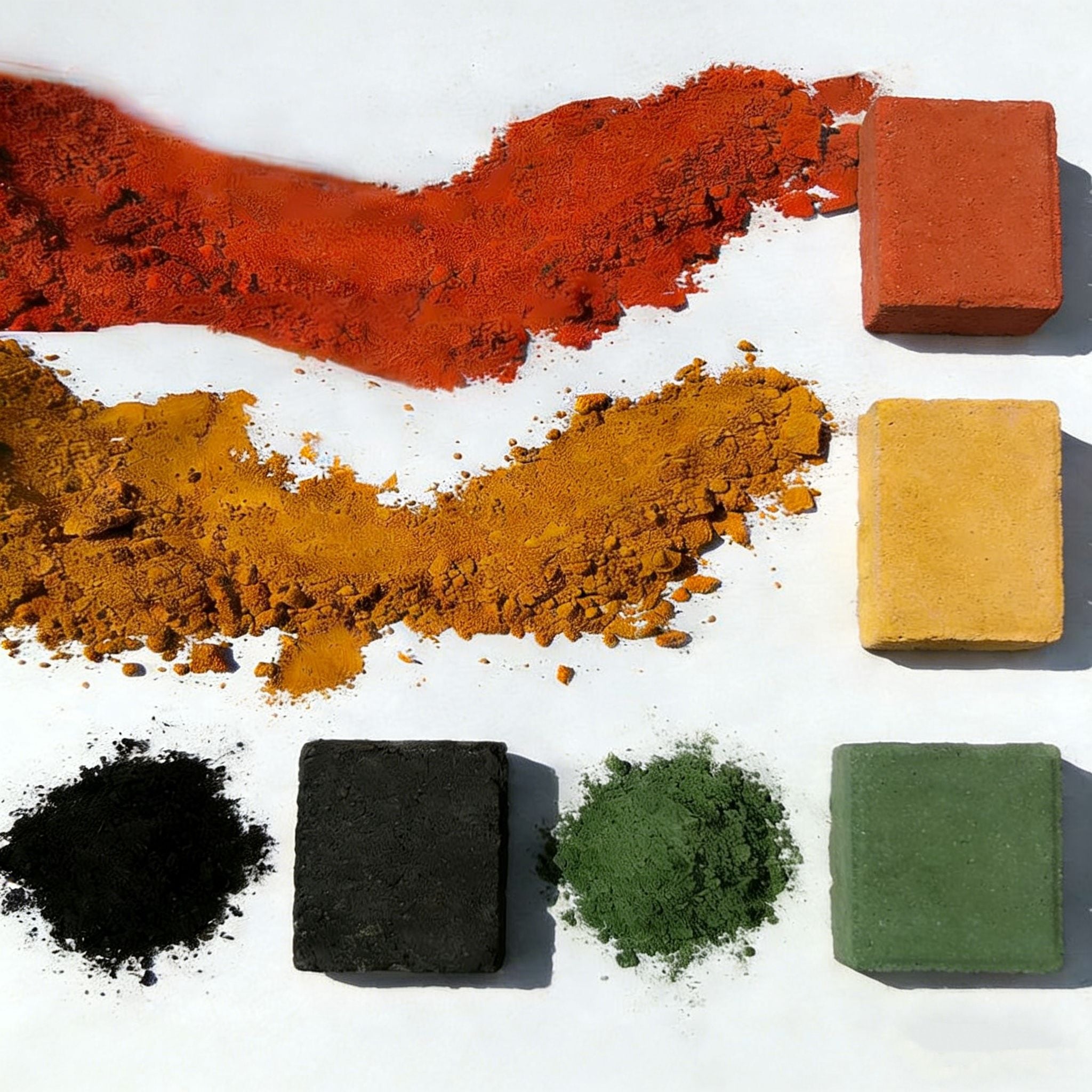
In colored concrete, ferric oxide fe2o3 is used in pavers, roof tiles, precast concrete, landscape blocks, colored mortar, stamped concrete, terrazzo products, and decorative cement panels. Its main function is to provide a stable red shade that can survive the high alkalinity of cement.
Unlike many organic colorants, ferric oxide fe2o3 has excellent light fastness, alkali resistance, and weather resistance. This is why it is commonly selected for outdoor concrete products exposed to sunlight, rain, freeze-thaw cycles, and temperature changes.
A concrete application engineer treats ferric oxide fe2o3 as part of the whole mix design. Cement color, sand type, aggregate surface, water-cement ratio, admixtures, curing condition, and pigment dispersion can all change the visible color.
The goal is not simply to buy ferric oxide fe2o3 with the highest number on a specification sheet. The real goal is to choose a grade that gives consistent color, stable dosage, easy mixing, and acceptable total cost in the final concrete product.
Why ferric oxide fe2o3 Purity Grades Matter
The purity of ferric oxide fe2o3 usually refers to the content of iron(III) oxide in the pigment. In general, higher purity means lower unrelated impurities and more concentrated color performance.
A higher ferric oxide fe2o3 content often supports stronger tinting strength and better color consistency. For premium concrete products, such as architectural precast panels or export-grade paving stones, this can help reduce color variation between batches.
However, ferric oxide fe2o3 purity is not the only factor that determines quality. A pigment with high purity but poor dispersion may still create color spots, streaks, or uneven surfaces in concrete.
A lower-grade ferric oxide fe2o3 may be suitable for cost-sensitive applications, but it must still meet basic requirements for color strength, moisture, soluble salts, and sieve residue. Otherwise, the real cost may increase through higher dosage, rejects, or customer complaints.
For this reason, ferric oxide fe2o3 grades should be selected according to the product type. High-end precast concrete may need a high-purity grade, while ordinary blocks or low-cost construction products may use a balanced standard grade after proper testing.
Key Indicators Beyond ferric oxide fe2o3 Purity
The tinting strength of ferric oxide fe2o3 determines how much pigment is needed to reach the target shade. If tinting strength is high and stable, producers can maintain color with a predictable dosage.
If ferric oxide fe2o3 tinting strength changes from batch to batch, the same mix design may produce different colors. This leads to repeated adjustment, production delay, and possible rejection of finished concrete products.
Particle size determines how ferric oxide fe2o3 disperses in cement, sand, and aggregate. Fine and controlled particles usually help color spread more evenly through the concrete matrix.
Poorly dispersed ferric oxide fe2o3 may appear as red spots, cloudy areas, streaks, or patchy surfaces. These problems are especially visible on smooth precast products, tiles, and decorative panels.
Moisture in ferric oxide fe2o3 should also be controlled. High moisture can cause caking, poor feeding, inaccurate dosing, and longer mixing time, especially in automatic pigment feeding systems.
Sieve residue in ferric oxide fe2o3 indicates the presence of coarse particles or impurities. High sieve residue may affect surface smoothness and may cause visible defects in high-quality concrete elements.
Soluble salts in ferric oxide fe2o3 deserve special attention. Excessive soluble salts, chlorides, or sulfates may increase the risk of efflorescence or affect durability in certain reinforced or exposed concrete systems.
Finally, ferric oxide fe2o3 must also show alkali resistance and weather resistance. Since cement is highly alkaline and many concrete products are used outdoors, the pigment must maintain color stability under harsh conditions.
Common Problems with Low-Quality ferric oxide fe2o3
When ferric oxide fe2o3 quality is unstable, concrete producers often notice color differences even when the same formula and pigment dosage are used. This may happen between production shifts, pallets, or different delivery batches.
Some ferric oxide fe2o3 products show poor dispersion because of agglomeration or wide particle size distribution. In the mixer, these pigments may not break down evenly, causing spots, streaks, and mottled surfaces.
If ferric oxide fe2o3 contains too much moisture, the powder may become compacted or caked during storage. This makes feeding difficult and may reduce the accuracy of automatic batching equipment.
Low-quality ferric oxide fe2o3 may also contain high impurities, coarse residues, or uncontrolled soluble salts. These issues can affect surface appearance, increase efflorescence risk, and reduce customer confidence in the finished product.
In outdoor products, ferric oxide fe2o3 with weak stability may fade, darken, or shift in shade over time. For pavers, roof tiles, and landscape products, color durability is directly linked to brand reputation and project acceptance.
How Hebei Tianhuibao Controls ferric oxide fe2o3 Performance
Hebei Tianhuibao Technology Co., Ltd. provides ferric oxide fe2o3 grades designed for different concrete applications, helping customers balance purity, color strength, cost, and performance.
Each ferric oxide fe2o3 grade is selected according to practical application needs. For premium precast concrete, customers may prefer higher purity and tighter color control. For standard pavers, a balanced grade may offer better cost efficiency.
The company controls ferric oxide fe2o3 through batch testing, shade comparison, moisture control, sieve residue inspection, and quality documentation. This helps reduce production uncertainty and supports long-term supply stability.
For production use, ferric oxide fe2o3 from a stable supplier can help reduce color correction, improve mixing uniformity, and lower the risk of rejected concrete products.
Hebei Tianhuibao also supports ferric oxide fe2o3 customers with technical documents such as TDS, SDS, CoA, and other reports requested for quality review, export, or project approval.
Application Recommendations for ferric oxide fe2o3
Before using ferric oxide fe2o3 in full-scale production, engineers should run lab trials with the actual cement, sand, aggregate, water, admixture, and curing conditions. A pigment that performs well in one concrete system may look different in another.
The dosage of ferric oxide fe2o3 should be optimized instead of increased without limit. After a certain point, additional pigment may bring little color improvement but may increase cost and influence workability.
For uniform color, ferric oxide fe2o3 should be mixed thoroughly with dry materials or added according to a controlled sequence. Sufficient dry mixing and wet mixing time help the pigment distribute evenly.
During production, ferric oxide fe2o3 performance should be checked by comparing fresh samples and cured samples against an approved color standard. Concrete color often changes after hydration, drying, and curing.
When changing cement sources, ferric oxide fe2o3 should be retested. Gray cement, white cement, slag cement, and different mineral additions can all affect the final shade.
Quality Documents for ferric oxide fe2o3
A professional ferric oxide fe2o3 supplier should provide documents that support incoming inspection, technical evaluation, and traceability. The most common documents include Certificate of Analysis, Technical Data Sheet, Safety Data Sheet, specification sheet, color shade report, tinting strength report, heavy metal test report, and soluble salt or chloride test report when required.
For export, ferric oxide fe2o3 may also need commercial invoice, packing list, bill of lading, certificate of origin, non-hazardous goods certificate, REACH-related statement, RoHS declaration, or test reports linked to standards such as ASTM C979 or EN 12878. Requirements vary by destination country and final application, so they should be confirmed before shipment.
Choosing the Right Grade and Final Summary
The best purity grade depends on the final product. Premium precast panels, colored architectural elements, and export pavers usually need tighter quality control, stronger color consistency, and better documentation. Standard concrete blocks or general paving products may choose a balanced grade if test results meet the customer’s color and durability requirements.
Application engineers should compare not only the purchase price but also dosage efficiency, rejected product rate, mixing time, color correction cost, and long-term outdoor performance. A lower-cost pigment may become expensive if it causes visible color variation, efflorescence complaints, or project rejection.
In practical concrete coloring, purity is important, but it must be considered together with tinting strength, particle size, moisture, sieve residue, soluble salts, alkali resistance, and supplier consistency. With the right grade and proper testing, concrete producers can achieve stable color, uniform appearance, and reliable outdoor durability with ferric oxide fe2o3.
 ×
×
 Hot News
 EN
EN