 ×
×
In the world of ceramics, the choice of pigment is not merely a technical decision; it is an artistic one. For centuries, potters have relied on the earth itself, digging up clay and minerals to create glazes that speak of nature’s unpredictability and beauty. However, as the demand for consistency, safety, and specific aesthetic outcomes grows, the debate between natural and synthetic iron oxides has intensified. At Hebei Tianhuibao Technology Co., Ltd., we believe that the future of pottery lies not in choosing one over the other, but in mastering the science behind both. By leveraging advanced micronization for natural ores and precise crystal control for synthetic pigments, we offer solutions that overcome the limitations of traditional materials. This article explores how our high-quality black iron oxide fe3o4 and other iron-based pigments are redefining the standards for pottery, blending the soul of natural minerals with the precision of modern chemistry.
To understand the value of our technology, one must first look at the challenges faced by contemporary ceramists. From the perspective of a studio potter or a production manager, the current market offers two imperfect choices, each with significant drawbacks.
The Problem with Natural Ore Sands:
Traditional natural iron reds and yellows available on the market are often produced through simple crushing and grinding processes. While they possess a certain rustic charm, their chemical composition is highly variable. These natural sands often contain uncontrolled levels of impurities such as silica, alumina, and manganese. For a potter, this unpredictability is a nightmare. The presence of these impurities narrows the firing temperature range significantly. A slight deviation in the kiln can cause the glaze to blister, bubble, or turn an unintended muddy black or dark brown. The lack of purity means that the color response is inconsistent, making it difficult to reproduce a successful batch. This is where the need for refined black iron oxide fe3o4 becomes apparent, as even natural blacks require purification to perform reliably.
The Limitation of Low-End Synthetic Pigments:
On the other end of the spectrum, low-end synthetic iron oxides offer vibrant colors and high purity. However, they often suffer from a different aesthetic flaw: uniformity. Most cheap synthetic pigments consist of single spherical particles. When used in glazes, these uniform particles can result in a surface that looks "flat," "dead," or "plastic-like." They lack the depth, texture, and visual complexity that characterizes high-end traditional wares, such as Ru porcelain, where the interplay of mineral structures creates a rich, layered appearance. Ceramists often complain that chemical glazes lack the "life" of mineral glazes. Our goal is to provide a black iron oxide fe3o4 that retains the vibrancy of synthetics while introducing the structural complexity needed for a lively glaze surface.
At Hebei Tianhuibao Technology Co., Ltd., we have developed proprietary technologies to address these specific pain points, ensuring that our pigments, including our premium black iron oxide fe3o4, deliver both performance and aesthetic depth.
For our natural product line, we go beyond simple crushing. We employ advanced micronization techniques that reduce particle size to the sub-micron level while simultaneously removing harmful impurities. This process ensures that the natural mineral structure is preserved, maintaining the unique textural qualities that potters love, but with a level of fineness that allows for smooth integration into glazes. By controlling the particle size distribution, we widen the firing range, reducing the risk of blistering and ensuring that the natural variations enhance rather than detract from the final piece. This refined approach to natural materials sets the stage for our synthetic innovations, particularly in how we handle black iron oxide fe3o4.
For our synthetic line, we utilize high-temperature solid-phase reaction technology. Unlike standard precipitation methods that produce uniform spheres, our process allows for the controlled growth of crystal structures. We can engineer particles with specific morphologies—such as cubic or octahedral shapes—that interact with light in complex ways. This creates a sense of depth and layering in the glaze, mimicking the visual richness of natural minerals. The result is a pigment that is chemically pure and consistent, yet visually dynamic. Our black iron oxide fe3o4 is a prime example of this technology, offering a deep, lustrous black that adds dimension to any glaze formulation.
One of the key advantages of our engineered pigments is their high coloring strength and saturation. Because our particles are optimized for light absorption and scattering, less pigment is needed to achieve intense colors. This efficiency is crucial for cost-effective production and allows for greater flexibility in glaze recipes. Whether you are aiming for a deep, jet-black finish or a subtle, earthy tone, our black iron oxide fe3o4 provides the necessary intensity without compromising the transparency or texture of the base glaze.
High saturation also means that the colors remain vibrant after firing. Many lower-quality pigments lose their intensity at high temperatures, resulting in washed-out hues. Our black iron oxide fe3o4 is designed to withstand rigorous firing schedules, ensuring that the final product matches the designer’s vision. This reliability is essential for both studio artists who need predictable results and industrial manufacturers who require strict quality control.
Impurities are the enemy of ceramic quality. Soluble salts, chlorides, and sulfates can cause efflorescence, pinholes, and color shifts. Our production process includes a rigorous deep washing and purification stage. We systematically remove water-soluble ions, ensuring that our pigments are chemically inert and stable. This is particularly important for black iron oxide fe3o4, which can be susceptible to oxidation if not properly stabilized. By eliminating these contaminants, we prevent surface defects and ensure that the color remains true over time. This level of purity is what distinguishes our black iron oxide fe3o4 from commodity-grade alternatives.
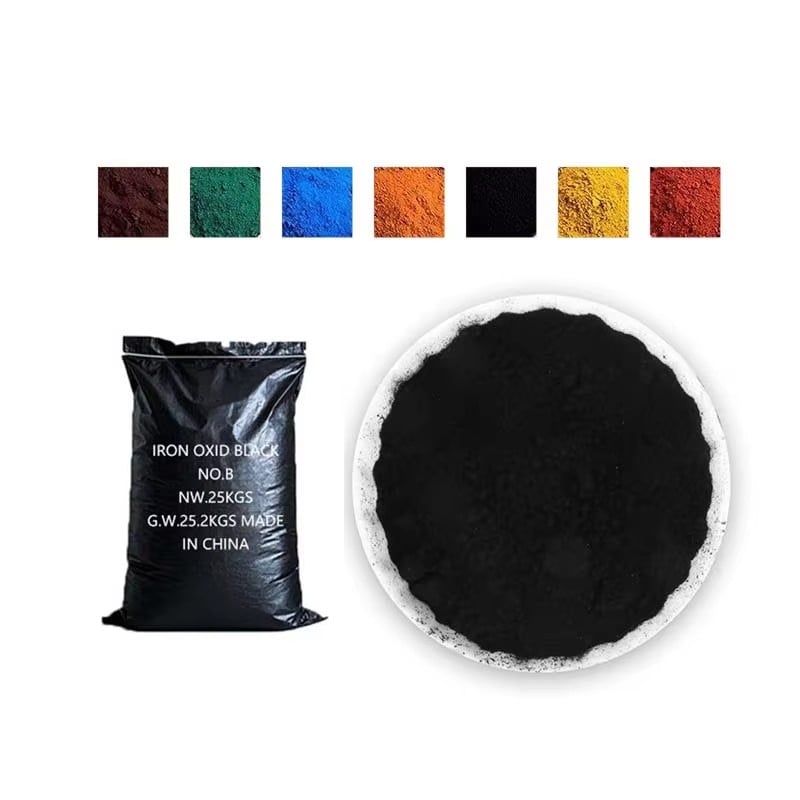
Our black iron oxide fe3o4 is not just a pigment; it is a tool for artistic expression. It combines the best of both worlds: the consistency and purity of synthetic production with the visual depth and complexity of natural minerals. Here is why it stands out:
Date: November 10, 2023
Location: Yixing, Jiangsu Province, China
Case Name: The "Midnight Glaze" Project for a Premium Tea Ware Brand
Challenge:
A renowned tea ware manufacturer was developing a new line of stoneware teapots with a deep, matte black glaze. They initially used a standard synthetic black iron oxide fe3o4, but the resulting surface appeared flat and lifeless, lacking the subtle variations seen in traditional Yixing clay. Switching to natural ore resulted in inconsistent coloring and frequent blistering due to impurities. The brand needed a solution that offered the reliability of synthetics with the aesthetic depth of naturals.
Solution:
The manufacturer partnered with Hebei Tianhuibao Technology Co., Ltd. to test our premium black iron oxide fe3o4. We provided a sample with a customized crystal morphology designed to enhance light scattering and depth. Our technical team worked with the client to adjust the glaze recipe, taking advantage of the high coloring strength of our black iron oxide fe3o4 to reduce the overall pigment load.
Results:
The choice between natural and synthetic iron oxides no longer has to be a compromise. With advancements in micronization and crystal control, manufacturers like Hebei Tianhuibao Technology Co., Ltd. are bridging the gap, offering pigments that deliver the best of both worlds. Our black iron oxide fe3o4 exemplifies this innovation, providing potters with a material that is consistent, pure, and aesthetically profound.
By choosing our black iron oxide fe3o4, you are not just buying a pigment; you are investing in the quality and integrity of your craft. Whether you are creating functional ware or artistic sculptures, our black iron oxide fe3o4 ensures that your vision is realized with precision and beauty. Embrace the future of pottery with pigments that respect tradition while embracing science. Let our black iron oxide fe3o4 be the foundation of your next masterpiece. With our black iron oxide fe3o4, the possibilities are as endless as your creativity. Trust in the power of refined black iron oxide fe3o4 to elevate your ceramics to new heights.
 Hot News
2026-09-04
2026-01-03
2026-01-01
2026-01-07
 EN
EN