 ×
×
Concrete is the most widely used construction material in the world — and for decades, its default color was gray. That is no longer the market reality. Architects, landscape designers, and municipal planners now specify colored concrete for building facades, paving systems, curbs, and hardscape projects where color is a structural part of the design intent. The colorant that makes this possible, in the vast majority of projects, is iron oxide for concrete — an inorganic pigment chosen for its lightfastness, alkali resistance, and long-term color stability.
But for a procurement manager sourcing iron oxide for concrete for a client supplying precast elements or paving products to European or North American contractors, "it's a good pigment" is not a sufficient answer. The question is whether the iron oxide for concrete batches in question meet documented compliance requirements — and whether the supplier can prove it. A concrete element that fails color specification on site is not a cosmetic problem; it is a contractual problem, a rework problem, and often a legal problem.
The Compliance Gap in Iron Oxide for Concrete Supply
The compliance gap in iron oxide for concrete supply is more common than buyers realize. Many suppliers produce iron oxide for concrete pigment with genuinely good color performance — high tinting strength, consistent shade, clean dispersion in cementitious systems — yet lack the formal test documentation that construction specification compliance requires. For buyers whose downstream customers work on government infrastructure, certified precast production, or architect-led building projects, that documentation gap is a supply chain liability, regardless of how well the pigment performs in a small laboratory test block.
The practical implication: not every supplier offering iron oxide for concrete maintains the certification documentation required for specification-driven market access. Knowing which documents matter — and how to verify them — is the difference between a compliant supply chain and an expensive surprise at project handover.
The Four Compliance Requirements for Iron Oxide for Concrete Batches
When assessing whether a supplier's iron oxide for concrete batches meet full compliance requirements, buyers should evaluate four distinct areas:
1. Standard Conformity: EN 12878 and ASTM C979
For iron oxide for concrete used in European construction, the relevant reference is EN 12878, the harmonized standard for pigments for the colouring of building materials based on cement and/or lime. In North American markets, ASTM C979 covers pigments for integrally colored concrete. Compliance-grade iron oxide for concrete pigment should be supported by test documentation confirming conformity with the applicable standard for your destination market — including requirements on pigment content, color consistency, and soluble matter.
A supplier who can reference specific standard tests for their iron oxide for concrete grades — rather than a generic "high quality" claim — provides documentary evidence that the product has been assessed against the criteria your project specification is likely to reference.
2. Heavy Metal Content and Leaching Safety
Iron oxide for concrete can be specified for a wide range of applications, including pavements, plaza surfaces, and precast elements that may be exposed to weathering, runoff, or — in some applications — contact with the public. Compliance considerations for iron oxide for concrete relate to the content of restricted heavy metals such as cadmium, lead, mercury, and chromium(VI), and in some regulatory contexts, to leaching behavior from the finished concrete element.
A compliance-grade iron oxide for concrete batch should be supported by third-party laboratory test reports confirming that heavy metal levels fall within the thresholds referenced by your destination market's construction or environmental regulations. For suppliers exporting iron oxide for concrete to EU-bound projects, REACH registration or a compliance declaration under EC 1907/2006 is a further documentation requirement that buyers should confirm before committing to volume.
3. Alkali Resistance and Stability in High-pH Concrete
Fresh concrete is an intensely alkaline environment, with a pH typically in the range of 12 to 13. Any colorant used in concrete must remain chemically stable under these conditions — a requirement that eliminates most organic pigments and explains why iron oxide for concrete has become the industry-standard choice.
However, not all iron oxide for concrete grades are equal in this regard. Impurity levels, residual soluble salts, and manufacturing process control all affect how a pigment behaves in cementitious systems. Soluble salt content, in particular, is a compliance-relevant parameter: excessive water-soluble salts in iron oxide for concrete can contribute to efflorescence — the white surface bloom that appears on improperly specified colored concrete. Buyers should request documented soluble salt and alkali-resistance data as part of the compliance file for any iron oxide for concrete grade under evaluation.
4. Batch-to-Batch Consistency and Tinting Strength
Color consistency across batches is not just a quality preference when sourcing iron oxide for concrete — in specification-driven construction supply chains, it directly affects contract compliance. Consider what happens when two consecutive batches of iron oxide for concrete pigment show color variation that exceeds the tolerance in a precast element order: a rejected delivery, a production halt, a costly re-pour, and a supplier qualification review. Single-sample COAs are not sufficient evidence of batch compliance.
Reliable iron oxide for concrete suppliers maintain documented color consistency data — typically expressed as delta-E values and relative tinting strength across multiple production batches. Asking for multi-batch comparison data is not excessive diligence; it is standard practice for procurement teams managing long-term supply agreements for iron oxide for concrete colorants.
Iron Oxide for Concrete: Red, Yellow, and Black Compliance Profiles
Not every iron oxide for concrete grade presents the same compliance considerations. Understanding the specific profile of each type helps procurement teams ask the right questions:
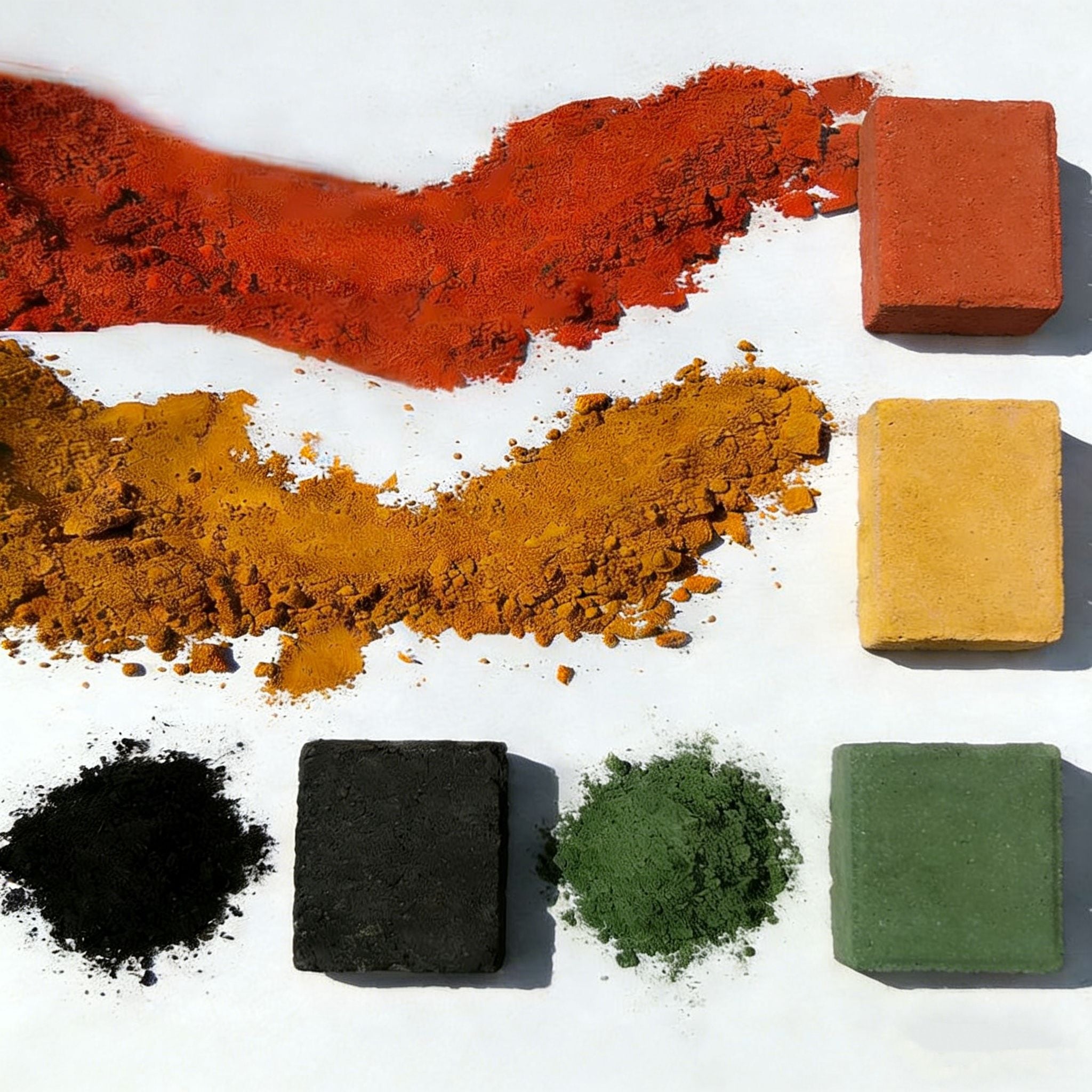
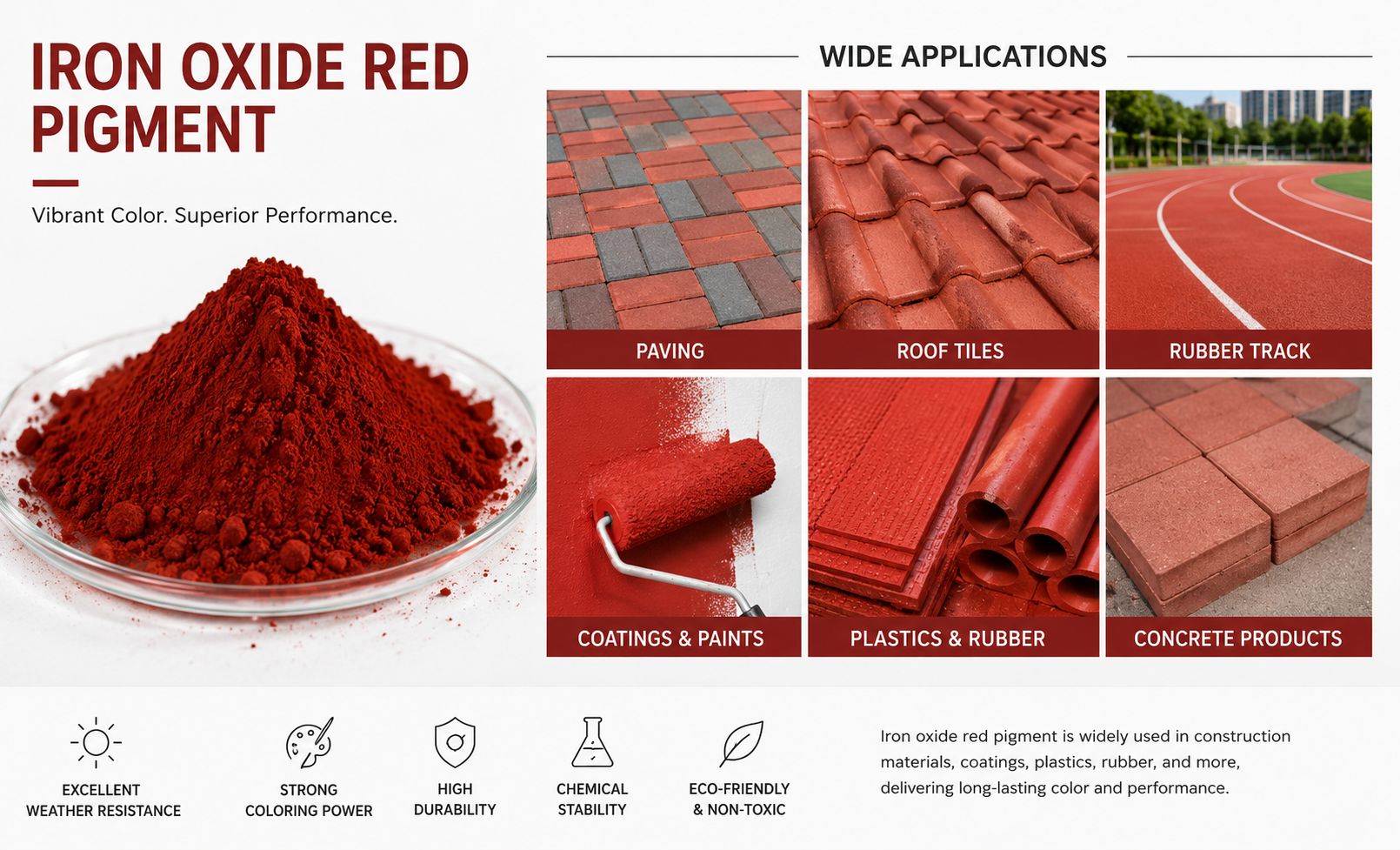
Red Iron Oxide (Fe₂O₃) for Concrete: The most widely used colorant for integrally colored concrete, precast elements, and architectural finishes. Red iron oxide for concrete is thermally stable, chemically stable in high-pH cementitious systems, and highly lightfast — properties that make it suitable for both cast-in-place and precast applications. Compliance focus: Fe₂O₃ purity, confirmed absence of restricted heavy metals, and soluble salt content within specified limits. Red iron oxide for concrete is among the most thoroughly tested and well-documented grades available from established manufacturers.
Yellow Iron Oxide (FeOOH) for Concrete: Widely used for sand, buff, and ochre tones in concrete paving and architectural finishes. Yellow iron oxide for concrete requires compliance documentation that accounts for its thermal conversion behavior above approximately 180°C, where it dehydrates and converts to red iron oxide. For standard concrete curing and most ambient-temperature applications, this is not a practical concern. However, buyers specifying iron oxide for concrete in autoclaved or steam-cured products should confirm that the TDS and SDS documentation addresses the actual processing temperature of their application.
Black Iron Oxide (Fe₃O₄) for Concrete: Used for charcoal, graphite, and deep gray tones in architectural concrete and paving. Black iron oxide for concrete has a favorable compliance profile — low heavy metal content, good chemical stability, and no known restricted substance concerns in standard applications. Moisture content specifications are important for black iron oxide for concrete storage and handling, as moisture absorption can affect dosing accuracy and consistency during batching.
How to Audit a Supplier's Compliance Documentation for Iron Oxide for Concrete Batches
Are you evaluating a supplier who claims full certification for iron oxide for concrete products — but you're not sure which documents to request or how to verify them? Here's a practical checklist:
One important operational note when evaluating iron oxide for concrete suppliers: samples and bulk cargo can differ in quality. Sample-approved iron oxide for concrete that does not perform consistently in production batches is a known supply chain problem. Production-scale quality controls — not sample performance alone — are the relevant compliance indicator for large-volume iron oxide for concrete procurement.
Compliant Iron Oxide for Concrete Supply from Hebei Tianhuibao
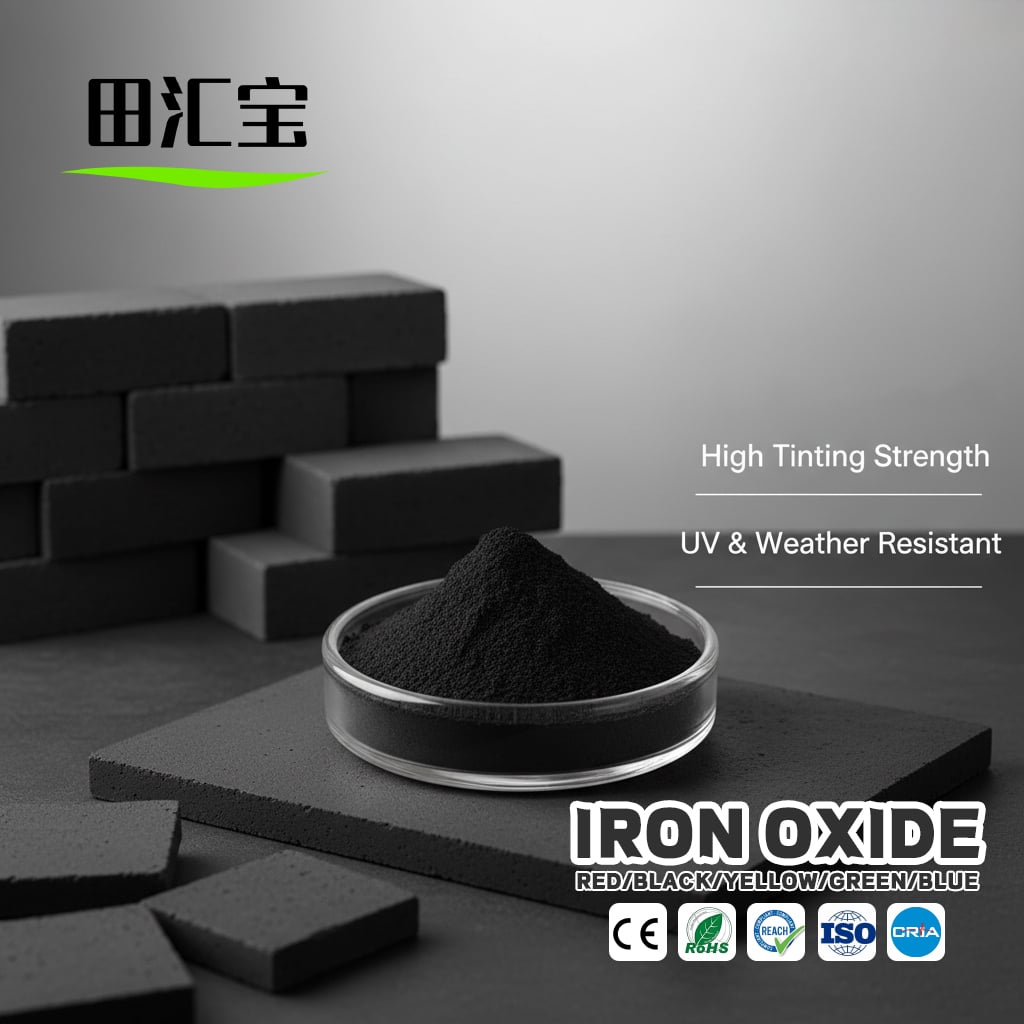
At Hebei Tianhuibao Technology Co., Ltd., iron oxide for concrete and industrial pigment supply is built around documented compliance from the outset. Our iron oxide for concrete and construction pigment grades are REACH and CE certified, and every shipment is supported by COAs, SDS/MSDS documentation, and third-party test reports. With 50,000 tons of annual production capacity and established export operations across 150+ countries, our iron oxide for concrete and pigment supply chain is designed for consistent, audit-ready delivery.
Our iron oxide for concrete batches — red, yellow, and black grades — are produced with batch-to-batch color consistency maintained within controlled tolerance limits. The minimum order quantity starts at 1 metric ton, while samples for evaluation are provided separately and do not count toward the MOQ — allowing procurement teams to verify product performance before committing to production volumes. Third-party factory or port-of-loading inspections are supported for buyers requiring additional quality assurance.
To review our iron oxide for concrete and industrial pigment offerings, or to request compliance documentation and samples, explore our iron oxide product range or contact our team directly.
Compliance Is the Foundation of Long-Term Iron Oxide for Concrete Procurement
Sourcing iron oxide for concrete is a decision that extends well beyond color and price. For buyers supplying specification-driven construction projects, the compliance documentation behind your iron oxide for concrete batches determines whether your shipment clears quality control, whether your precast or paving products meet the color tolerance in your customer's contract, and whether your supply chain can withstand a project audit.
Iron oxide for concrete has a long, stable application history in architecture and infrastructure. In professional B2B procurement, that stability is most effectively maintained by working with suppliers whose iron oxide for concrete batches are backed by current, specific, and verifiable compliance documentation — not by general product descriptions or outdated certificates. For buyers prioritizing reliable, compliant iron oxide for concrete supply, the checklist above is a practical starting point for supplier qualification.
 Hot News
2026-10-10
2026-10-08
2026-09-17
2026-09-11
2026-09-10
2026-09-04
 EN
EN