 ×
Iron oxide black is the easiest pigment to source and one of the easiest to get wrong. It carries the colour index name Pigment Black 11, it is chemically Fe₃O₄ — magnetite — and it is the default black colorant for concrete pavers, blocks, roof tiles, mortar, asphalt and a long list of plastic and coating products. Buyers rarely have trouble finding a supplier. They have trouble when a black surface that looked right in a sample panel comes out grey and patchy on site, or when a black part goes brown in a kiln or an extruder.
The short answer: black is not a "harder" pigment, it is a different one. Its heat ceiling is lower than red's, its failures are more visible than any other colour's, and the specification that protects you is a short one — Pigment Black 11, water-soluble matter within the ASTM C979/C979M limit, a retained standard, and a trial in your own mix. The sections below explain what is behind each of those.
Pigment Black 11 is iron(II,III) oxide, Fe₃O₄, the mineral magnetite. Synthetic iron oxide black is produced under controlled conditions, which is why it arrives with a defined particle size distribution, a defined tinting strength and a colour that repeats from lot to lot. Natural magnetite exists in large quantities and is cheaper, but it carries whatever came out of the ground with it — silica, clay and other minerals — and those impurities show up as inconsistent colour, inconsistent strength and inconsistent dispersion.
That difference is the reason the specification should name the pigment rather than the colour. "Black iron oxide" describes a family. Pigment Black 11 produced by controlled synthesis describes a product, and a supplier who uses the index name is telling you the chemistry is defined rather than dug.
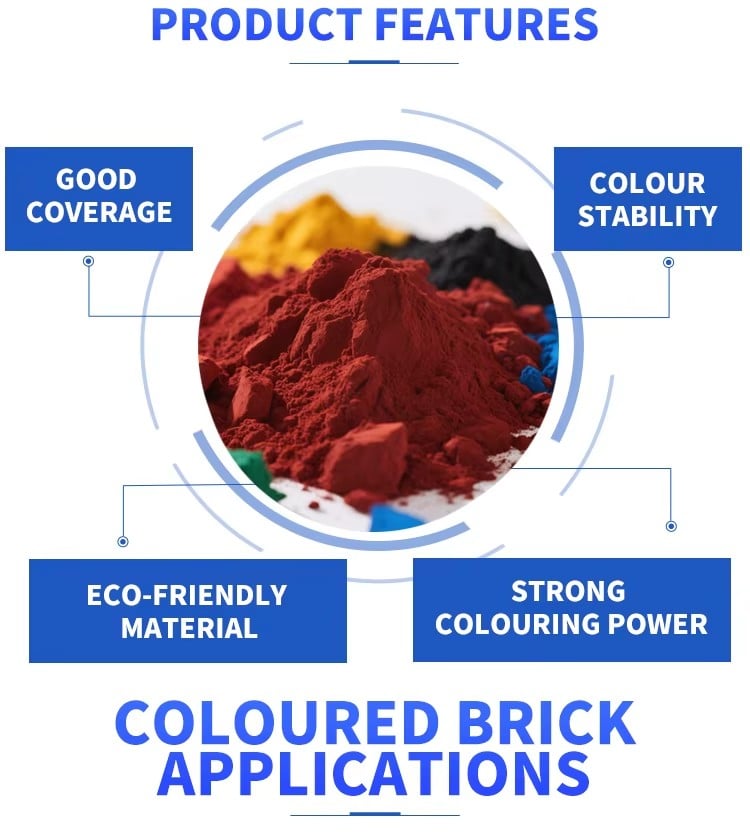
The properties that matter downstream are the usual inorganic pigment set, and black holds them well: insoluble in water, resistant to alkali (which is what a cement matrix is), stable under UV and weathering, non-migrating, and non-toxic at the loadings used. It is also, tonne for tonne, one of the strongest colorants available to a concrete producer, which is why it can be worked into the very dark shades that architects specify.
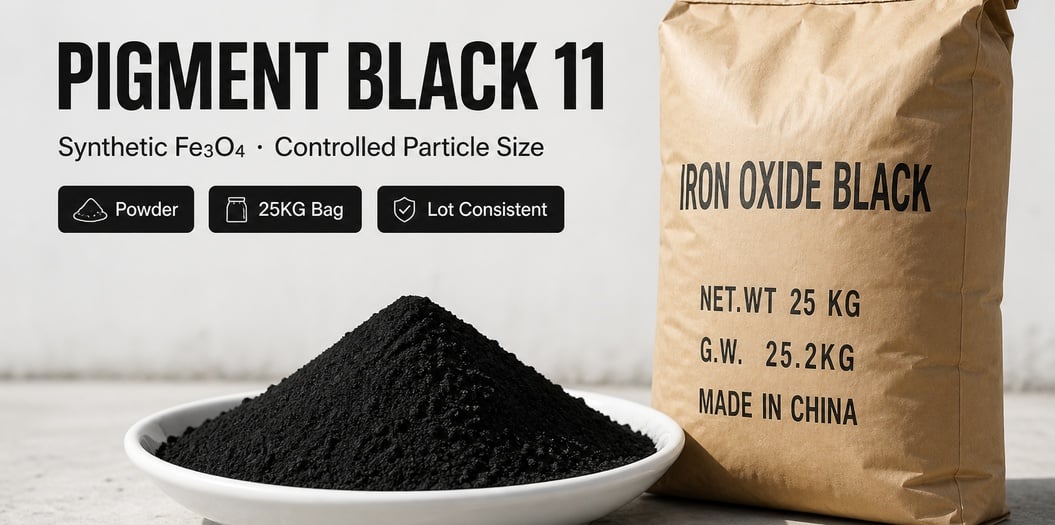
Three differences decide most of what goes wrong, and all three are consequences of the chemistry rather than of quality.
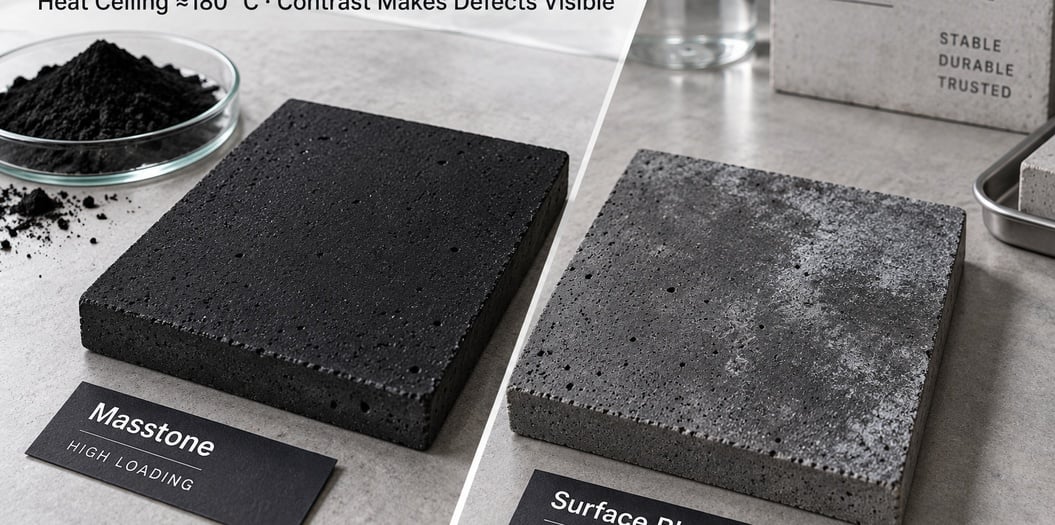
Heat. Magnetite is an oxide of iron in a mixed oxidation state. Heat it far enough and it oxidises further, and the stable end point in an oxidising atmosphere is haematite — red iron oxide. In practice the commonly cited service and processing ceiling for iron oxide black sits around 180 °C, which is comfortable for asphalt, roofing compounds and most polymer processing, but not for a ceramic body that has to be fired. A black that is expected to stay black through a kiln is being asked to do something the chemistry does not support. Products that need to go through firing and still read black are a different material problem, and worth raising with the pigment supplier before the body is designed.
Contrast. Every pigmented surface shows bloom, lime migration and curing-related haze. On a red paver they read as a lighter patch of the same family. On a black paver they read as white staining, because black leaves no room for a lighter shade to hide. This is why black facades and pavements generate the most efflorescence complaints per square metre even though the pigment has nothing to do with the mechanism. How efflorescence forms in coloured concrete and how to reduce it is a separate subject, but the practical rule is that the darker the surface, the more rigorously the water, curing and salt load have to be controlled — and the more carefully the pigment's own water-soluble matter limit should be checked.
Loading. Deep black is a high-loading colour. To go genuinely dark you need more pigment per tonne than red or yellow, which pushes the addition rate toward the upper end of the permitted range. Iron oxide pigment dosage for concrete works through the arithmetic against your own materials; the point here is that at high loading, dispersion quality stops being a detail. A pigment that disperses easily at 2% can still produce streaking and mottling at 6%.
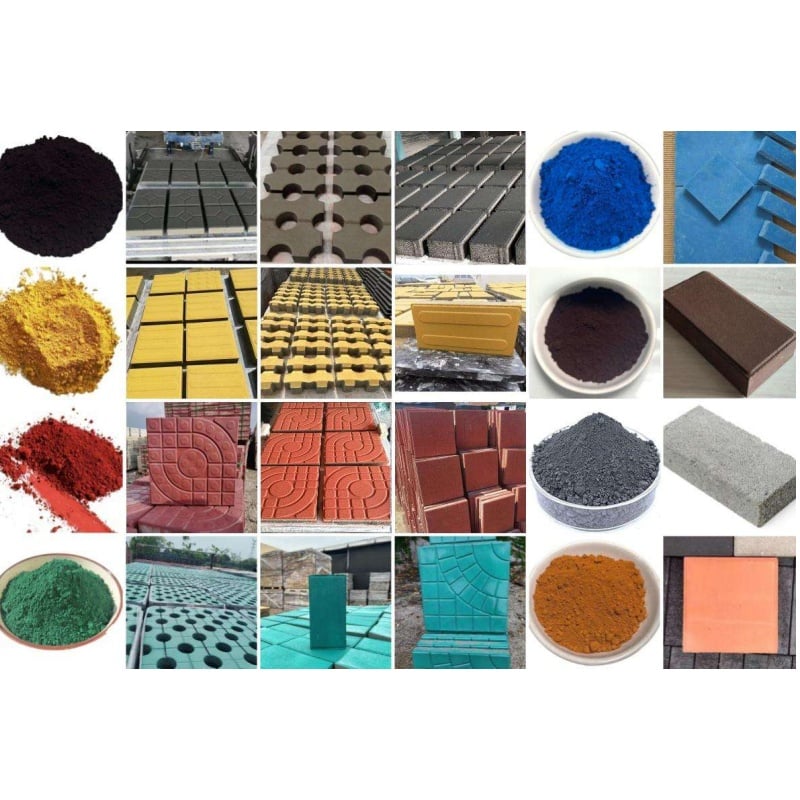
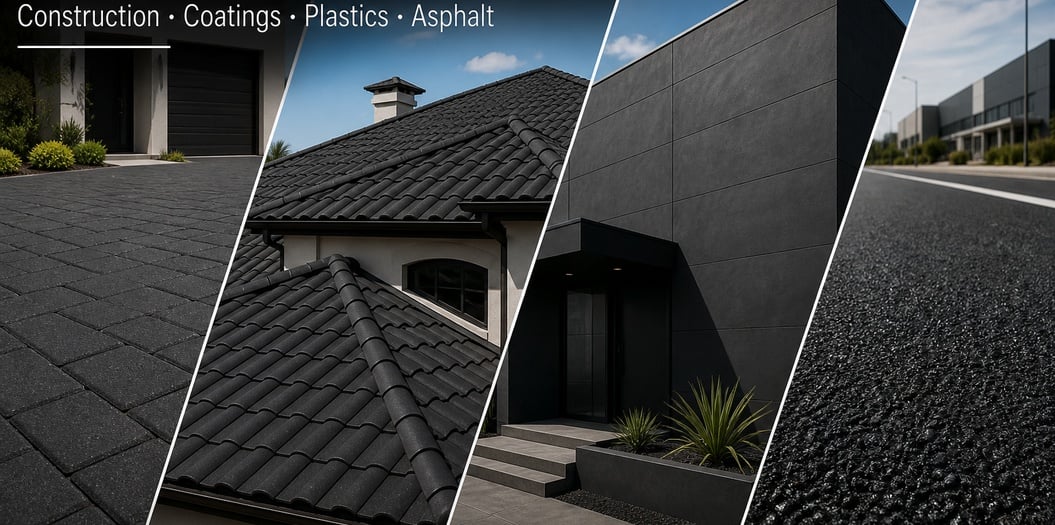
Most of the volume goes into four groups, and the reason black is specified is normally that a thin film or a thin section still has to read black.
| Application | Why black is specified | What to watch |
|---|---|---|
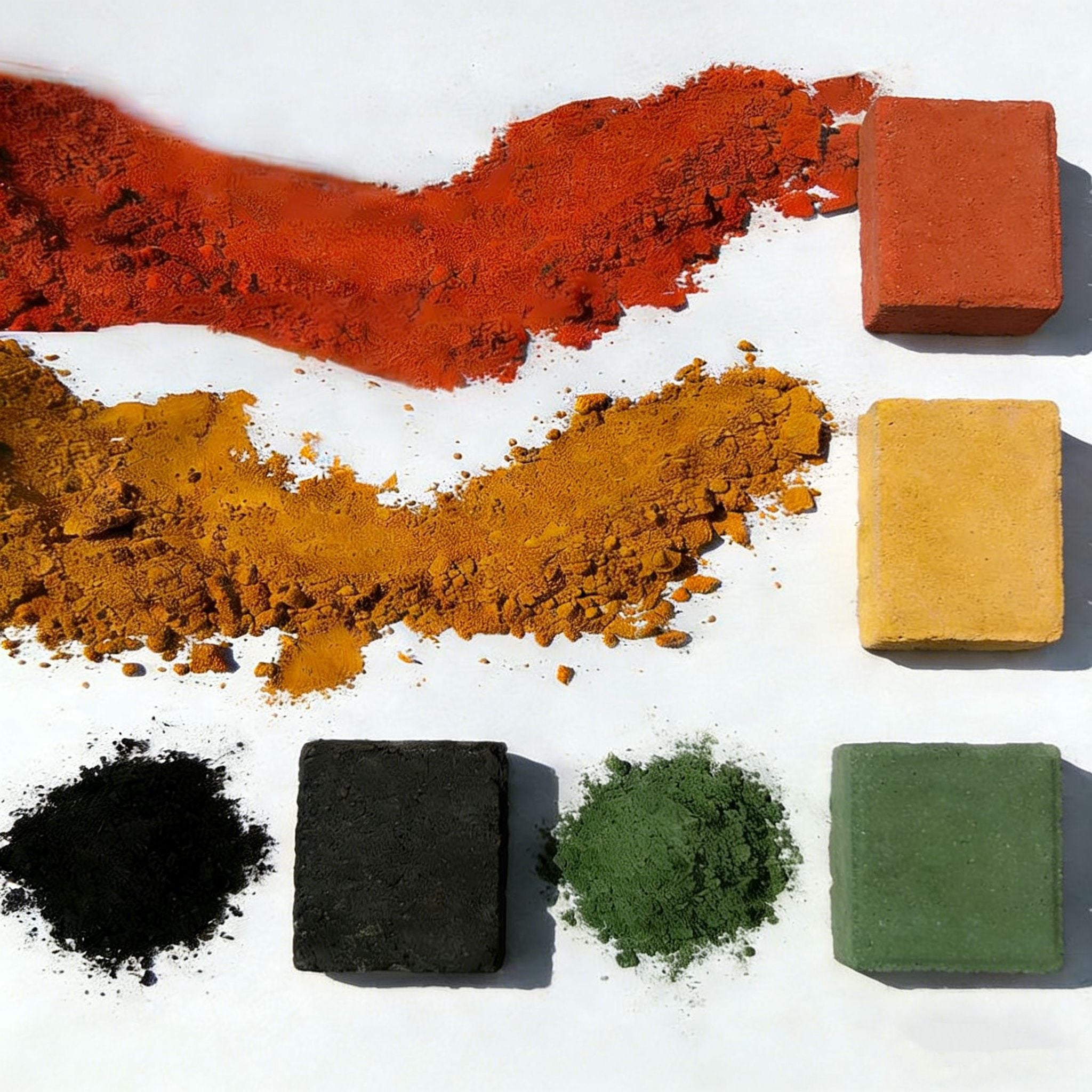
| Concrete block pavers, paving slabs, walling blocks | Uniform dark tone across a very large production run; pavers are laid next to each other, so any batch-to-batch drift is instantly visible | Batch-to-batch ΔE against a retained standard; surface finish consistency |
| Roof tiles, architectural masonry, mortars and grout | Colour has to survive decades outdoors without fading, under UV and rain cycling | Water-soluble matter; salt content; curing regime |
| Ready-mix and precast concrete | Deep shades that organic colorants cannot hold in an alkaline matrix | Loading rate; dispersion; cement source changes |
| Asphalt, roofing compounds and industrial coatings | Good heat stability inside the ~180 °C window; in coatings, black pigments also contribute to the primer's protective function | Processing temperature ceiling; binder compatibility |
| Plastics and rubber | Non-migrating and easy to disperse in most polymer systems | Processing temperature versus the heat ceiling |
Two common threads run through that table. The first is that black is bought for permanence, not for fashion — the customer is specifying a colour that has to still be the same colour five years later. The second is that black is unforgiving of variation. Where a supplier's colour control matters most is exactly here, which is why a retained standard and a measured tolerance are worth more on a black order than on any other. Setting a ΔE tolerance you can enforce covers how to write that into a purchase order.
Fired ceramics and high-temperature processes are the honest limitation. Past the oxidation threshold, black moves toward red-brown, and no specification can hold it there. If the product has to be fired, the colour decision belongs to a different part of the palette or to a different material system.
Everything else that gets blamed on the pigment is usually one of five things:
Notice that four of the five are process variables. This is the practical reason to run a trial rather than argue: a complaint that names the pigment usually resolves into the mix, the cure or the finish once the same pigment is run under controlled conditions. Why compliance-grade pigment matters across a B2B supply chain walks through the same argument from the procurement side.
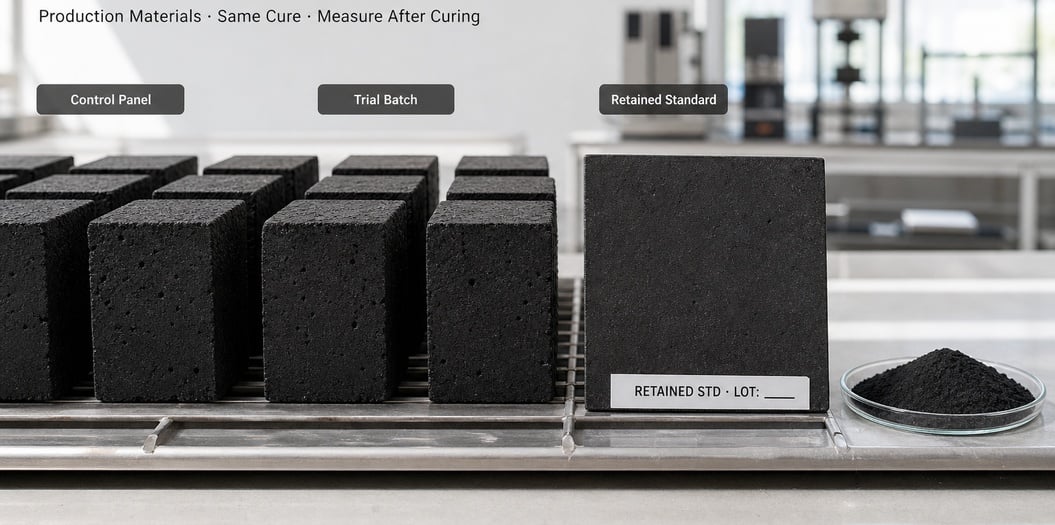
The specification can be short, and shorter is better because fewer clauses get examined.
The grade matters less than the discipline. A standard, a number and a retained sample will settle more disputes than any amount of grade-shopping. The Iron Oxide Black Series covers the grades available for construction, coatings and polymer applications, and custom colour matching is where a specific target shade, particle size or packaging requirement gets worked out.
Black repays a structured trial more than any other colour, because the failure modes are visible at a glance. A red that drifts slightly still reads as red; a black that drifts slightly reads as grey, and on a laid pavement the change of batch is what the eye finds first. The trial is how that gets settled before a production run rather than after a complaint.
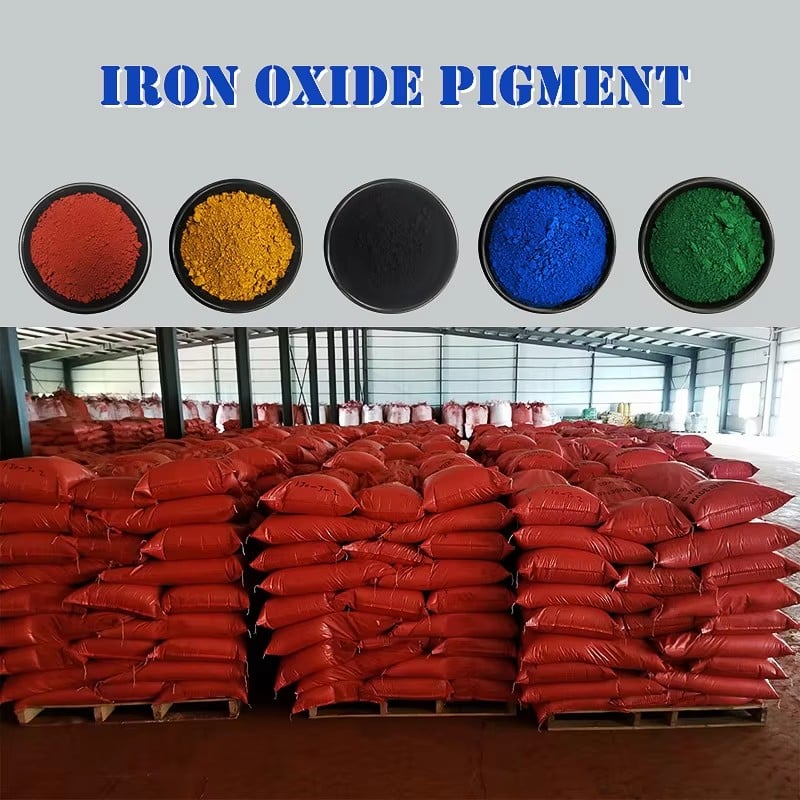
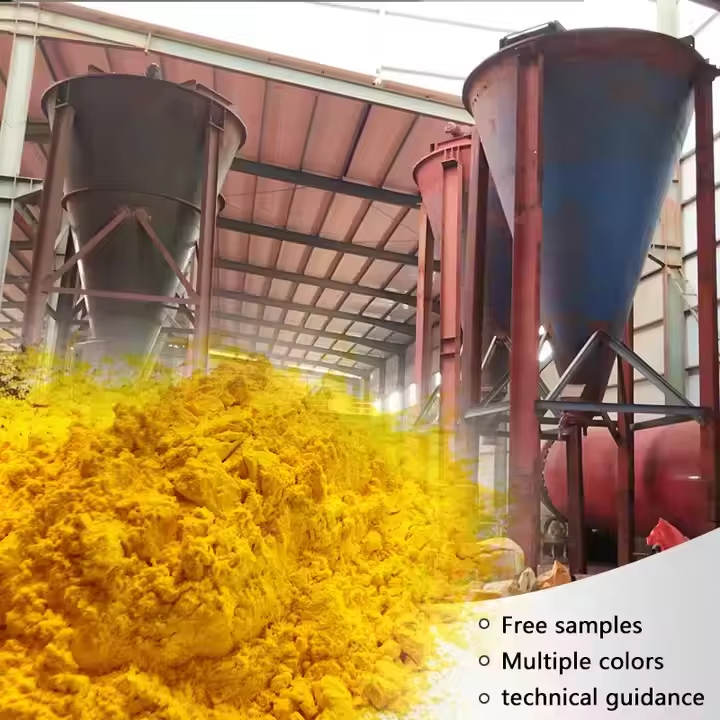
Hebei Tianhuibao Technology Co., Ltd. has manufactured iron oxide pigments for 26 years, with an annual production capacity of 50,000 tons, supplying customers in more than 150 countries and regions. The range covers the Iron Oxide Black Series alongside red, yellow, brown, and composite green and blue pigments, with factory-direct colour matching, particle size adjustment and packaging customisation through Custom Services. Certifications held include REACH, RoHS, CE and ISO. The minimum order quantity is 1 metric ton, packed in 25 kg bags ex-stock; customised items are produced on a 7–15 day cycle. Colour data measured against a retained standard is available with the lot.
To specify a black that holds, send us the substrate, the processing or service temperature, and the target shade — we will come back with the grade, the loading you should trial, and a sample for your own mix. Contact: [email protected] / +86-13400211655.
 Hot News
2026-10-10
2026-10-08
2026-09-17
2026-09-11
2026-09-10
2026-09-04
 EN