 ×
A colored render that was signed off in a bucket and then reads wrong on the wall is one of the most common complaints in the pigment business, and it is almost never the pigment's fault. Mortar and render are thin-section materials applied to an absorbent background, and both of those facts change the color more than a change of pigment grade does. The same ochre pigment that produces a clean buff in a cast sample can dry to a pale, chalky version of itself on a wall, or to a patchy one, without anything being wrong with the bag it came from.
The practical answer is short: specify the pigment against the binder weight rather than the aggregate, fix the binder before you fix the color, and approve the shade on a trial panel on the real substrate and cured the real way. Everything below explains why each of those three things decides the outcome.
Three differences separate mortar and render from concrete, and each one moves color.
The section is thin. Render is applied in millimetres, not hundreds of millimetres. There is far less material between the surface and the background, so what sits behind the render — the block, the brick, the old substrate — has a much shorter path to influence what the eye sees. A dark substrate under a thin cream render pulls the finished tone down; the same mix over a light substrate reads brighter.
The binder fraction is high. Mortar and render carry a much higher proportion of binder relative to aggregate than structural concrete does, because workability and adhesion demand it. The pigment is dispersed in that binder, so the binder's own color is a larger share of the final tone. Change from a grey cement to a lighter one, or from cement to a lime-rich mix, and the color moves even though the pigment dose did not change.
The water leaves through one face. Render dries mainly by evaporation from the exposed surface and by suction into the background. Both draw soluble material toward the surface and both leave the surface denser and, usually, lighter than the body of the material. That is a physical process, not a pigment property, and it is the origin of most "the color faded" reports on rendered facades.
This is the decision that gets taken first and reconsidered last, and it should be the other way round.
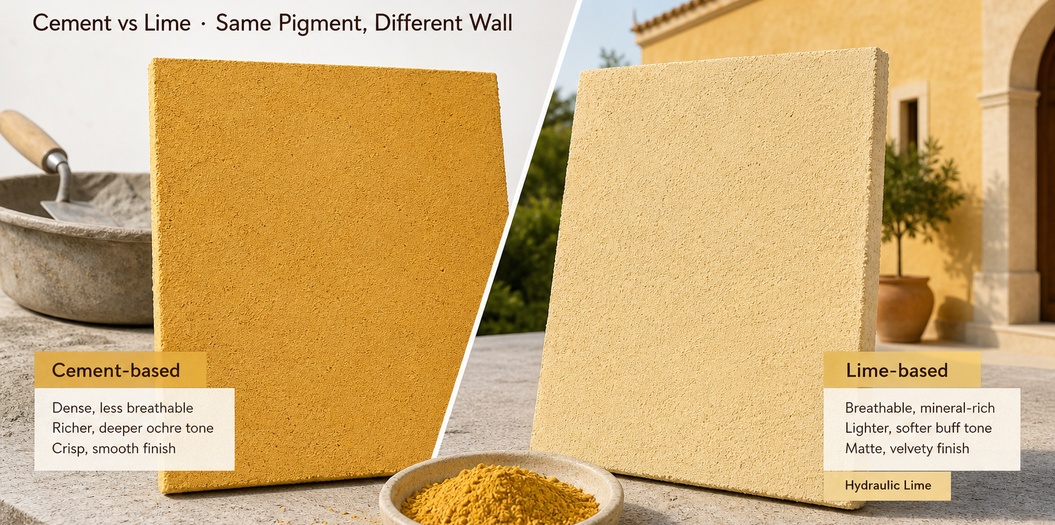
A cement-based render and a lime-based render of nominally the same shade are not the same color, and they do not age the same way. Cement-rich mixes are denser, less vapour-permeable and typically darker and more uniform in tone. Lime-rich mixes are more permeable, more forgiving of movement, and tend to dry to a softer, lighter, more variable surface — the variability being part of what people like about them, and also the reason a client who approved a flat sample is surprised by the wall.
If the design intent is a historic or vernacular look, the binder is usually lime and the color expectation has to be set on a lime panel, not on a cement panel tinted to match. Trying to reach a lime look with a cement mix by adding more pigment does not work: the pigment deepens the tone but the surface still reads cement, because the difference the eye is picking up is texture and light scatter rather than chroma.
Two practical consequences follow. First, freeze the binder system before the color is approved, because a later change of binder invalidates the color approval. Second, record the binder in the specification alongside the pigment, so that a re-render in three years does not silently change the system.
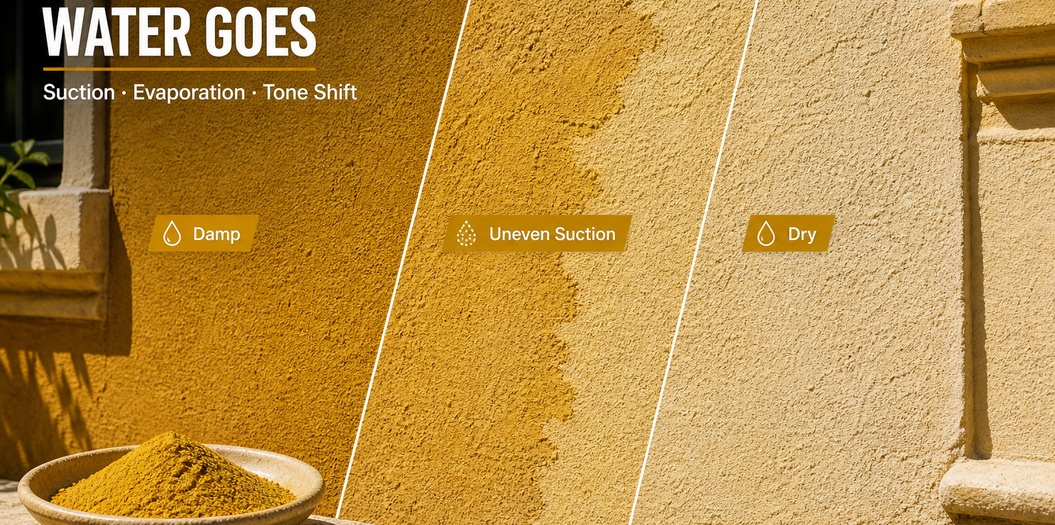
Render loses water in two directions at once, and the two directions act on the surface differently.
Suction into the background pulls water inward quickly, especially on a dry, porous block. Evaporation works at the exposed face. A background with high and uneven suction — old brick, patchy repair mortar, a substrate that was damped unevenly — produces uneven drying, and uneven drying produces uneven tone. This is the mechanism behind the patchy render that gets photographed and sent to the pigment supplier.
There is a second effect that matters for darker and mid-tone shades: as water moves to the surface and evaporates, it carries soluble salts with it. When those salts crystallise at or just below the surface, they scatter light and the wall reads lighter and greyer than intended. That is efflorescence, and its mechanism and control are covered separately in Efflorescence in Colored Concrete — the chemistry does not change because the material is a render rather than a slab, but the thin section makes it more visible and faster to appear.
What follows for color control is unglamorous but effective: dampen the background evenly before application, keep the water content of the mix consistent between batches, protect the fresh render from drying too fast in sun or wind, and judge the color when the wall is dry rather than during curing. Comparing a damp wall against a dry approved panel is the single most common way a sound job gets rejected.
The specification for a colored render can be one page, and it should be, because every clause on it will be examined when something goes wrong.
| Item | What to state | Why |
|---|---|---|
| Pigment identity | Iron oxide pigment with the color index name, supplied as powder, granule or aqueous preparation | EN 12878:2014 covers pigments for coloring building materials based on cement and/or lime, including pigments supplied in all three of those forms, and expressly allows their use in pure lime mortar |
| Compliance basis | Conformity to EN 12878 for cement- and lime-based systems | It is the standard written for this application, and it sets the requirements and test methods the material has to meet |
| Binder system | Cement, cement-lime, masonry cement or lime, with the mix designation | The binder changes the finished color; a color approval is only valid for one binder system |
| Dosage basis | Pigment expressed as a percentage of binder weight, not of total dry mix | Mortar and render carry a high binder fraction; dosing against total mass makes the same figure mean different things on different mixes |
| Mortar / plaster reference | ASTM C270 for mortar for unit masonry where a US specification is in use; ASTM C926 for application of portland cement-based plaster where stucco is specified | These govern the mortar and the application, and they are the documents an inspector will hold you to |
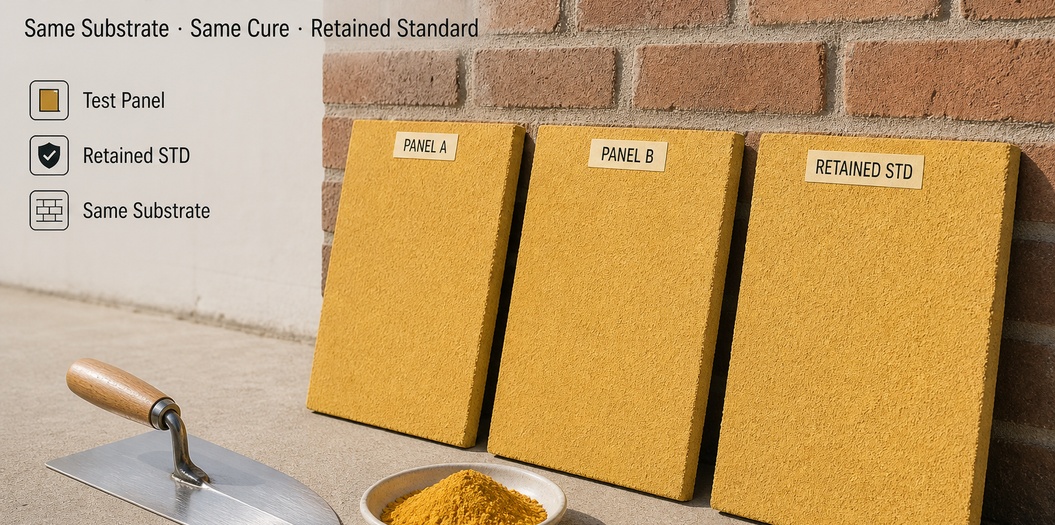
| Shade reference | A retained physical panel on the actual substrate, sealed and dated | A photograph cannot arbitrate a color dispute |
| Acceptance | The ΔE limit and the light it is judged under, with the measurement formula named | Without a number there is no way to settle which of two panels is closer |
The dosage line is worth a second look, because it is where specifications most often go wrong. A figure quoted as a percentage of total dry mix is not portable between mixes: change the binder-to-sand ratio and the same number delivers a different amount of pigment per unit of binder, which is the quantity that actually controls depth of color. Fixing the basis removes a whole class of disagreement before it starts. If the dosage for a particular grade is in question, Iron Oxide Pigment Dosage for Concrete works through the arithmetic of dosing against your own materials, and the same logic applies here with the binder as the reference.
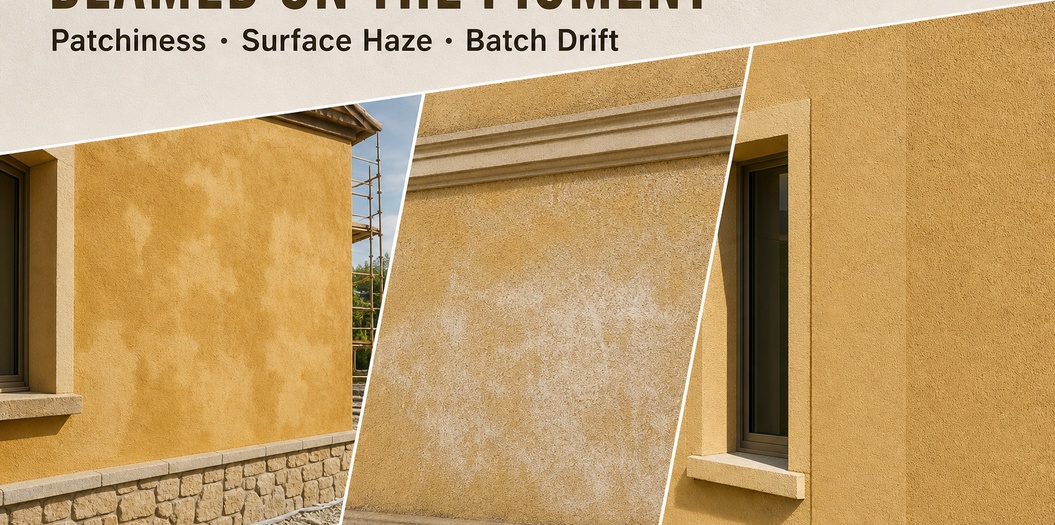
Most render color complaints resolve into a short list, and only one entry on it is a pigment problem.
| What is seen | What is usually happening | Where to look first |
|---|---|---|
| Whole wall lighter than the approved sample | Comparison made damp against dry, or curing still in progress | Re-check when dry, in the same light, against the retained panel |
| Patchy, uneven tone | Uneven suction from the background, or uneven damping before application | Background preparation and moisture uniformity |
| White or grey haze on the surface | Salt migration and crystallisation at the surface | Water quality, salt load, drying conditions |
| Colour weaker than a previous job | Binder changed, or dosage basis changed between jobs | Mix design records, not the pigment certificate |
| Slight shade drift between batches | Different pigment lot, or different sand color | Batch records for both pigment and sand |
| Genuine shade error against the standard | Pigment lot outside tolerance | Lot certificate and a measured ΔE against the retained panel |
The pattern is consistent: five of the six are process, and the sixth is measurable. That is the practical argument for putting the measurement in writing — setting a ΔE tolerance you can enforce describes how to write it so that a later lot can be accepted or rejected on a number rather than on an opinion.
One more failure deserves its own line because it is specific to ochre and buff shades. Iron oxide yellows are the workhorse for cream, buff and ochre renders, and they are strong enough that small dosing errors read as visible steps in tone. They are also supplied in grades that differ in tinting strength, so a substitution between grades at the same nominal dose produces a different depth. Ask for the grade by name — the Iron Oxide Yellow Series covers the 313 and 920 grades and where each is normally used — and hold the grade fixed across the project.
A trial in a bucket proves nothing about a wall. The trial has to reproduce the two things that decide the outcome: the substrate and the drying.
Done this way, the trial answers the question the client is actually asking — what will this wall look like — rather than what color the pigment is in a bag.
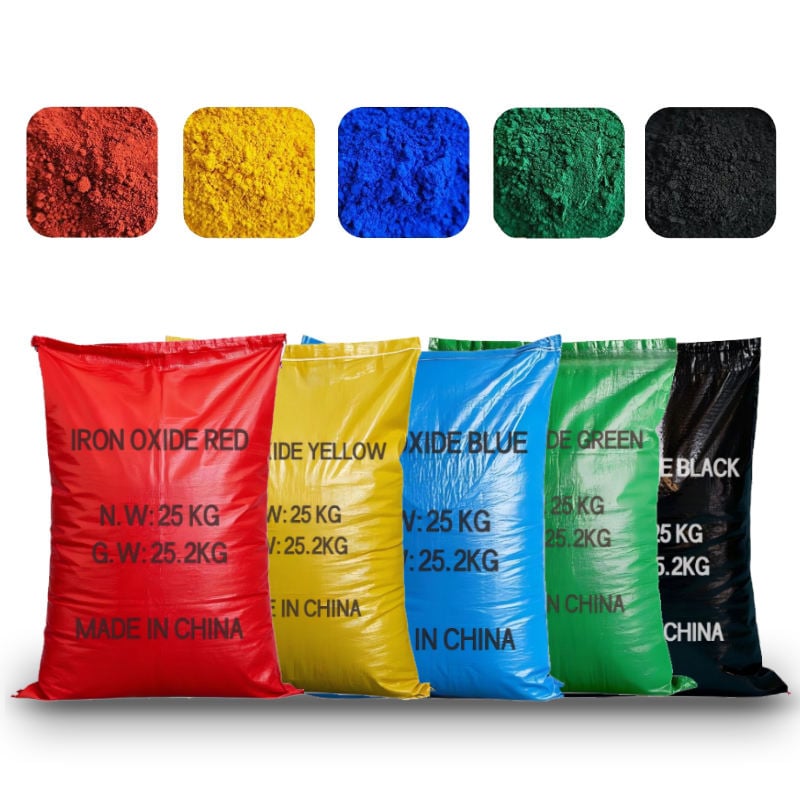
Hebei Tianhuibao Technology Co., Ltd. has manufactured iron oxide pigments for 26 years, with an annual production capacity of 50,000 tons, supplying customers in more than 150 countries and regions. The range covers the Iron Oxide Yellow Series, the Iron Oxide Red Series, the black and brown series, and composite green and blue pigments, in powder, granule and easy-dispersing forms, with factory-direct color matching and particle size adjustment through Custom Services. Certifications held include REACH, RoHS, CE and ISO. The minimum order quantity is 1 metric ton, packed in 25 kg bags ex-stock; customised items are produced on a 7–15 day cycle. Colour data measured against a retained standard is available with the lot.
If you are specifying a colored render, send us the binder system, the substrate and the target shade. We will come back with the grade, the dosage basis for your mix, and a sample to trial on your own wall. Contact: [email protected] / +86-13400211655.
 Hot News
2026-10-10
2026-10-08
2026-09-17
2026-09-11
2026-09-10
2026-09-04
 EN