 ×
In short: Iron oxide pigments ship under HS 2821.10, and those six digits are almost never what delays a load. Holds come from a file that disagrees with itself: a net weight that does not match the packing list, a description that drifts from the invoice, a COA naming a grade the bag does not carry. Below is the document set a pigment buyer should hold before dispatch, the fields that must line up across it, and a ten minute check you can run on your own file.
Every pigment order eventually turns into a stack of paper. The buyer spends weeks on grade, tinting strength and price per ton, then the container sits at the port because the invoice says "iron oxide" and the customs declaration says "inorganic pigment, mineral origin". Same goods. Two descriptions. One hold.
This piece is about that gap, and about the documents that close it.
Iron oxide pigments fall under HS 2821.10 (Harmonized System heading for iron oxides and hydroxides). That heading is the same in every country that uses the system, which is most of them. National tariff lines then add two to four digits on top, so a Chinese declaration runs to ten digits while an EU declaration stops at eight.
The code is not where mistakes happen. The description is.
Customs systems compare the declared description against the invoice, the packing list and sometimes the product literature. If your supplier writes "iron oxide pigment, synthetic, red" on the commercial invoice and "mineral colorant" on the declaration, an officer has a legitimate reason to ask. The fix is boring: one product name, written the same way on every document, with the grade appended where the grade matters.
For pigment this looks like:
> Synthetic iron oxide pigment, red, grade 130, powder, 25 kg net per bag
Grade matters because 130, 190, 110 and 313 are different products with different prices, and a description that omits the grade invites a valuation question later. It also matters because some markets apply trade measures to specific iron oxide lines depending on origin. Ask your broker to confirm the national line and any measure attached to it before you book, rather than after the container is loaded. That check takes a phone call. A hold takes a week.
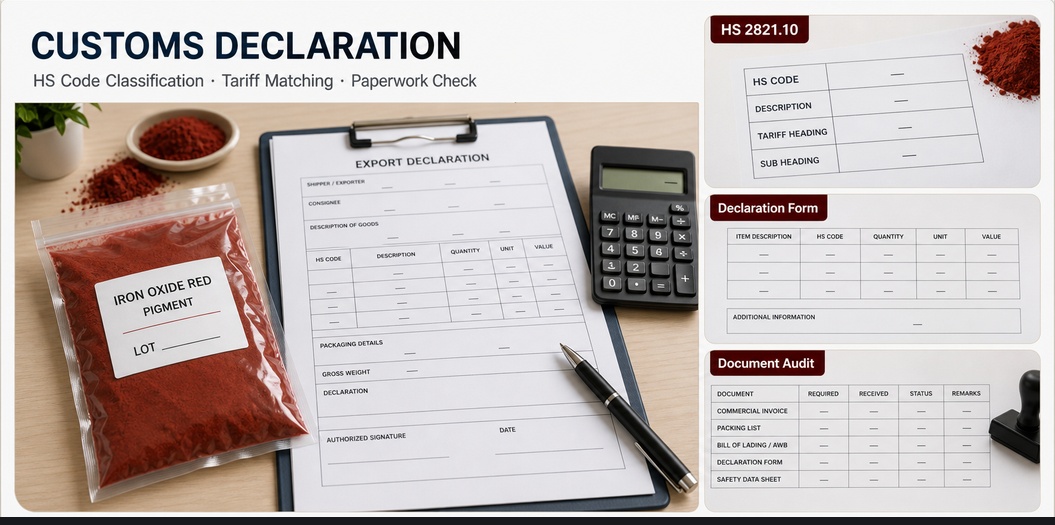
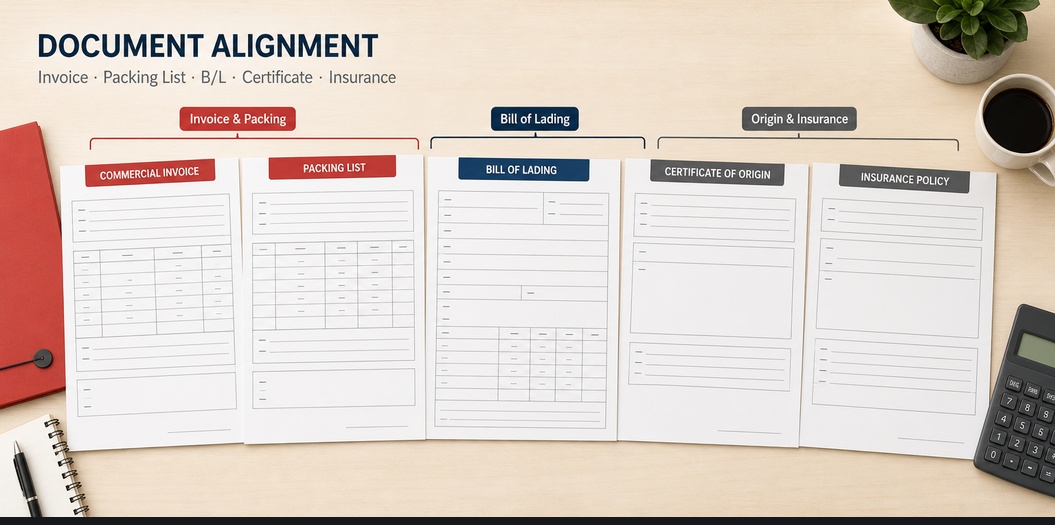
A customs broker does not read your emails. They read the file, in a fixed order, and they compare one document against another. Five of those documents decide most of the outcome.
| Document | Who issues it | What has to agree elsewhere |
|---|---|---|
| Commercial invoice | Seller | Product description, grade, quantity, unit price, and the Incoterms 2020 term you agreed |
| Packing list | Seller | Net weight, gross weight, bag count, pallet count, dimensions |
| Bill of lading (carrier's receipt and contract of carriage) | Carrier or forwarder | Shipper, consignee, port pair, container number, seal number |
| Certificate of origin | Chamber of commerce or an authorized body | Origin criteria, invoice number, exporter name spelled exactly as on the invoice |
| Insurance certificate, on CIF or CIP terms | Insurer | Insured value, vessel, voyage, and the Incoterms term it corresponds to |
Two rows in that table cause most of the trouble. The first is weight. Net weight is the pigment. Gross weight includes bags, pallets and stretch wrap. A packing list that shows one figure where the broker expects two will be queried, and the answer arrives by email two days later. The second is names. If the exporter's legal name changed, or the invoice uses a trading name while the certificate of origin uses the registered name, the file no longer matches itself.
Neither problem is technical. Both are avoidable by reading the five documents side by side before they leave the office.
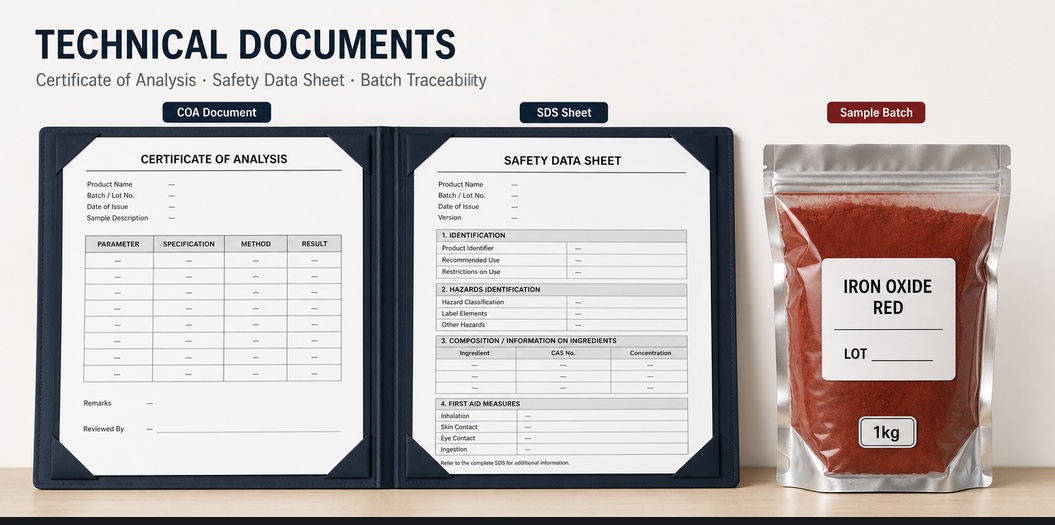
Buyers ask for both, and suppliers sometimes send one while promising the other. They serve different purposes and neither substitutes for the other.
The certificate of analysis is lot specific. It reports what was measured on the material in that container: iron content as Fe2O3, moisture, residue on sieve, pH of aqueous extract, oil absorption, tinting strength against a retained standard (the approved sample kept aside for comparison), sometimes particle size distribution. Good certificates name the method behind each figure, citing standards such as ISO 1248 for the pigment specification and the ISO 787 series for the individual test methods. A certificate that lists numbers with no method behind them is a brochure with a header.
The safety data sheet is not lot specific. It describes the substance and its hazards, in the sixteen section format used under GHS (Globally Harmonized System, the international hazard classification standard). Iron oxide pigments are generally not classified as hazardous for transport in the ordinary powder form, which is exactly why the sheet is short and unexciting. That is the correct outcome, not evidence of a careless supplier.
The document that actually protects you in a color dispute is the certificate of analysis, and only if two things are true: the lot number on it matches the lot number printed on the bag, and the retained standard it was measured against is the one you approved. If neither is stated, the certificate proves that something was tested, not that your material was.
Four things account for most pigment shipment delays that reach the buyer as "customs is slow".
Description drift. Covered above. One name, everywhere.
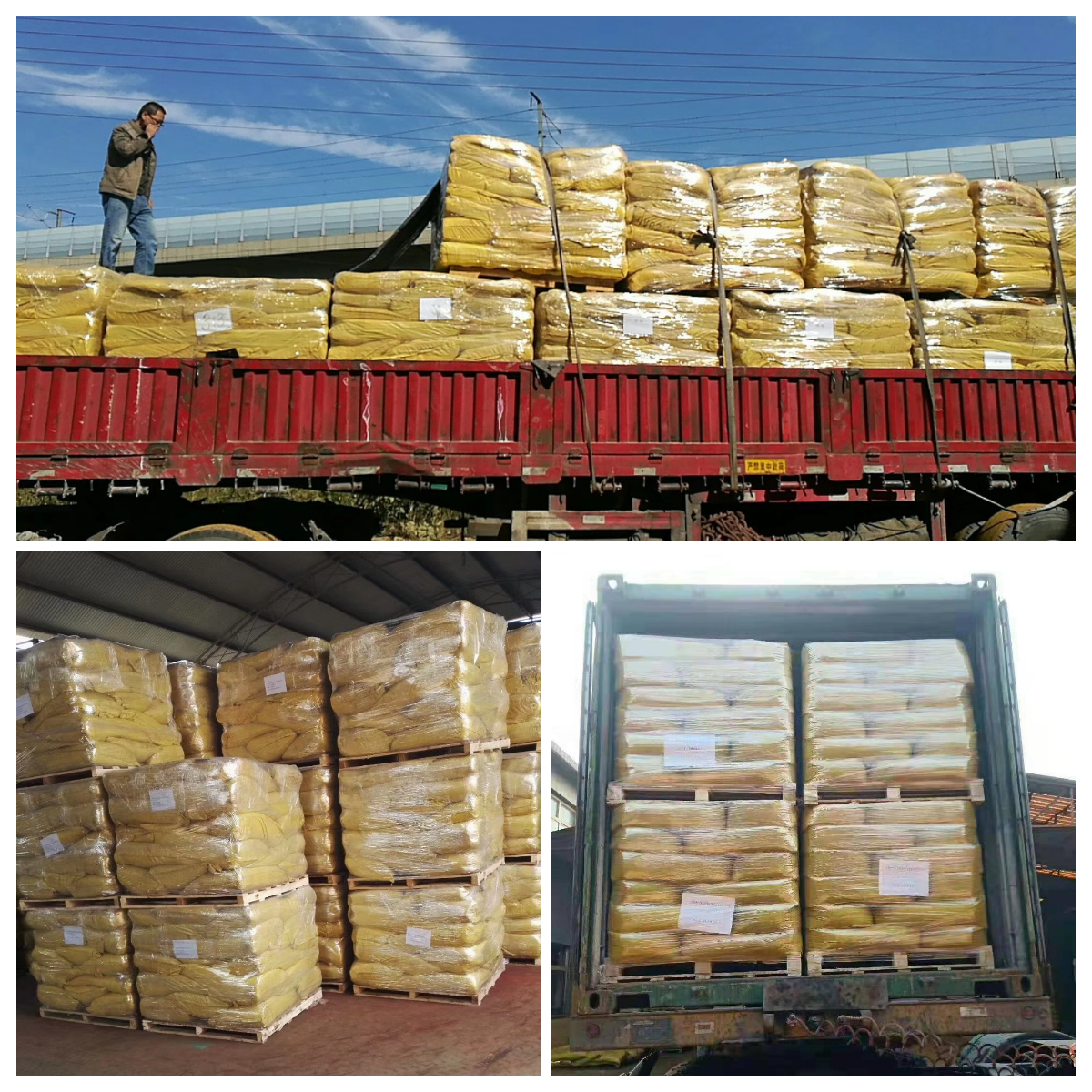
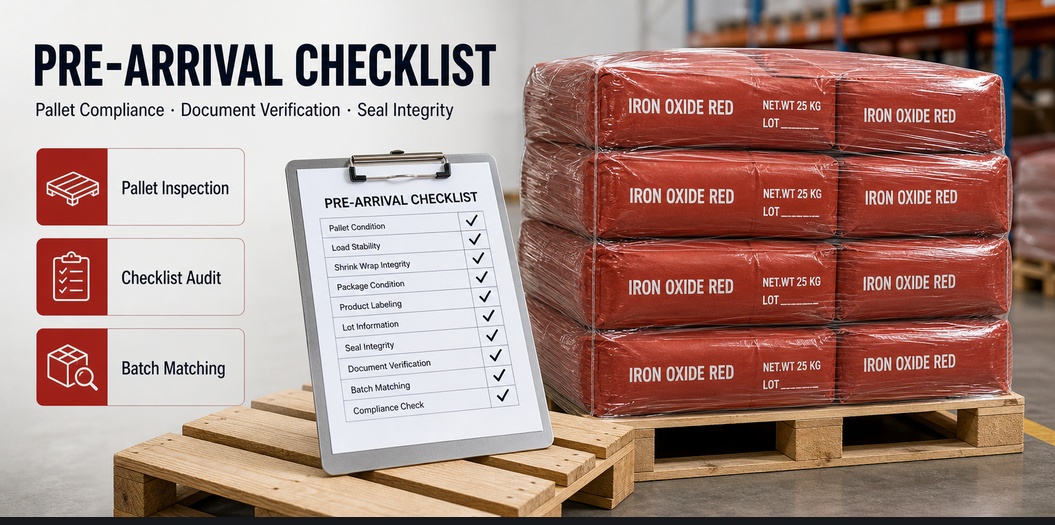
Weight that does not reconcile. A 25 kg bag is 25 kg net. Twenty bags on a pallet, shrink wrapped, is 500 kg net and something more than 500 kg gross. If the packing list says 500 kg and the forwarder's documentation says 512 kg, the two documents are describing different things and somebody has to prove it.
Wood packaging without the stamp. Most countries require solid wood pallets and crating to be heat treated or fumigated and marked under ISPM 15 (the international standard for phytosanitary measures on wood packaging). A pallet with no visible stamp can be refused, re-treated or returned at the buyer's cost. Plastic pallets avoid the question entirely, and for a two ton order the price difference is small. Ask which one your supplier uses before the load is packed.
A missing regulatory statement. EU buyers routinely ask for a REACH statement (the EU regulation covering chemical registration and evaluation) and, where the customer's own compliance system requires it, an SVHC (substance of very high concern) declaration. These are one page each. Their absence does not block a shipment at the border, but it can block your internal release of the material, which arrives as the same delay.
Run this against the draft file, not the final one. Corrections are cheap before the container is sealed.
None of this is difficult. It is simply the part of a purchase that nobody enjoys, which is why it gets done late and badly.
A supplier who sends a complete file before you ask is telling you something about how they run the plant. It usually means the same person who signs the certificate of analysis also walks the warehouse, and that lot control exists as a practice rather than a slogan.
The reverse is also informative. If the certificate arrives after three reminders, carries no lot number, and cites no test method, the material may still be fine. The system behind it probably is not.
Hebei Tianhuibao Technology Co., Ltd. has manufactured iron oxide pigments for 26 years, with an annual production capacity of 50,000 tons, and supplies customers in 150+ countries and regions. The range covers the Iron Oxide Red Series (grades 110, 130 and 190, plus nano, ultra-fine, easy-dispersing and acid- and alkali-resistant grades), the Iron Oxide Yellow Series (313 and 920), the black and brown series, and composite blue (886) and green pigments, with factory-direct color matching, particle size adjustment and packaging customization through Custom Services. Certifications held include REACH, RoHS, CE and ISO. Our minimum order is 1 ton (1,000 kg), and trial quantities can be drawn from the same production lot that the quotation refers to. Stock items ship in 3 to 5 working days; customized items in 7 to 15 working days.
Each shipment is accompanied by a certificate of analysis carrying the lot number, a safety data sheet, a packing list with net and gross weight, and a certificate of origin. If you need those documents in a specific format for your customs broker, say so at the quotation stage and we will match it.
Send us your destination country, the grade and quantity you are planning, and the Incoterms term you work to. We will come back with the HS classification we use, the document set for that destination, and the price. Contact: [email protected] / +86-13400211655.
 Hot News
2026-10-10
2026-10-08
2026-09-17
2026-09-11
2026-09-10
2026-09-04
 EN