 ×
Iron oxide red 130 and 190 sit next to each other on almost every supplier price list, and the difference between them is not a difference in quality. Both are synthetic alpha-Fe2O3, both carry the same Colour Index reference — Pigment Red 101 (CI 77491) — and the same CAS number, 1309-37-1. What changes is where each grade sits in the shade sequence and how much colour it delivers per kilogram. Specify the wrong one and the mistake does not appear on the delivery note. It appears on the slab, three days after curing, next to the approved sample.
This article sets out what the grade numbers mean, which parameters separate the two grades, and how to verify the choice against your own materials.
They are supplier and trade shorthand, not an international designation. No ISO or ASTM classification defines a "130" or a "190"; under the Colour Index both are the same pigment, Pigment Red 101. The numbers are a position marker inside a manufacturer's own family, which is why a 190 from one factory and a 190 from another can differ, and why grade numbers should never be transferred between suppliers without a fresh certificate of analysis.
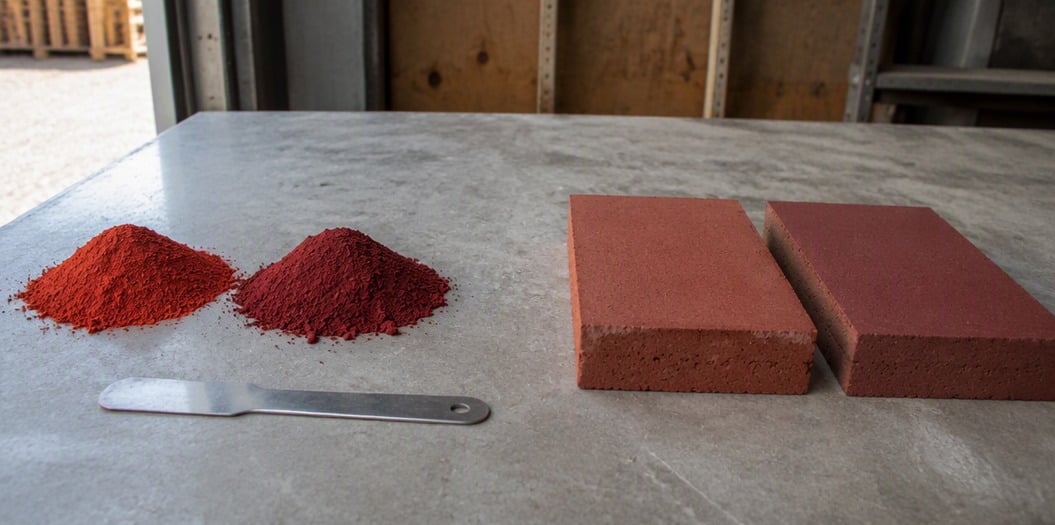
Within one family, the numbers mark a position on a shade axis. In the commonly reported industry sequence for synthetic iron oxide red, grades 110, 130 and 190 run from a yellowish red toward a bluish red, with 130 in the middle. A "110" leans warm and orange-brown, a "190" reads deeper and bluer, and a "130" is the general-purpose mid-tone grade.
| Parameter | Commonly reported window for these grades | Note |
|---|---|---|
| Chemical class | Synthetic iron oxide, alpha-Fe2O3 | CI Pigment Red 101 (77491), CAS 1309-37-1 |
| Fe2O3 content | 95% min (130-type) to 96% min (190-type) | higher content is typical of the bluer, higher-strength grades |
| Tinting strength | 95–105% (130-type), 98–102% (190-type) | quoted against a supplier's own standard |
| Oil absorption | 15–25% | affects dispersion demand in the mixer |
| Residue on 320 mesh | 0.3% max | a coarseness indicator |
| Water-soluble matter | 0.3% max | relevant where efflorescence is a concern |
| Volatile content at 105 °C | 1.0% max | moisture and residual volatiles |
| pH | 3–7 | water-based system compatibility |
| Colour difference vs standard | ΔE 1.0 max | the figure that governs batch-to-batch colour |
| Particle shape | Spherical | typical of synthetic grades |
These are ranges commonly reported on published technical data sheets for 130-type and 190-type grades — a procurement benchmark, not a specification for any supplier's product. Always read the actual certificate of analysis for the lot you are buying.
Fe2O3 content sets the ceiling on depth. Iron oxide red is a particulate that scatters and absorbs light, not a dye. Higher iron oxide content means less inert material diluting the colour, so the grade reaches deeper masstone at the same addition rate — which is why 190-type grades are the usual starting point for a saturated, deep red rather than a terracotta.
Particle size distribution sets the hue. In synthetic alpha-Fe2O3, shade moves with primary particle size: commonly reported behaviour is that finer particles read warmer and more yellow, larger particles deeper and bluer. Grades 130 and 190 are therefore not one colour at two strengths but two hues that also differ in strength. A 190 used as a drop-in replacement for a 130 shifts the hue first and the depth second.
Tinting strength, not Fe2O3 content alone, sets the cost per unit of colour. Tinting strength depends on particle size distribution and on how completely the pigment de-agglomerates in the mixer. Two grades with the same declared Fe2O3 content can need visibly different addition rates to reach the same depth, so purchasing on price per kilogram compares the wrong numbers. The useful comparison is price per unit of delivered colour, and that requires a trial.
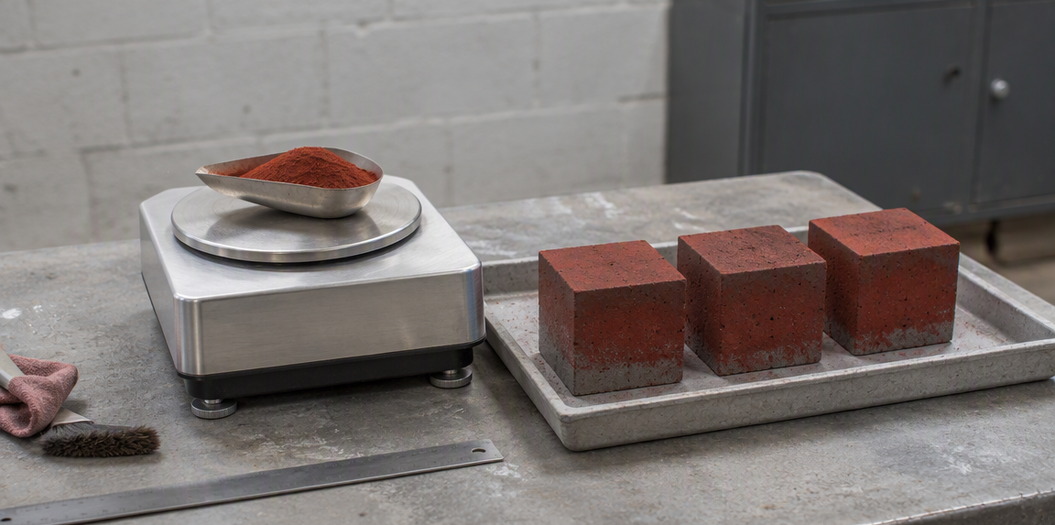
Work backwards from the masstone, on the real materials. The useful question is not "which grade is better" but "what does the target colour look like in this cement and this sand". The two grades separate most clearly in light mixes and reduced (white-tinted) shades, and least in deep masstone on grey cement — which matters when a project uses white cement for one element and grey for another.
As a working rule:
For integrally coloured concrete, addition rates are commonly reported at 1% to 10% by mass of cement, with roughly 5–8% the band most pigmented mixes land in. The upper limit is not arbitrary — exceeding it is generally reported to reduce the mechanical strength of the product — so the answer to "the colour is not deep enough" is normally to change the grade or re-examine the cement and sand, not to add more powder.
That range is where the grade decision pays for itself. If a 130-type grade needs an addition rate near the top of the band while a 190-type reaches the same target mid-band, the bluer grade can cost less per unit of colour even at a higher price per kilogram.
For integrally coloured concrete, the reference point is ASTM C979 / C979M-16, Standard Specification for Pigments for Integrally Colored Concrete. It defines the test set a pigment is evaluated against: water wettability, alkali resistance, percentage of sulfates, water solubility, atmospheric curing stability, light resistance, effects on concrete (mixture preparation, making and curing, time of setting, air content, compressive strength), and colour match of shipment.
Two practical notes. First, "colour match of shipment" makes batch-to-batch consistency a testable requirement rather than a promise — ask for the ΔE figures your supplier holds against their own standard, batch by batch. Second, the specification explicitly does not cover pigment stability under accelerated curing with low- or high-pressure steam; if your plant steam-cures, that gap has to be closed with a trial under your own cure cycle.
A practical verification sequence:
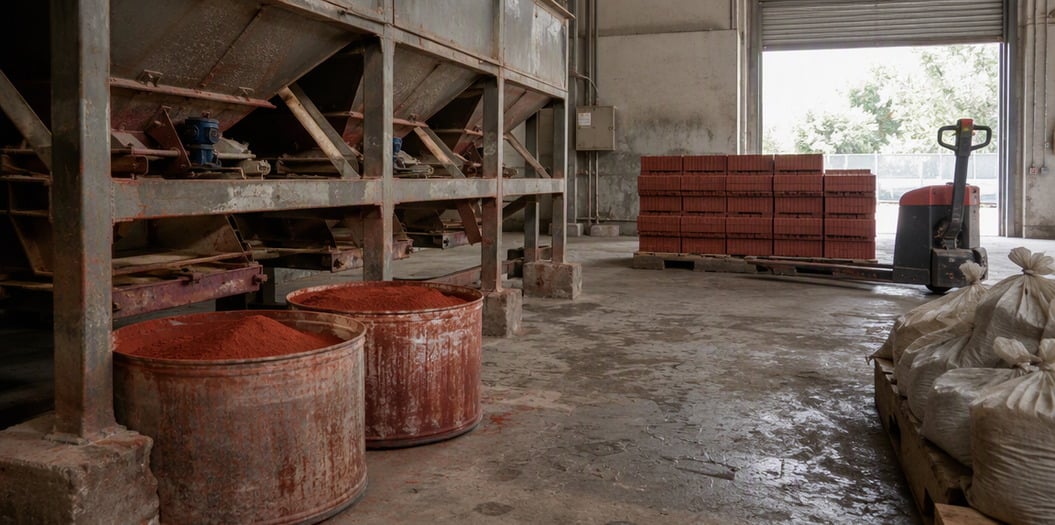
Grade selection is one variable in the finished colour, and not the largest one on many projects.
The base colour of the cement and sand sets the floor and ceiling of what any red pigment can achieve in that mix; a darker, iron-rich sand shifts the cured tone regardless of grade. Water-cement ratio changes surface density and colour depth, and a high ratio raises the risk of surface porosity and efflorescence, where a white bloom over a red surface reads as a colour defect even though the pigment was correct. Compaction and curing decide how much of the pigment-rich surface layer survives to handover. And dispersion decides whether the pigment is spread evenly through the matrix at all — pigment that stays agglomerated sits in local clusters, visible as mottling and as tone drift between batches.
That last point is what grade selection cannot substitute for. A 190 will not repair a dispersion problem, and a 130 will not deepen a mix that has too little cement in it.
State the grade and the parameters, and never the grade number alone:
Iron oxide red pigment, synthetic alpha-Fe2O3, CI Pigment Red 101. Fe2O3 content 96% min. Tinting strength 98–102% against supplier standard. Colour difference versus approved standard ΔE ≤ 1.0. Residue on 320 mesh 0.3% max. Water-soluble matter 0.3% max. Volatile content at 105 °C 1.0% max. Supplied with lot-specific certificate of analysis. Colour approval against retained master sample under agreed curing conditions.
That wording makes the colour outcome testable against a document rather than an opinion, and removes the assumption that a grade number means the same thing across suppliers — which it does not.
For a documented example of grade matching in production, our case study Iron Oxide Red 190 for a Concrete Floor Tile Producer in Pakistan, in the Case section of this site, describes a tile plant where shade variation across batches was the customer's core problem.
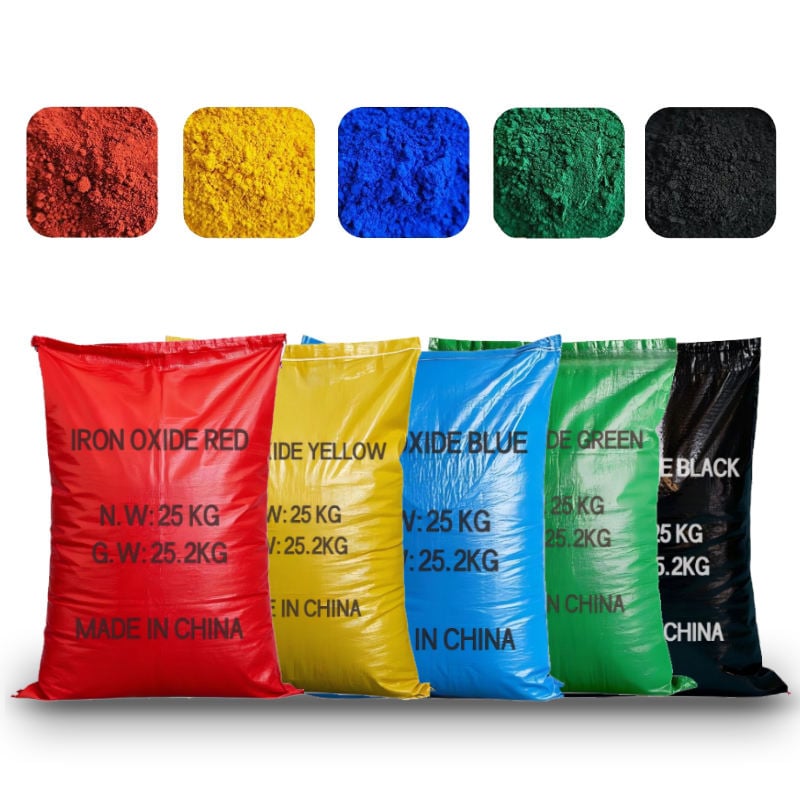
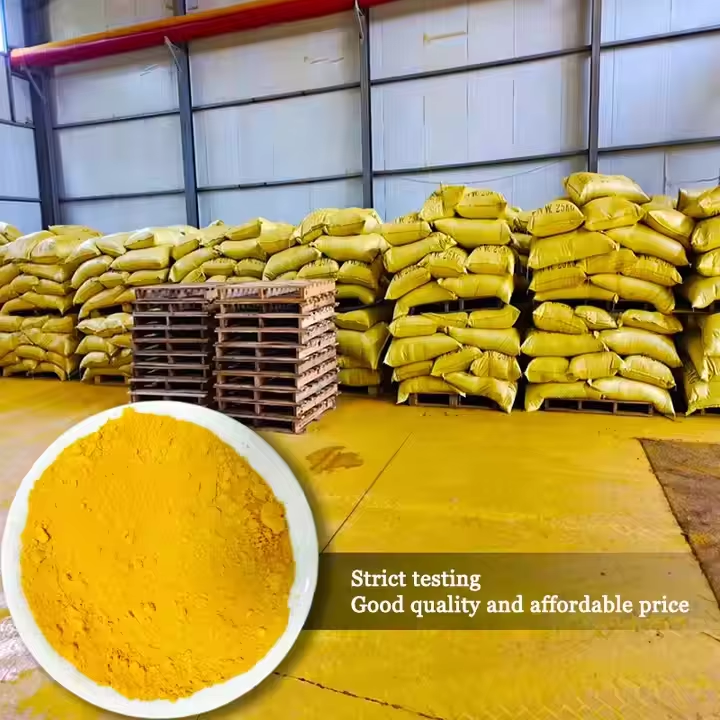
Hebei Tianhuibao Technology Co., Ltd. has produced iron oxide pigments for 26 years, with an annual production capacity of 50,000 tons, and supplies customers in 150+ countries and regions. The iron oxide red series covers grades 110, 130 and 190, plus nano, ultra-fine, easy-dispersing, acid- and alkali-resistant and food-contact grades, and factory-direct colour matching. Certifications held include REACH, RoHS, CE and ISO, with IATA DGR for air transport and IMDG Code for sea transport. The minimum order quantity is 1 metric ton in 25 kg woven bags available ex-stock; small samples are supplied separately for testing and do not count toward the MOQ. Stock items ship in 3–5 working days, customised items in 7–15 working days. Quality control runs from raw material testing through to finished product inspection, and multi-batch colour consistency data (ΔE) is available on request.
To compare 130-type and 190-type grades against your own target colour, send us your cement and sand details, or the master sample, and request a specification sheet and a trial sample. Contact: [email protected] / +86-13400211655.
 Hot News
2026-10-10
2026-10-08
2026-09-17
2026-09-11
2026-09-10
2026-09-04
 EN