 ×
In short: Iron oxide pigment is a fine powder, and fine powders compete with everything else in a concrete mix for water and admixture. In most plants the effect on set time and 28 day strength is small and gets blamed on the pigment when the cause sits elsewhere. Run one control mix and one pigmented mix from the same cement, the same water-cement ratio and the same curing, then compare setting time and cube results. That single pair of mixes answers the question your customer is really asking.
A batch plant changes color on a Friday and the cubes come back low on Tuesday. The pigment gets blamed first, because it is the only thing that visibly changed. Sometimes that is fair. Often it is not.
This is what is actually happening in the mixer when you add color.
Cement grains hydrate and, in doing so, take water and release heat. Iron oxide red (Fe2O3) does neither. It is chemically quiet in a Portland cement system, which is why it holds color for decades.
What it does bring is surface. A pigment at typical integrally colored concrete dosage adds a large number of very fine particles. Those particles want water, and they want it at the moment the mix is still plastic. The result is usually a small bump in water demand, and a plastic mix that feels slightly stiffer at the same slump.
There is a second effect that catches plants out. Fine pigment surfaces can carry away part of the air-entraining or water-reducing admixture before it reaches the cement. The dose you wrote on the batch card is still in the drum. Less of it is doing work.

Setting is a heat and chemistry event. The tricalcium silicate (C3S, the main strength-giving phase in Portland cement) starts reacting, and the paste stiffens. Anything that slows the access of water to cement grains pushes that curve to the right.
In practice a pigmented mix often sets a little later than the control. Ten or twenty minutes is common and usually harmless. What matters is whether the shift is consistent, and whether it drifts as pigment dose goes up.
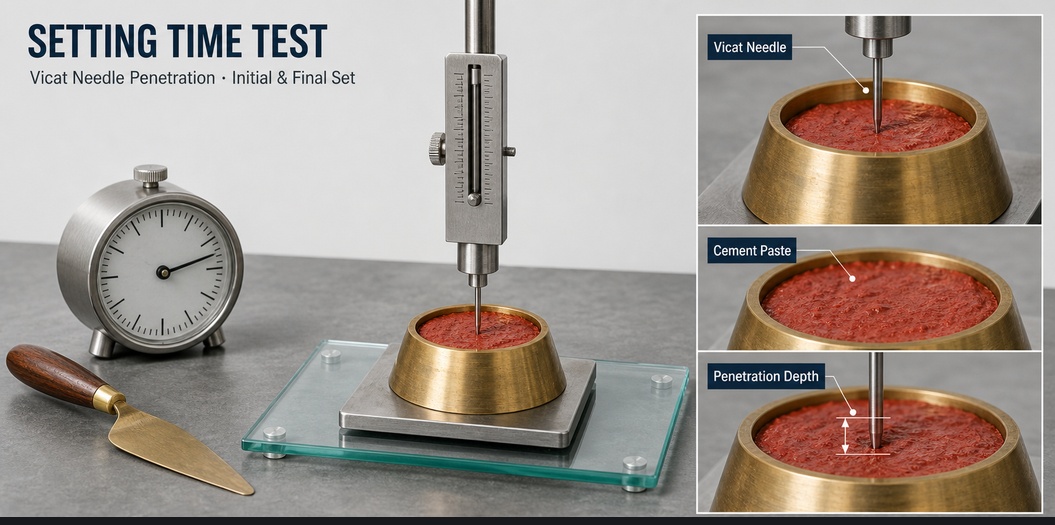
Two methods settle it. The Vicat needle (ASTM C191, a penetration needle test on paste) gives you a clean number in the lab. The penetration resistance method (ASTM C403, a probe pushed into sieved mortar) works better on a real mix with aggregate in it. Either one, run on a control and a pigmented sample from the same cement lot, tells you the size of the shift.
| What you are checking | Method | What a shift tells you |
|---|---|---|
| Initial and final set of the paste | ASTM C191, Vicat needle | Whether the pigment alone is delaying set, with aggregate taken out |
| Set of the actual mix on site | ASTM C403, penetration resistance | What the finisher will actually feel, including admixture effects |
| Workability at the plant | ASTM C143, slump | Whether water demand rose at the same dose |
| Strength development | ASTM C39, compressive strength of cylinders | Whether the mix is still reaching its design strength |
| Pigment compliance for colored concrete | ASTM C979, EN 12878 | Whether the pigment is the right grade for integral coloring |
Strength loss has many parents. Cement lot variation, aggregate moisture, batching tolerance, curing, and the temperature of the pour all move the number. If you change the pigment and the mix at the same time, you learn nothing.
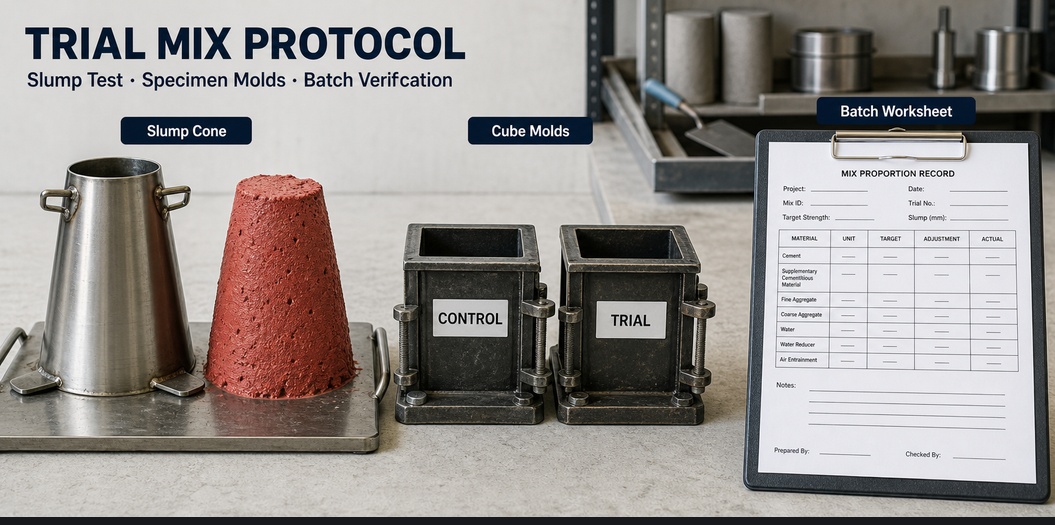
Keep the control honest. Same cement silo, same aggregate stockpile, same water-cement ratio (w/c, the weight of water divided by the weight of cement), same admixture batch. Change only the pigment. Cast cylinders from both, cure them side by side, and break at 7 and 28 days under ASTM C39.
If the pigmented mix comes in below the control at both ages and the gap widens, you have a real effect and the dose is the first thing to look at. If the two are inside the scatter of your own testing, the pigment is not your problem and you should go looking at curing and moisture.
Be honest about the scatter too. Two cylinders are not evidence. Batching plants that argue about half a megapascal with single cubes are usually arguing about noise.

Batching the pigment by weight, not by scoop. A pigment weighed to the nearest kilogram on a 2 cubic meter batch is fine. A pigment added by the shovel is not, and the color variation that follows gets blamed on the supplier.
Dispersion time. Pigment dropped in at the end of the cycle and discharged thirty seconds later never disperses. You get streaks, and you get a mix that behaves differently from the one you tested in the lab. Give it a full mixing interval and watch the discharge.
Curing, every time. Colored concrete is judged on the surface, and the surface is where curing shows up first. A pigmented slab that dries early looks patchy and gets read as a pigment fault. It usually is not.
Where the plant gets it wrong is almost always here, in these three, and not in the drum of pigment.
A pigment supplier cannot tell you how their product behaves in your mixer. They can tell you what is in it, and they can give you the same product batch after batch so your trial stays valid.
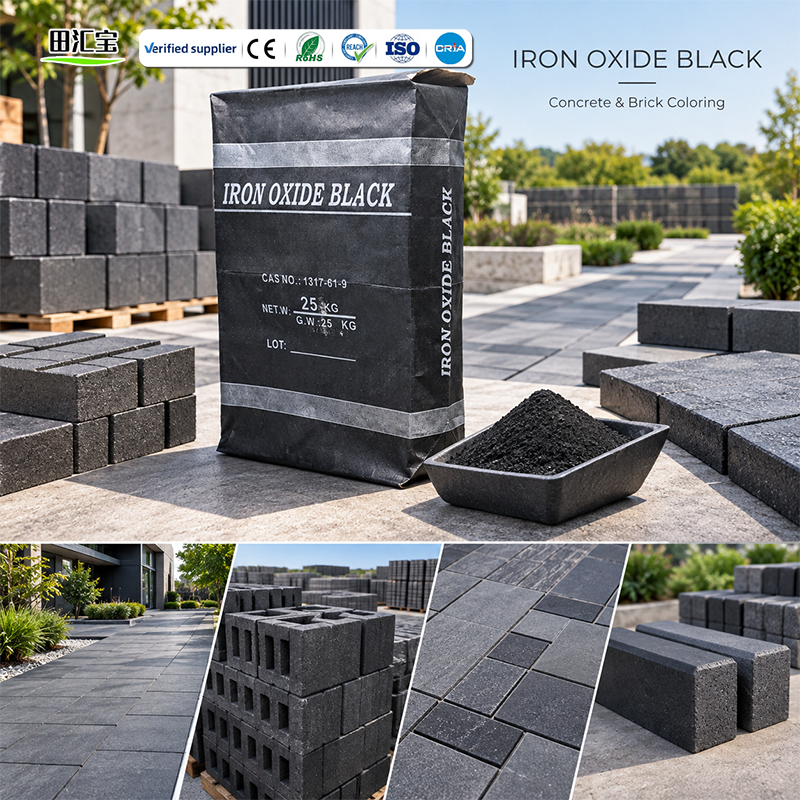
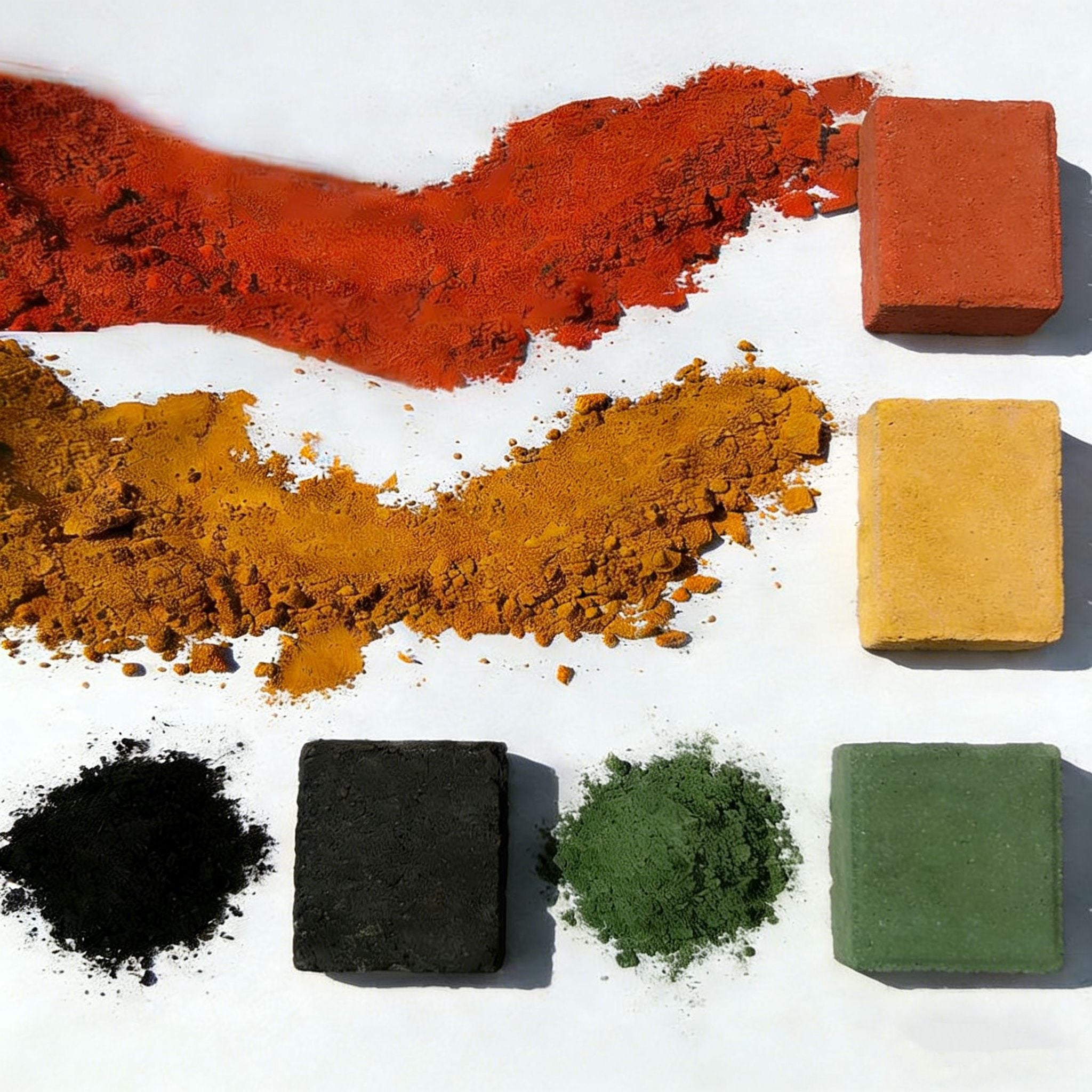
We have made iron oxide pigments for 26 years, producing red (Fe2O3), yellow (α-FeOOH), black (Fe3O4), brown, and composite green and blue grades for concrete, mortar, asphalt, coatings, plastics and rubber. Our minimum order is 1 ton (1,000 kg), and trial quantities can be drawn from the same production lot that the quotation refers to, with the lot number and certificate of analysis supplied together.
If you are chasing a set time or strength question on a colored mix, send us the mix design and the cement lot you are running. We will match the pigment lot to it, so the only variable in your trial is the one you meant to test.
Contact: [email protected] | +86-13400211655
 Hot News
2026-10-10
2026-10-08
2026-09-17
2026-09-11
2026-09-10
2026-09-04
 EN