 ×
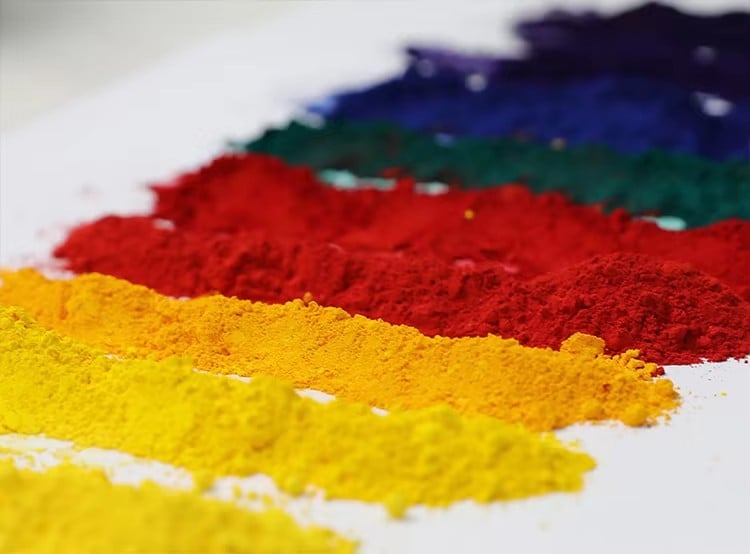
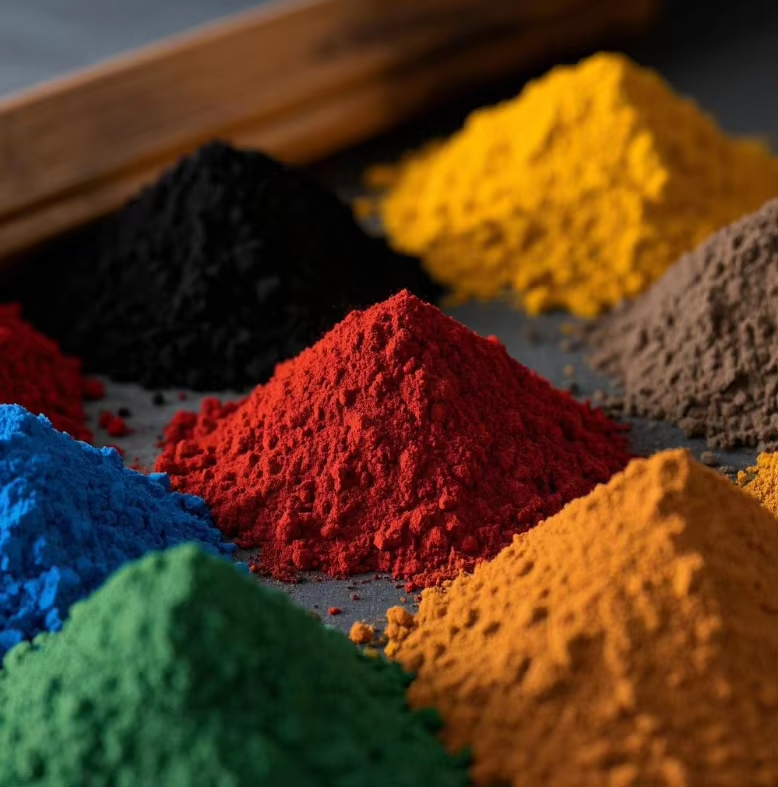
In short: A paver plant and a ready-mix plant can buy the same pallet of iron oxide and still land on two different colors from the same dosage. Dry-cast units come off a press within seconds. Wet-cast is poured and left in the mould. Judge the pigment against the process that shapes it, keep face-mix dosage separate from body-mix thinking, and approve color on a plaque made on your own press.
Two plants order red from the same lot. One runs pavers on a vibro-press, the other casts slabs into steel forms. Both dose against cement weight, both write the same number on the batch card. Within a month one calls back saying the color is pale and the other says it went dark.
Nothing was wrong with the pigment.
On a dry-cast line (zero-slump mix, pressed and stripped onto a steel pallet within seconds of filling) the pigment meets very little water and a great deal of pressure. On a wet-cast line (a pourable mix cast into moulds or forms and left to set before stripping) it meets a lot of water and almost no pressure until the vibrators start.
Same powder. Two environments.
The pigment's actual job does not change. It has to sit evenly through the cement paste and stay there. What changes is how much paste reaches the surface of the finished unit, and how dense that surface ends up. That is where color is decided, and it is decided by the machine before the pigment ever gets a vote.
Dry-cast mix is damp, not fluid. There is just enough water to let the press do its work, which means very little bleed, very little segregation, and a face that closes up under compaction. Color reads deep because you are looking at a dense, paste-rich skin.
Wet-cast carries far more water. Some of it rises. As it arrives at the top surface it raises the local water-cement ratio there, and a higher ratio at the surface means a more porous, paler layer once the unit dries. The same pigment load now reads lighter and slightly chalky.
Water is the variable nobody writes on the batch card.
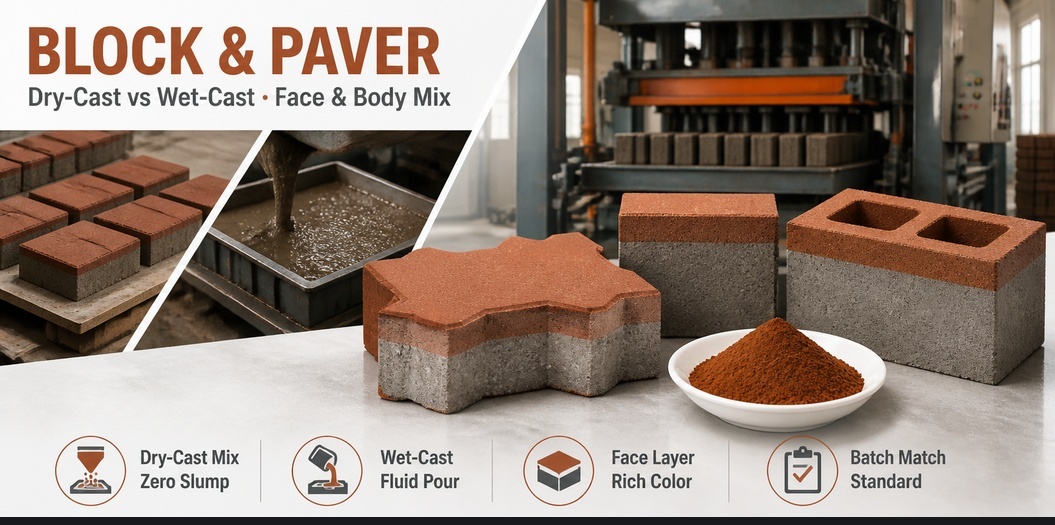
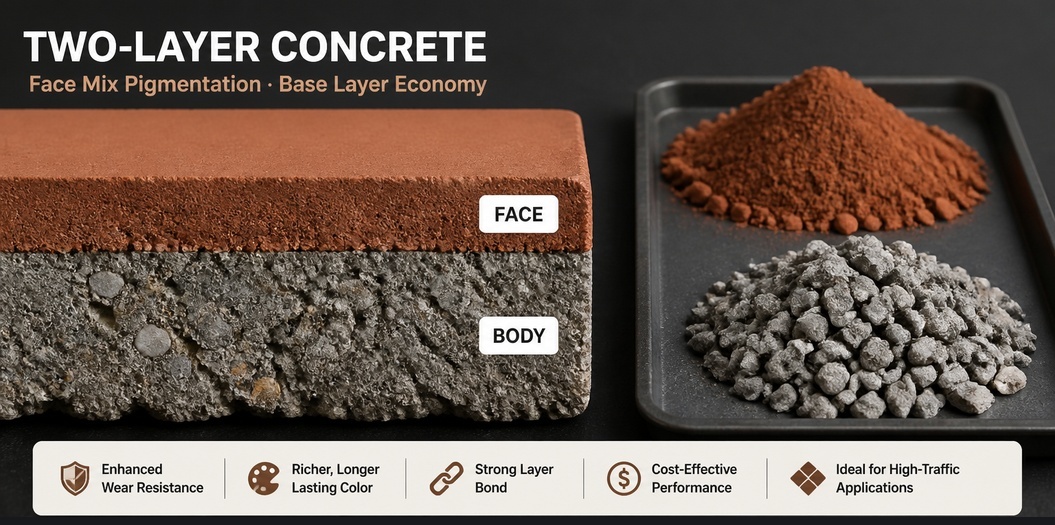
Most block and paver lines run two layers. The face mix (the thin, cement-rich layer that carries the color) sits on top of the body mix (the grey backing layer that gives the unit its strength). Only the face carries pigment. The body is usually plain grey and always cheaper.
This trips up costing more often than it trips up chemistry. A face layer might be a small fraction of the unit's total mass, so the pigment dose per ton of face mix is several times the figure per ton of finished product. If purchasing quotes a price per ton of pigment against a cost per ton of product, and the plant doses per ton of face mix, the two numbers will never meet. Somebody concludes the pigment is expensive. It is not. The arithmetic was.
Face mixes also tend to use finer aggregate and a different cement content from the body. Finer aggregate means more surface area competing for the same pigment, so the color reads weaker than the dose suggests.
How much pigment goes into a cubic meter of concrete is a separate question, and it is covered in iron oxide pigment dosage for concrete. What matters here is that the figure has to be quoted per ton of face mix, not per ton of finished unit.
Two presses running an identical face mix formula will not produce identical color. Vibration time, pressure and moisture all move the paste around, and the face you end up with is a record of those settings.
Over-vibrate and paste floods to the surface: a rich, dark, glassy face that can craze later. Under-vibrate and the face stays open: pale, dusty, and quick to show handling marks. Both are press problems that get filed as pigment complaints.
When a complaint arrives with a phone photo, the useful questions are boring ones. Which press. Which pallet. How long did the mix sit in the hopper before it was pressed. A mix that has been standing for an hour is not the same mix.
| What changes | Dry-cast (block, paver) | Wet-cast (slab, precast, cast in place) |
|---|---|---|
| Mix consistency | damp, zero slump | pourable, set by slump |
| Shaping | pressed and vibrated, stripped at once | cast, vibrated, stripped after set |
| Bleed water | very little | significant, raises water-cement ratio at the top |
| Where the color sits | dense surface skin | surface paste, lighter and less even |
| Usual color complaint | face-mix dose drift, press settings | water variation, curing, surface bloom |
| Best approval sample | plaque pressed on the production press | cube or plaque cast from the production mix |
| Extra spec to add | sieve residue, moisture | water-soluble matter, curing record |
White bloom on a colored unit is a salt problem. The salts come from cement, from sand, from the mixing water, sometimes from the ground the unit is stacked on. Iron oxide does not supply them. The causes and the countermeasures are set out in efflorescence in colored concrete.
What pigment does is decide how loudly the bloom reads. A white deposit on a dark face looks like a defect. On a buff or terracotta face the same deposit passes for weathering. If your market is unforgiving about bloom, that is an argument for the face color you choose, and an argument for a tighter water-soluble figure on the purchase order.
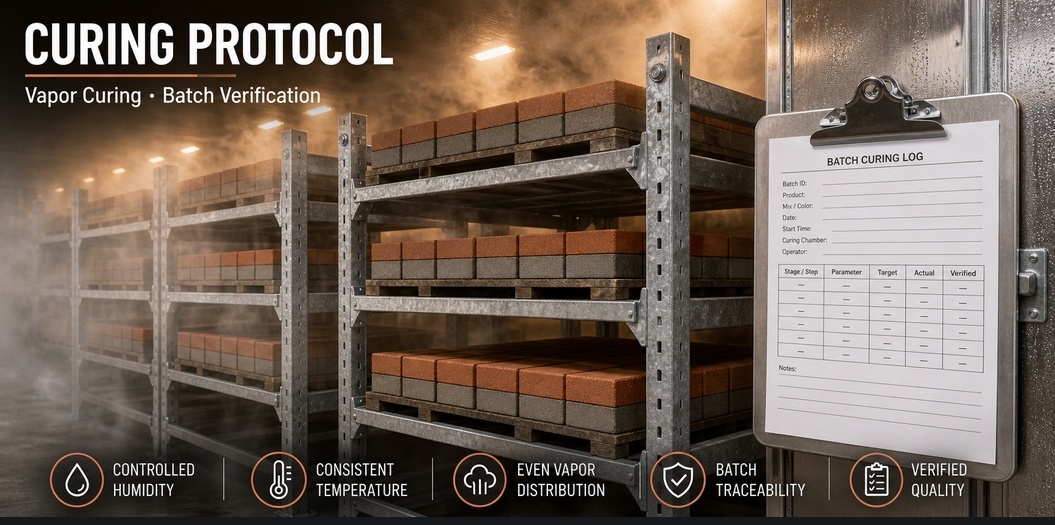
Dry-cast units usually cure in a chamber with steam or mist, at a temperature the plant controls. Wet-cast may cure in the mould, under sheeting, or in the open. Both can bloom. Only the chamber gives you a knob to turn.
A single purity figure is not a specification. These are the lines that actually decide whether two lots behave the same on your line.
If the tolerance figure itself is still being argued about, setting a ΔE tolerance walks through how to pick one you can defend.
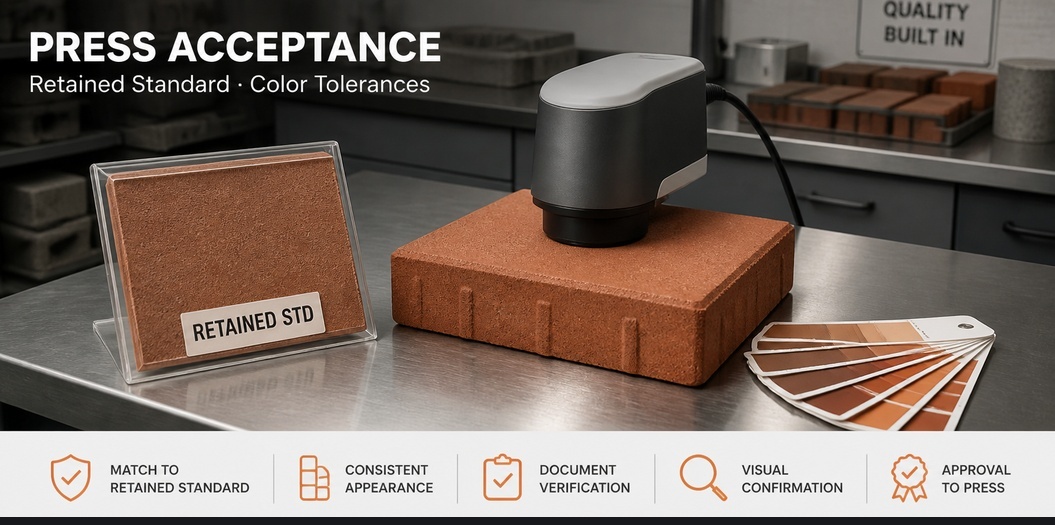
Lab plaques are useful for screening a supplier. They are not an approval. Approval happens on your machine, in your mix, with your cure.
This is the press-side version of the new lot trial protocol, shortened to what a block plant can fit into one shift.
None of this is complicated, and almost none of it is on a data sheet. It depends on your press, your sand and your curing room. A supplier who has seen enough plants will tell you that up front instead of quoting a dosage table.
Hebei Tianhuibao Technology Co., Ltd. has been making synthetic iron oxide pigments for 26 years, covering red (Fe2O3), yellow (α-FeOOH, a hydrated iron oxide), black (Fe3O4), brown and composite green and blue grades for concrete, coatings, plastics and ceramics. Minimum order is 1 ton (1,000 kg). We supply the retained standard, the lot marking and the test data that a face-mix approval actually needs, and we will tell you when a color problem is sitting in your press rather than in our bag.
Email [email protected] or call +86-13400211655 to start a trial against your own face mix.
 Hot News
2026-10-10
2026-10-08
2026-09-17
2026-09-11
2026-09-10
2026-09-04
 EN