 ×
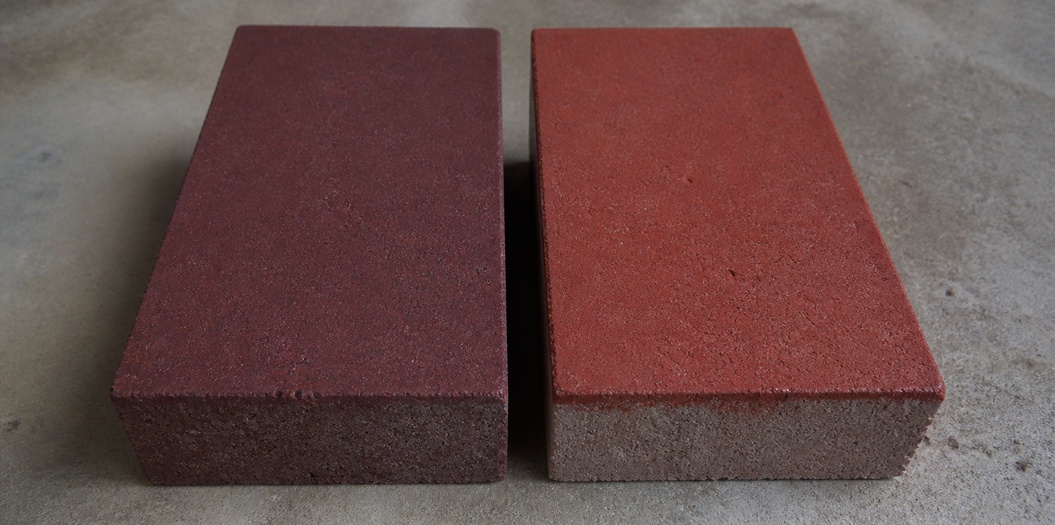
In short: Pigment sits inside cement paste, so the paste is part of the color. Two plants running the same dose and the same bag can produce a red paver and a maroon one, and neither of them dosed wrong. This article covers how cement lightness, slag and fly ash, and local sand move the final color, the order to fix things in, and what to write into an approval so the substrate cannot drift quietly.
A factory in one province sends a red block and a buyer in another province sends back a photo of the same product, darker. The reply from the plant is that nothing changed. Often that is true. What changed is what the block is made of.
A colored concrete unit is pigment particles suspended in a cement paste matrix. The matrix is not transparent and it is not neutral. It scatters light back at the viewer, and that scattered light mixes with what the pigment reflects.
This means the same pigment at the same dose behaves differently on different pastes. On a light matrix there is more light coming back through the color, and the tint (the pigment diluted to a pale shade) reads cleaner. On a dark matrix the same dose sits in shadow and the color reads deeper and duller. Neither result is wrong, and neither is the pigment's fault.
The practical consequence is uncomfortable for anyone who thinks in terms of "our standard dose". There is no dose that produces one color across all cements.
Ordinary portland cement (OPC) varies in lightness more than most buyers expect. Clinker chemistry, the amount of grinding, and the minor constituents all move it. Two OPC deliveries from two suppliers can sit far enough apart that the same red dose produces visibly different units.
White cement takes the other end of the range. With a white or near-white paste the matrix stops competing with the pigment, tints read cleaner, and a red that looked muddy on gray can look bright. Plants switching to white cement for a premium line often discover that the old dose is now too high, because the pigment no longer has a dark background to fight.
Between the two ends sits everything else a plant actually uses.
Blended cements and supplementary additions change the paste color in ways that are easy to miss on a batch card.
Slag (a glassy by-product of iron making, ground and blended into cement) usually darkens the paste and pushes it cool. Reds tend to drift toward maroon, and a warm brick red can lose the warmth that made it sell. Fly ash is less predictable: it commonly darkens and dulls the mix, and when the ash carries unburned carbon the effect is stronger and less even from batch to batch.
That last point is the one that catches people. Carbon content in fly ash is not constant, so a plant can see color move without changing a single line on the mix design. When a red goes flat for a week and then recovers, look at the ash before you look at the pigment.
Silica sand is not colorless in the way a bag of white powder is. Local sands carry iron, clay and organic matter, and a sand with an iron stain warms the mix measurably. A plant that switches quarry for cost reasons can shift every colored product on the line.
Fine aggregates also change how much matrix is exposed at the surface after finishing. A sand that leaves more paste at the face will show more of the cement's own tone, which pulls the color toward the paste and away from the pigment.
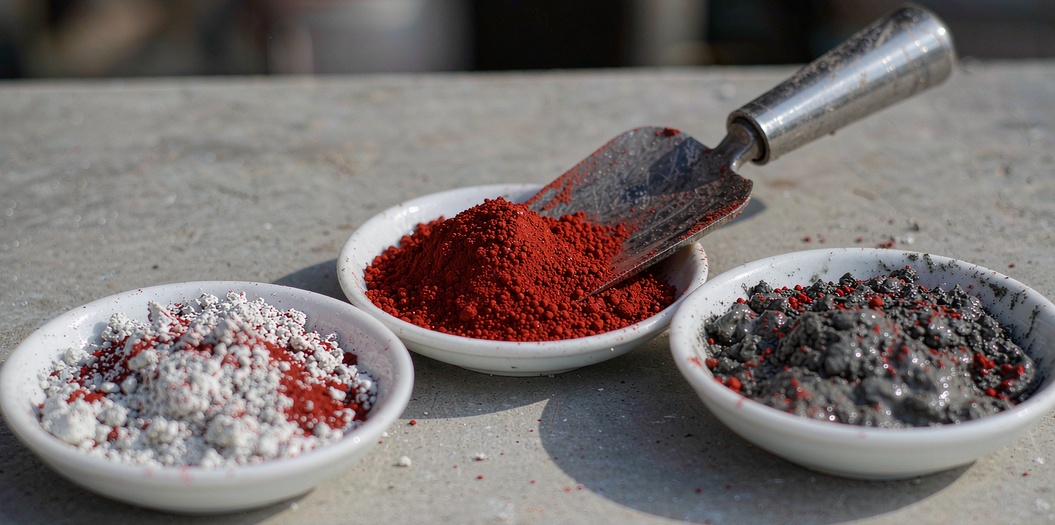
Masstone (the pigment at full strength) is the forgiving case. At high dose the pigment dominates and the paste contributes less. Move to a light tint and the balance flips.
At a few grams per kilo, most of what the eye sees is still cement. A ten percent shift in paste lightness can read as a visible change in a pale buff or a soft peach, while the same shift in a deep red would pass unnoticed. Buyers who approve only the dark color and then order a light one are effectively approving a product they have never seen.
There is a second effect. Tints expose the difference between pigments that look identical at full strength. A pigment that is slightly cooler than the approved one will sit invisibly in a masstone and show clearly at a pale dose. When a plant reports that the light shade "never matches" while the dark shade is fine, the answer is often that two pigment lots were approved on the wrong one.
| What changed at the plant | What it does to the finished color | Check this first |
|---|---|---|
| Gray OPC replaced by white cement | Lighter, cleaner tint at the same dose; old dose now reads strong | Re-dose downward, then re-approve |
| Slag added or increased | Darker, cooler; reds drift toward maroon | Slag ratio on the batch card |
| Fly ash source changed | Duller, less even; varies batch to batch | Unburned carbon in the ash |
| Sand quarry changed | Warmer or cooler cast across all colored lines | Iron and clay in the sand |
| Pigment dose increased to chase a target | Deeper but flattening chroma (color intensity) | Whether the substrate moved first |
The last row is the one worth pinning on the wall. Raising the dose to fix a color that moved for substrate reasons buys a darker product with the same hue problem, and it costs money on every tonne.
The order of operations saves weeks.
First, confirm the cement. Same supplier, same type, same delivery period as the batch that was approved. If the plant has changed cement source, no pigment adjustment will restore the original color, because the original color no longer exists in that mix.
Second, confirm the additions. Slag ratio and fly ash source, written down per batch. This is where most unexplained drift lives.
Third, confirm the sand. A single quarry change explains a shift across every colored product at once, which is a useful diagnostic: if only one color moved, look at the pigment or the process; if all of them moved, look at the raw materials.
Only then adjust dose. And when you do, move in small steps and keep the previous plaque (the cast sample kept as the reference standard). The dosage and color control routine covers the arithmetic; the point here is that the arithmetic is the last step, not the first.
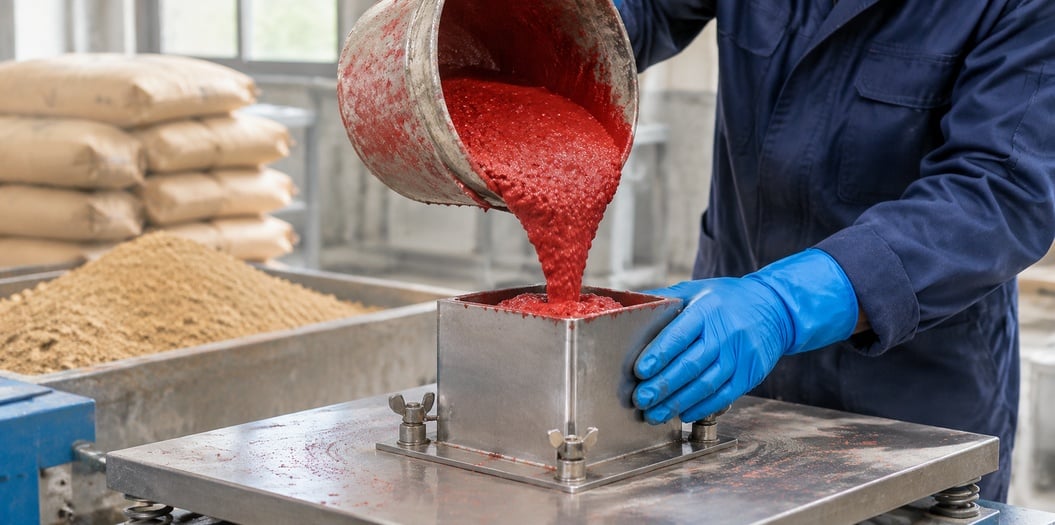
An approval plaque that does not record its cement is not an approval, it is a color sample. Six things belong on the record beside the plaque:
With those recorded, a later dispute has a comparison that means something. Without them, the retained plaque is a color nobody can reproduce, and every conversation about drift becomes an opinion.
A drawdown (a thin film of the mixed paste spread on a card and left to set) tells you what the pigment does. It does not tell you what the paver will look like.
For any new color, ask for a sample cast from the customer's own cement, own sand and own water, on the customer's own machine if that can be arranged. Small lab casts in a steel mould will not match a wet-cast production line, because compaction, vibration time and surface finishing all change how much paste sits at the face.
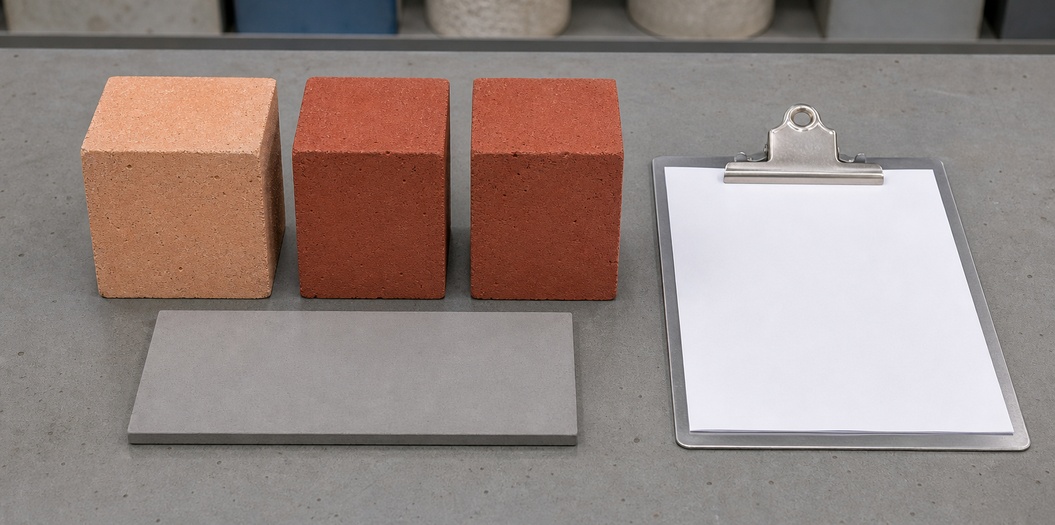
Two practical notes. Cast at least three units, because one unit is a sample and three is a range. And read them after the same curing interval the customer will use before shipping, since many colored units continue to shift as moisture leaves.
If the customer cannot supply material, ask for a 5 kg bag of their cement and 5 kg of their sand. It is a small shipment and it removes the largest unknown in the whole exercise. Where the numbers still conflict after all this, the color matching and ΔE tolerance procedure gives a way to settle it with measurements instead of opinions.
Hebei Tianhuibao Technology Co., Ltd. has produced synthetic iron oxide pigments for 26 years, supplying red, yellow, black and brown grades to concrete, coatings, plastics and ceramic plants. When a plant changes cement or aggregate, the pigment is usually the last thing that needs to change, and our technical team will work through the substrate question with you before anyone adjusts a dose. Minimum order is 1 ton (1,000 kg).
Contact: [email protected] / +86-13400211655.
 Hot News
2026-10-10
2026-10-08
2026-09-17
2026-09-11
2026-09-10
2026-09-04
 EN