 ×
In short: Two labs can test the same bag of iron oxide and report numbers that cannot be compared. One reads a Hegman gauge and calls the result fineness. The other weighs what stays on a sieve and calls it residue. Both tests are real, neither one is a particle size, and a purchase order that names one while the receiving plant checks the other will end in an argument. This is what each test actually sees, and how to write a line that survives both labs.
A buyer writes "fineness: 25 µm max" into the spec. The certificate that arrives three weeks later says "residue on 45 µm sieve: 0.2%". Both sides believe they agreed on something. They did not.
In the coatings trade, fineness usually means fineness of grind: how far a pigment has been broken down and wetted into a liquid vehicle. In the pigment trade it often means sieve residue: how much grit stays on a screen. Put those two sentences in the same purchase order and nobody is lying when they sign it.
The units make it worse. One number is read off a groove in micrometres. The other is a percentage. They cannot be converted, and no amount of arithmetic will turn one into the other.
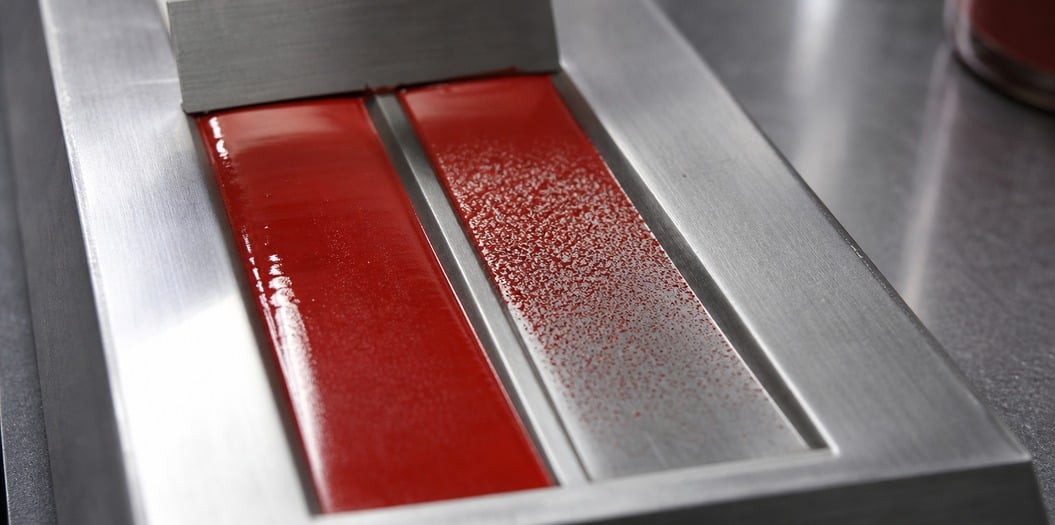
A Hegman gauge is a machined steel block with a tapered groove cut into it, from about 100 µm at the deep end down to zero. You drop paste into the deep end, pull a straight blade across it, and read the point where scratches stop appearing. That reading is in micrometres, and ISO 1524 is the method most of the world writes into the spec. ASTM D1210 covers the same ground and usually reports a Hegman number between 0 and 8 instead.
Here is the part buyers miss. The gauge does not see individual particles. It sees the largest surviving clusters in that particular paste, on that particular machine, in that particular resin. Change the dispersant, change the mill, change how long the batch ran, and the reading moves while every particle in the bag stays exactly the same size.
So a Hegman figure is a statement about a dispersion, not about a powder. When a supplier quotes one for a dry pigment, read it as "this is what our standard lab gets in our standard vehicle", and ask what that vehicle was.
Mill setup does as much of the work as the pigment, which is the whole subject of getting nano iron oxide red to disperse.
Sieve residue (the share of pigment held back on a screen of stated mesh) is a cleanliness check. ISO 787-7 washes the sample through the screen by hand with water and weighs whatever stays. It is a crude test with a narrow job: catch oversize grit, hard lumps that never dispersed in the reactor, and the occasional bit of contamination from a bag or a conveyor.
What it cannot see is the fine end. A pigment with 0.1% on a 45 µm screen may still be badly agglomerated at 2 µm, and the sieve will never tell you, because everything below the mesh passes straight through.
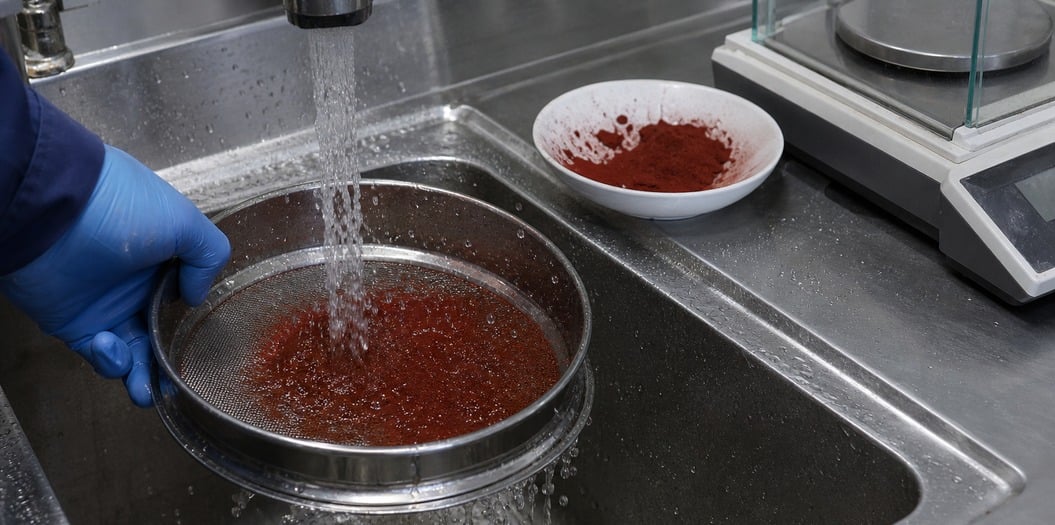
The screen also tells you something the gauge cannot: whether the problem left the factory at all. Grit on the sieve was there before your mill touched it.
Laser diffraction answers yet another question: what does the whole population look like. You get a curve, and usually a D50 (the size at which half the sample by volume is finer) plus a span. Two pigments can share a D50 and behave nothing alike, because one is a tight peak and the other has a long coarse tail.
Three tests, three questions. Only the distribution describes the powder. Only the gauge describes what your plant will actually see.
| What you want to know | Test | Standard | Reported as | Blind spot |
|---|---|---|---|---|
| How well it disperses in my vehicle | Fineness of grind | ISO 1524 or ASTM D1210 | µm, or Hegman 0 to 8 | Depends on mill, resin and time |
| Whether the bag carries grit | Sieve residue, water method | ISO 787-7 | % retained on a stated mesh | Says nothing below the mesh |
| What the powder population is | Laser diffraction | Instrument method | D50 and a curve | Says nothing about dispersion |
| Whether the batch matches the last one | Color read against a retained standard | ASTM D2244 | ΔE | Tells you it moved, not why |
A fourth column could be added to that table and it would say the same thing every time: none of these tests replaces the others, and the certificate only carries the ones the supplier chose to run.
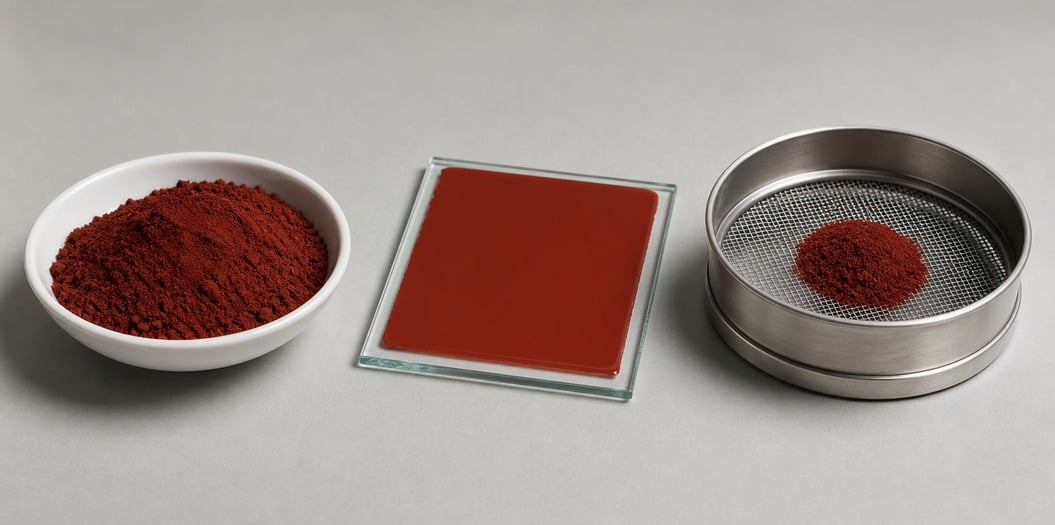
Two plants, same lot, same day, different results. That is normal and it is not a quality problem.
A bead mill running a long pass will pull a stubborn agglomerate apart and report a fine grind. A high-speed disperser in a batch tank, run for twenty minutes because the shift is behind schedule, will leave the same agglomerates intact and report a coarse one. The pigment did nothing. The energy input did.
Solids loading matters as much. Push the pigment loading up and the paste gets viscous, the blade cannot generate the same shear, and the gauge number drifts coarser. That is why a formulator's 15 µm and a plant's 30 µm can both be honest readings of the same material.
Vague specs are the root of most disputes here, and they are easy to fix. Five items do the work:
One more line is worth adding for concrete and mortar buyers: if the plant screens pigment into a dry mix, residue is the number that matters, and a Hegman figure in the spec is decoration.
You do not need a laboratory to catch most of this.
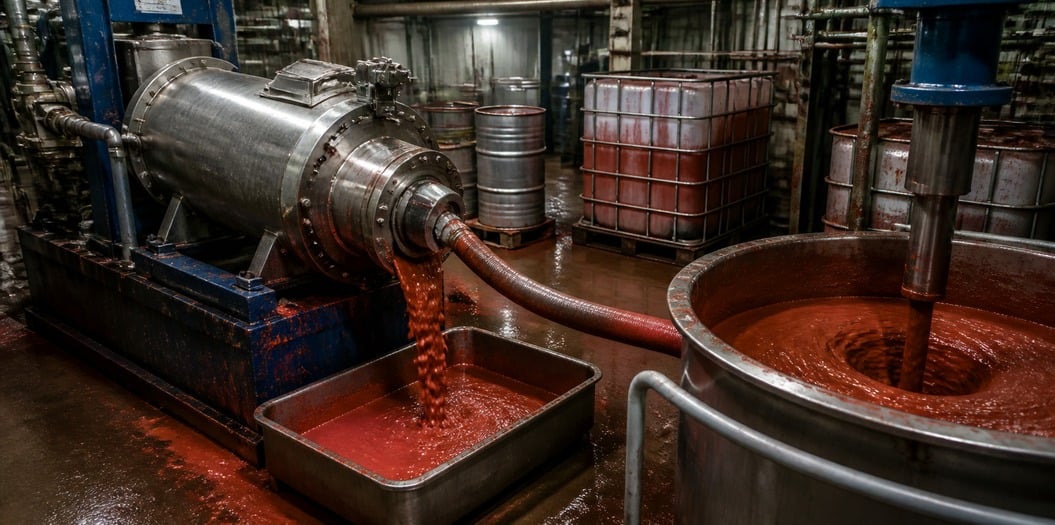
If the drawdown and the retained standard disagree, you have a real conversation to have with the supplier, and you have something to show. The same bench routine, with a ΔE limit you have agreed to enforce, is set out in setting a color tolerance you can defend. For the full sequence around a new lot, see how a trial should be run, and check what a COA does and does not prove before you lean on the certificate alone.
Hebei Tianhuibao Technology Co., Ltd. has produced synthetic iron oxide pigments for 26 years, with red, yellow, black and brown grades for concrete, coatings, plastics and ceramics. Every lot ships with a certificate carrying the tests named above, and a retained sample stays in our file for the period stated on your order. Minimum order is 1 ton (1,000 kg). For a specification review or a sample matched to your vehicle, write to [email protected] or call +86-13400211655.
 Hot News
2026-10-10
2026-10-08
2026-09-17
2026-09-11
2026-09-10
2026-09-04
 EN